
When you take a drug that affects how your blood clots, you’re playing with something invisible but powerful: your bleeding risk, the chance that even a minor injury or internal event could cause dangerous, uncontrolled blood loss. Also known as hemorrhagic risk, it’s not just about cuts—it’s about brain bleeds, stomach ulcers, or internal bleeding after surgery that no one sees coming. Many people don’t realize their daily pill routine could be quietly increasing this risk, especially if they’re mixing prescription drugs with herbal supplements or over-the-counter pain relievers.
One of the biggest culprits is warfarin, a blood thinner used to prevent clots in people with atrial fibrillation or artificial heart valves. Also known as Coumadin, it works by slowing down clotting factors, but even small changes in diet, other meds, or liver function can throw it off balance. Then there’s NSAIDs, like ibuprofen and naproxen, which damage the stomach lining and stop platelets from sticking together. These are common in pain relief routines, but when paired with warfarin or even aspirin, they can turn a harmless headache pill into a silent threat. And it’s not just prescriptions—supplements like fish oil, garlic, ginkgo, and high-dose vitamin E can thin your blood too. You might think they’re "natural" and safe, but your body doesn’t care where the compound comes from. It only reacts to the effect.
Doctors don’t just guess at bleeding risk—they look at your full list of meds, your age, kidney and liver health, and even past bleeding episodes. A person on low-dose aspirin for heart protection might be fine, but add a few supplements, start a new antibiotic, or get a dental procedure, and suddenly the risk spikes. That’s why communication with your healthcare team matters. If you’re on a blood thinner, don’t start or stop anything without asking. Even something as simple as switching from one generic brand of levothyroxine to another can affect how your body handles other drugs, including those that influence clotting.
Below, you’ll find real-world guides that break down exactly which drugs and supplements increase bleeding risk, how to spot the early signs of trouble, and how to talk to your provider about balancing safety with treatment. Whether you’re on warfarin, taking NSAIDs for arthritis, or using herbal products for sleep or pain, you’ll find practical advice to protect yourself—not just from side effects, but from hidden, life-threatening combinations.
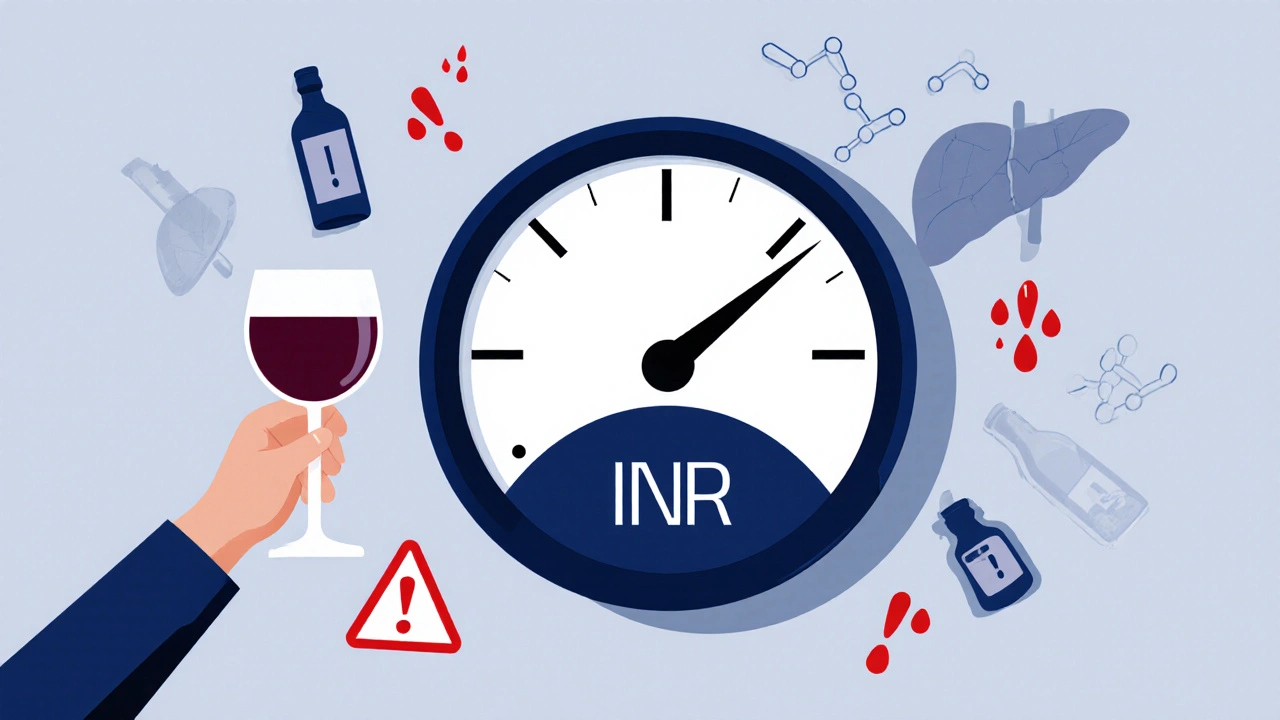
Alcohol can cause dangerous spikes in INR levels for people on warfarin, increasing bleeding risk significantly. Learn how drinking affects blood thinners, what limits are safe, and what symptoms to watch for.
Read More