
When your eyes turn red, sting, or ooze crusty gunk, you might be dealing with a antibiotic eye drops, prescription or over-the-counter medications used to kill bacteria causing eye infections. Also known as ocular antibiotics, they’re one of the most common treatments for bacterial conjunctivitis—often called pink eye. But not every red eye needs them. Viral infections, allergies, or irritants like smoke or chlorine can mimic the same symptoms. Using antibiotic eye drops when they’re not needed won’t help—and it might make future infections harder to treat.
These drops work by targeting the specific bacteria causing the problem. Common types include tobramycin, a broad-spectrum antibiotic often used for bacterial conjunctivitis in adults and children, ciprofloxacin, a fluoroquinolone that penetrates eye tissue well and fights stubborn strains, and erythromycin, a gentler option often prescribed for newborns or people with sensitive eyes. Each has different strengths, and doctors pick based on age, infection severity, and possible allergies. You won’t find these in a regular pharmacy without a prescription—unlike artificial tears or allergy drops, which are sold over the counter.
Antibiotic eye drops are fast-acting. Most people feel better within 24 to 48 hours if it’s a simple bacterial infection. But you still need to finish the full course—even if your eye looks fine. Stopping early lets surviving bacteria come back stronger. And while these drops are generally safe, they can cause temporary stinging, blurred vision, or mild swelling. If your symptoms get worse after starting them, or if you develop a fever or vision changes, stop using them and see a doctor. That could mean a deeper infection, like keratitis, which needs urgent care.
Children, contact lens wearers, and people with weakened immune systems are at higher risk for serious eye infections. That’s why it’s not smart to guess. A doctor can tell if it’s bacterial, viral, or allergic by looking at your eye, asking about symptoms, and sometimes swabbing the discharge. Self-diagnosing with leftover drops from last time? That’s how resistant infections start. And while some online sources push "natural remedies" like honey or tea bags, there’s no solid evidence they kill the bacteria causing real infections. Stick to what’s proven.
What you’ll find here are real, practical guides based on current medical understanding. From how to properly apply drops without contaminating the bottle, to when to switch from drops to ointment, to why some people don’t respond to standard treatments—we’ve got it covered. You’ll also see how antibiotic eye drops fit into broader health patterns, like why overuse affects your body’s natural defenses, and what alternatives exist when antibiotics aren’t the answer. No fluff. Just what you need to know to use them right—or avoid them altogether when you don’t need them.
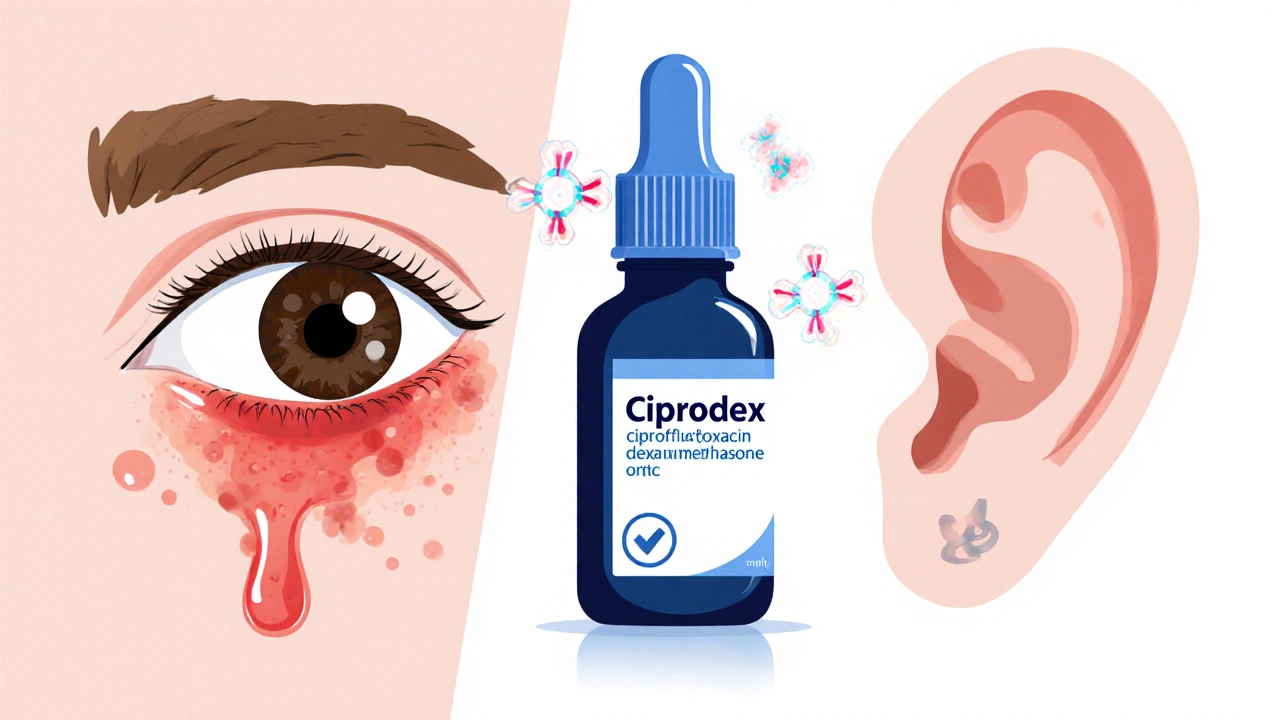
Ciprodex combines an antibiotic and steroid to treat ear and eye infections, but cheaper, safer alternatives exist. Learn which options work best based on your condition, cost, and medical history.
Read More