
When you take warfarin, a blood thinner used to prevent clots in people with atrial fibrillation, artificial heart valves, or a history of deep vein thrombosis. Also known as Coumadin, it works by slowing down your body’s ability to form clots. But if you drink alcohol, even in small amounts, you’re changing how warfarin behaves in your body — and that can be dangerous.
Alcohol affects warfarin in two ways. First, it can make warfarin stronger, increasing your risk of bleeding — think nosebleeds, bruising easily, or worse, internal bleeding. Second, heavy or binge drinking can damage your liver, which is the main organ that processes warfarin. If your liver can’t do its job right, warfarin builds up in your system, and your INR (the test that measures how long it takes your blood to clot) can spike. A 2023 study in the Journal of Thrombosis and Haemostasis found that people who drank more than three drinks a day had a 40% higher chance of serious bleeding compared to non-drinkers on warfarin. Even one drink a day can mess with your INR stability, especially if you’re not consistent.
It’s not just about how much you drink — it’s about how often. Having a beer every night is riskier than having two drinks on a weekend. Your body doesn’t get a chance to reset. And if you suddenly stop drinking after a long stretch, your INR can drop fast, making you more prone to clots. That’s why consistency matters more than moderation. If you drink, tell your doctor. Don’t assume they know. Bring your INR logs to every appointment. Some people do fine with one drink a day, but only if their INR stays steady and their liver is healthy. Others can’t risk even a glass of wine. Your situation is unique.
Warfarin doesn’t play nice with other things either. That’s why you’ll find posts here about drug interactions, how certain foods, supplements, and medications can change how warfarin works, and why Coumadin, the brand name for warfarin isn’t always the best choice anymore. You’ll also see guides on how to manage blood thinners safely when traveling, how to spot hidden risks in supplements, and why some people react differently to generics. This isn’t about fear. It’s about control. You’re not giving up your life — you’re learning how to live smarter with your medication.
Below, you’ll find real-world advice from people who’ve been there — how to track your intake, what to ask your pharmacist, and when to skip the drink entirely. No fluff. Just what works.
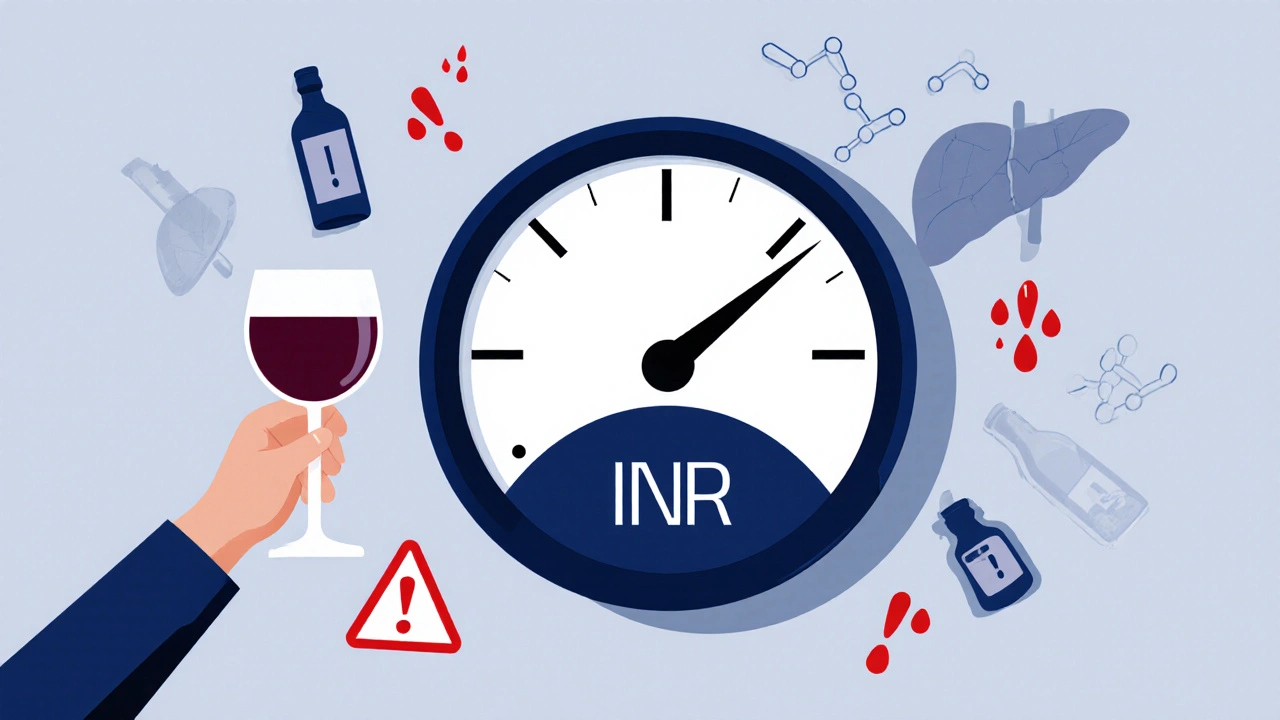
Alcohol can cause dangerous spikes in INR levels for people on warfarin, increasing bleeding risk significantly. Learn how drinking affects blood thinners, what limits are safe, and what symptoms to watch for.
Read More