
When you pick up a generic pill, you might wonder if it’s really the same as the brand-name version. That’s where AB rating, a classification system used by the FDA to indicate therapeutic equivalence between brand-name and generic drugs. Also known as therapeutic equivalence code, it tells pharmacists and doctors whether a generic can be safely swapped without changing how the drug works in your body. Not all generics get an AB rating—only those proven to deliver the same amount of active ingredient at the same rate as the original.
The AB rating, a classification system used by the FDA to indicate therapeutic equivalence between brand-name and generic drugs. Also known as therapeutic equivalence code, it tells pharmacists and doctors whether a generic can be safely swapped without changing how the drug works in your body. isn’t just a label—it’s a safety net. For drugs like levothyroxine, a thyroid hormone replacement used to treat hypothyroidism or warfarin, a blood thinner with a narrow window between effective and dangerous doses, even tiny differences in absorption can cause big problems. That’s why these drugs are closely watched. If a generic doesn’t match the brand exactly in how fast or how much it enters your bloodstream, it won’t get an AB rating. You’ll see codes like BX instead, meaning it’s not considered interchangeable.
Most people switch to generics without issue, and the system works well for the majority of medications. But if you’ve ever felt different after switching—more tired, more anxious, or just not quite right—it might not be in your head. Differences in inactive ingredients like fillers, dyes, or coatings can affect how your body handles the drug, especially if you have sensitivities. That’s why some patients stick with one brand or generic manufacturer, even if it costs more. The FDA doesn’t require manufacturers to test every batch against the original every time, so small variations can creep in over time.
Understanding AB rating helps you ask better questions. When your pharmacist hands you a new pill, check the label. If it says AB, you’re likely getting a direct substitute. If it says BX or has no rating, talk to your doctor. This isn’t about brand loyalty—it’s about control over your treatment. The posts below dive into real cases where generic switches caused unexpected side effects, why some people react differently to the same drug, and how to spot when a medication change might need attention. You’ll also find guides on managing drugs with narrow therapeutic indexes, avoiding hidden interactions, and making smart choices when cost and safety collide.
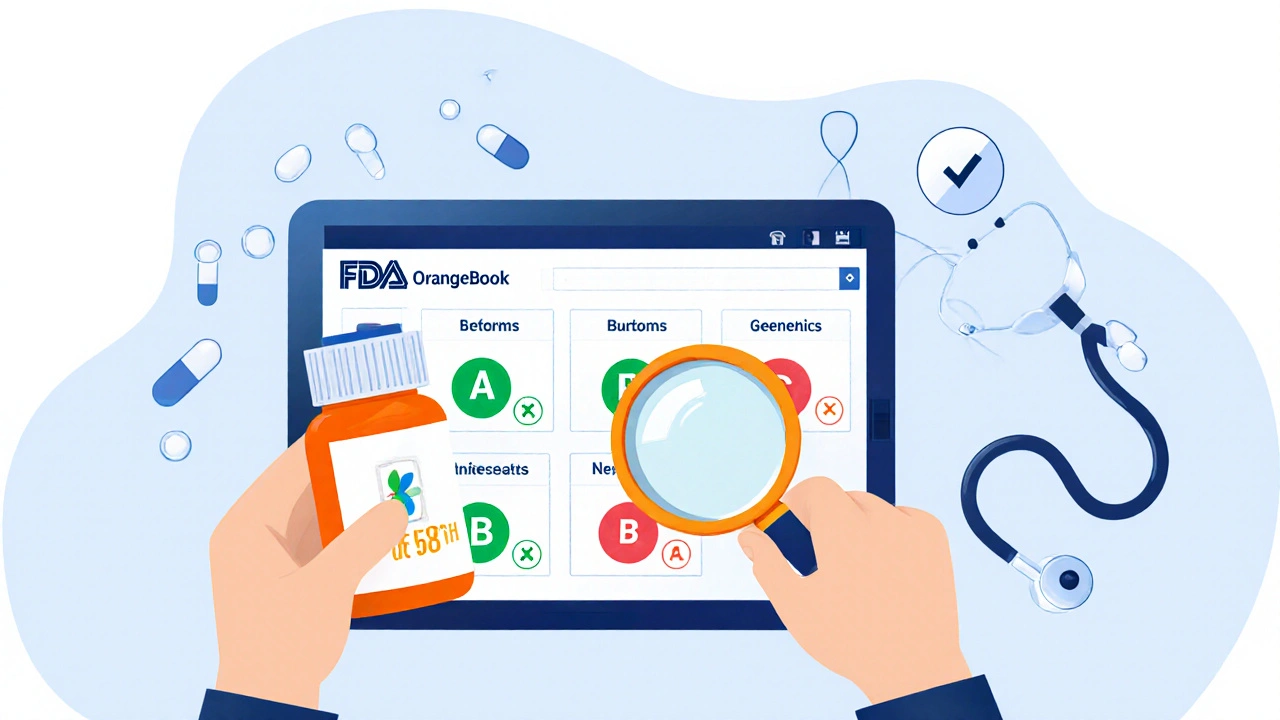
Learn how to use the FDA Orange Book to verify if a generic drug is truly equivalent to its brand-name version. Understand TE codes, AB ratings, and common mistakes to avoid unsafe substitutions.
Read More