
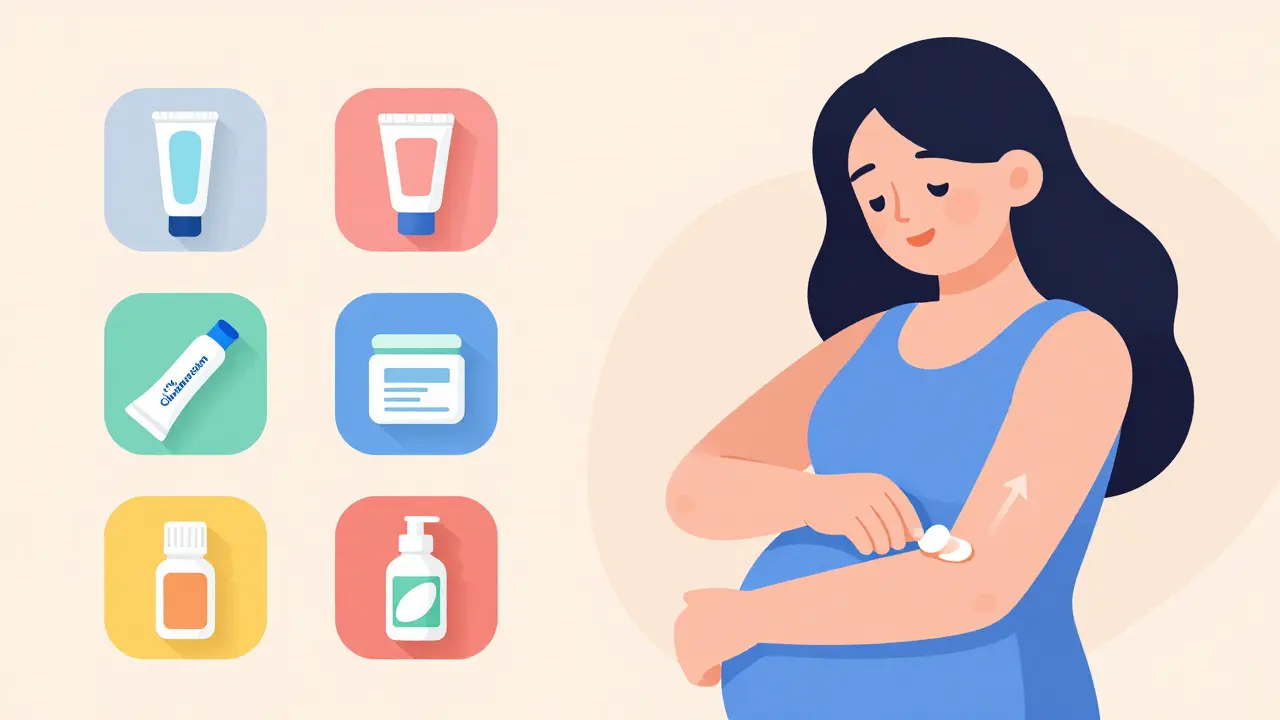
What You Need to Know About Topical Medications During Pregnancy
Many pregnant women worry about using creams, lotions, or acne treatments because they’re afraid of harming their baby. The good news? Most topical medications don’t get into your bloodstream in significant amounts. That means they’re often much safer than pills or injections. But not all topicals are created equal. Some are perfectly fine. Others carry risks-even if they’re just applied to your skin.
Why Topical Medications Are Usually Safer Than Pills
When you swallow a pill, it goes straight into your blood and travels to your baby. Topical creams? Only a tiny fraction gets absorbed-usually between 1% and 10%, depending on the product, where you apply it, and how much you use. For example, putting hydrocortisone cream on your forearm might result in less than 1% absorption. But if you rub it on your face, armpits, or groin, your body absorbs more. That’s why doctors tell you to use stronger creams sparingly and avoid applying them to large areas or thin skin.
Safe Topical Treatments for Common Pregnancy Skin Issues
Pregnancy brings skin changes-eczema flares, acne, yeast infections, and dark patches (melasma). Here’s what’s considered safe based on current medical guidelines:
- Hydrocortisone cream (1%): A mild steroid that’s safe for short-term use on eczema or bug bites. Avoid using it on large areas or for more than a week without checking with your provider.
- Clindamycin and erythromycin gels: Antibiotics used for acne. Both are Category B, meaning animal studies showed no harm, and human data supports their safety. They’re often first-line choices for pregnancy acne.
- Benzoyl peroxide (5% or less): A common acne treatment that kills bacteria and dries out pimples. It’s Category C, but since it barely enters your blood, it’s widely recommended by dermatologists and OB-GYNs.
- Clotrimazole, miconazole, nystatin: Antifungal creams for yeast infections. These are first-line choices during pregnancy. Avoid econazole in the first trimester.
- Azelaic acid (15%): Great for melasma (the pregnancy mask). It’s Category B and doesn’t absorb much. Many women report clear skin with no side effects.
- Acyclovir cream: Safe for cold sores or herpes outbreaks. It’s minimally absorbed and has been used safely for decades.
Topical Medications to Avoid During Pregnancy
Some products sound harmless-but aren’t. These should be avoided completely:
- Topical retinoids: This includes adapalene (Differin), tretinoin (Retin-A), and tazarotene. Even though they’re applied to the skin, case reports link them to birth defects when used in early pregnancy. The American College of Obstetricians and Gynecologists (ACOG) says to stop using them before trying to conceive.
- Topical NSAIDs: Creams with diclofenac, ibuprofen, or ketoprofen. While they absorb less than pills, they still carry a risk of causing premature closure of a fetal blood vessel (ductus arteriosus) after 30 weeks. Avoid them in the third trimester.
- Podofilox and podophyllin resin: Used for genital warts. These can be toxic to the fetus and should never be used during pregnancy.
- Strong corticosteroids: Clobetasol, betamethasone, and other high-potency steroids can affect fetal growth if used long-term or over large areas. Use only if absolutely necessary and under medical supervision.
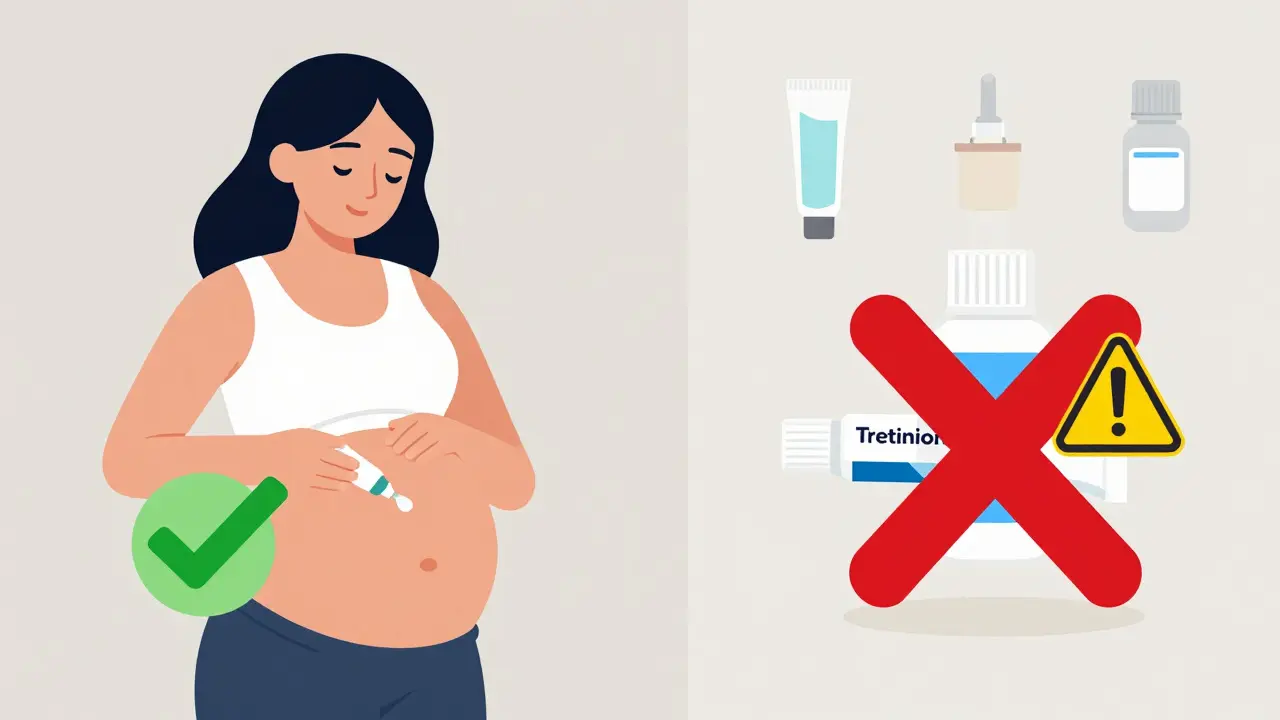
What About Over-the-Counter Products?
Just because something’s sold without a prescription doesn’t mean it’s safe in pregnancy. Many OTC moisturizers, anti-aging creams, and spot treatments contain hidden ingredients like retinol, salicylic acid (in high doses), or hydroquinone. Always check the label. Salicylic acid in low concentrations (2% or less) in cleansers or toners is generally okay. But avoid peels, high-strength serums, or daily use of anything with salicylic acid over 5%. Hydroquinone, often found in skin-lightening creams, has limited safety data and should be avoided.
How to Use Topical Products Safely
Even safe creams can cause problems if used the wrong way. Follow these rules:
- Use the smallest amount needed. A pea-sized dab is often enough for a palm-sized area.
- Avoid applying to broken skin, open wounds, or large areas. More skin contact = more absorption.
- Don’t use strong steroids on your face, neck, or groin unless your doctor says it’s okay.
- Wash your hands after applying cream to avoid accidentally transferring it to your eyes or mouth.
- Stop using any product if you notice redness, burning, or swelling. That’s a sign of irritation or allergy.
What to Do If You Used Something Unsafe by Accident
If you used tretinoin or a topical NSAID before realizing you were pregnant, don’t panic. Most cases don’t result in birth defects. The risk is low, especially with topical use. But tell your doctor right away. They can check your medical history, review the product, and decide if you need extra monitoring. Many women have accidentally used retinoids early on and gone on to have healthy babies. The key is early communication-not guilt.
Why Product Labels Can Be Confusing
Since 2015, the FDA replaced the old A, B, C, D, X pregnancy categories with detailed narrative sections in drug labels. But many companies haven’t updated their packaging, and doctors still refer to the old system. That’s why you might see a cream labeled “Category C” on the box, but the doctor says it’s safe. The newer labels give more context: how much is absorbed, what animal studies showed, and whether any human cases reported harm. If you’re unsure, ask your provider to check the latest prescribing information or call the InfantRisk Center (they handle over 1,200 pregnancy medication questions every month).
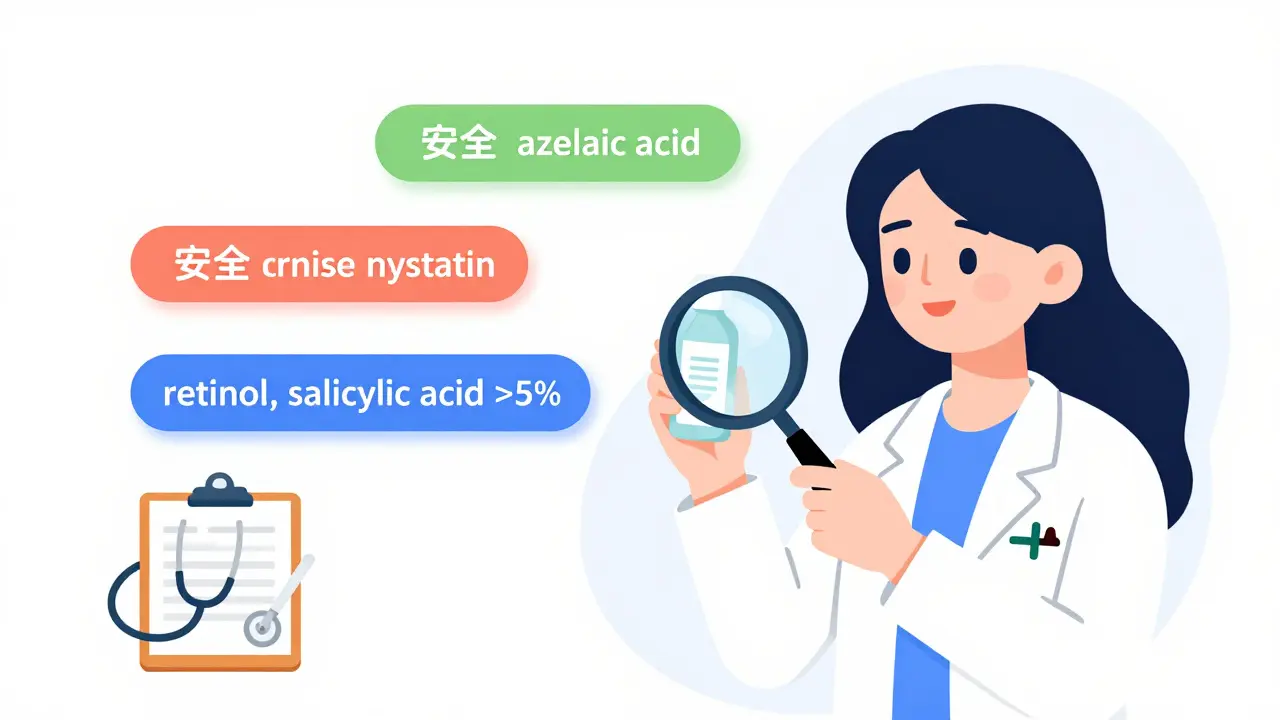
Real Stories: What Other Pregnant Women Say
On parenting forums, women share mixed experiences. One user on Reddit said her dermatologist prescribed clindamycin for her pregnancy acne-and she saw results in two weeks with no side effects. Another woman on BabyCenter shared how she accidentally used a retinoid cream before knowing she was pregnant. She panicked for weeks, but her ultrasound showed no issues. She went on to have a healthy baby. Then there’s the story of a woman who used a high-strength steroid cream for months to treat psoriasis. Her baby was born smaller than expected. Her doctor linked it to the long-term steroid use.
These stories show that while most topicals are safe, individual results vary. The key is knowing what’s risky, using products wisely, and talking to your care team.
When to See a Dermatologist
If your skin condition isn’t improving with OTC products, or if you’re unsure about what to use, don’t wait. See a dermatologist who understands pregnancy. About 82% of OB-GYNs consult dermatologists for skin issues in pregnant patients-because this is a specialized area. A dermatologist can recommend safe alternatives, adjust your routine, and help you avoid products that could cause harm.
Bottom Line: You Don’t Have to Suffer
Pregnancy doesn’t mean giving up skincare or treating infections. You can manage acne, eczema, yeast infections, and melasma safely. Stick to the proven, low-absorption options. Avoid retinoids, strong steroids, and NSAIDs late in pregnancy. Always check labels. And when in doubt, ask your doctor. Most topical treatments won’t hurt your baby-but the wrong one might. Knowledge is your best protection.
Can I use hydrocortisone cream while pregnant?
Yes, 1% hydrocortisone cream is considered safe for short-term use during pregnancy. It’s a mild steroid with very low absorption through the skin. Use it only on small areas, avoid the face and groin unless directed by your doctor, and don’t use it for more than a week without checking in with your provider.
Is benzoyl peroxide safe for acne during pregnancy?
Yes, benzoyl peroxide is generally safe. It doesn’t absorb much into the bloodstream, and studies haven’t linked it to birth defects. Most dermatologists recommend 5% or lower concentrations. Avoid high-dose gels or treatments that combine it with retinoids.
Can I use retinol cream if I’m pregnant?
No. Retinol is a form of vitamin A and a derivative of retinoids. Even though it’s topical, it can still be absorbed and has been linked to birth defects in early pregnancy. Stop using retinol products before trying to conceive and avoid them entirely during pregnancy and breastfeeding.
Are antifungal creams safe for yeast infections in pregnancy?
Yes, clotrimazole, miconazole, and nystatin are first-line treatments for yeast infections during pregnancy. They’re applied locally and don’t enter your bloodstream in harmful amounts. Avoid econazole in the first trimester unless your doctor approves it.
Is it safe to use topical NSAIDs like diclofenac gel during pregnancy?
Avoid topical NSAIDs after 30 weeks. While they absorb less than oral versions, they still carry a risk of causing premature closure of the ductus arteriosus-a vital blood vessel in the baby’s heart. If you need pain relief, talk to your doctor about safer alternatives like acetaminophen or physical therapy.
What should I do if I used a risky cream before knowing I was pregnant?
Stop using the product immediately and contact your OB-GYN or midwife. Don’t panic-most accidental exposures don’t lead to problems. Your provider will review the product, timing, and dosage, and may recommend extra monitoring like a detailed ultrasound. The risk is low, especially with topical use, but it’s important to get professional advice.
Can I use azelaic acid for melasma during pregnancy?
Yes, azelaic acid (15%) is one of the safest and most effective treatments for melasma (pregnancy mask). It’s Category B, meaning animal studies showed no harm, and human use has been well-documented. Many women see improvement in dark patches with no side effects.
Do I need to stop using all skincare products when pregnant?
No. You don’t need to strip your routine. Stick to gentle cleansers, fragrance-free moisturizers, and sunscreen. Avoid retinoids, hydroquinone, high-dose salicylic acid, and strong chemical peels. Most basic skincare is safe-just check labels and avoid anything with unfamiliar active ingredients.
Next Steps: What to Do Today
Take a quick inventory of your skincare and medication cabinet. Look for any products with retinol, tretinoin, adapalene, salicylic acid over 5%, hydroquinone, or NSAIDs like diclofenac. If you find any, stop using them. Replace them with safe alternatives like azelaic acid for dark spots or clindamycin for acne. If you’re unsure about a product, take a picture of the ingredient list and ask your OB-GYN or pharmacist. Don’t wait until your next appointment-your skin and your baby’s health are worth acting on now.


Post A Comment