
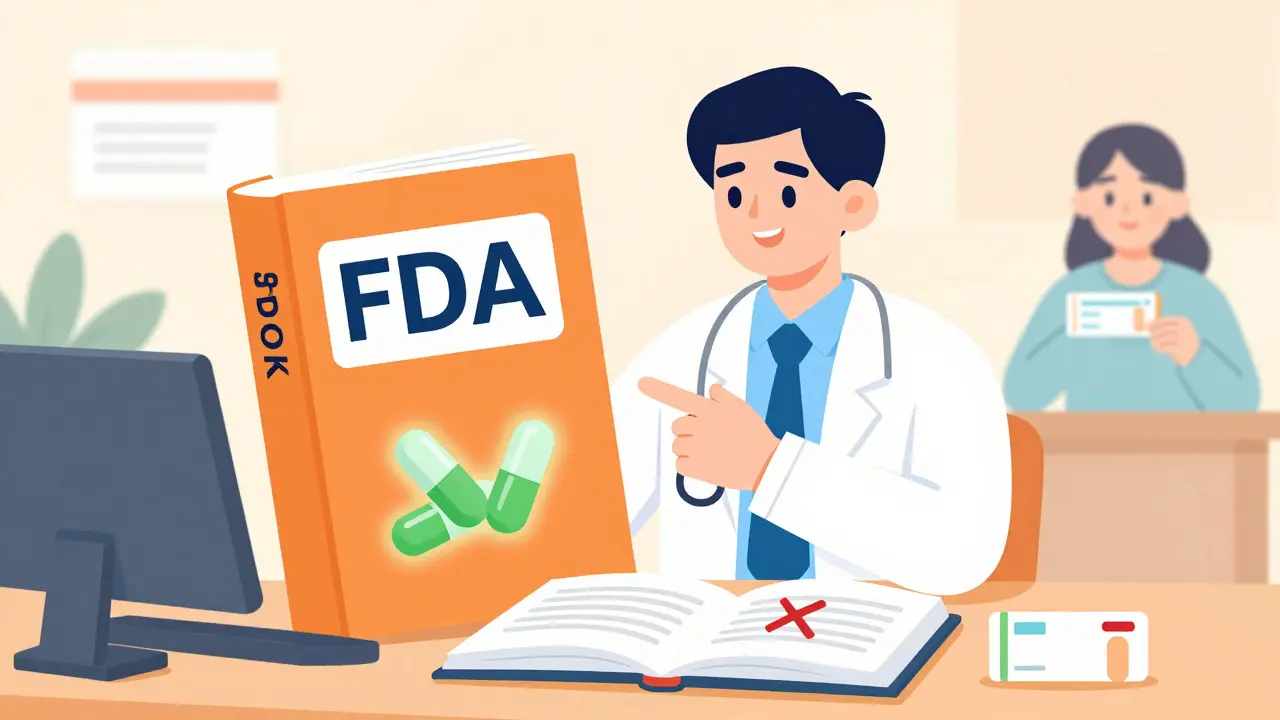
Most prescriptions in the U.S. are for generic drugs - 90% of them, to be exact. Yet many doctors still hesitate to prescribe them. Why? Not because generics don’t work. They do. But because of misinformation, outdated beliefs, and a lack of clear, practical education. The gap isn’t in the science - it’s in the classroom, the clinic, and the conversation with patients.
Why Clinicians Still Doubt Generics
Even though the FDA requires generic drugs to have the same active ingredient, strength, dosage form, and route of administration as the brand-name version, many clinicians still worry. A 2017 study found that 68% of physicians had at least some doubt about whether generics were truly equivalent. That’s not just a small concern - it’s a widespread belief that affects prescribing habits. The truth? Generics must meet strict bioequivalence standards. For a generic to be approved, its absorption rate in the body - measured by AUC and Cmax - must fall within 80% to 125% of the brand-name drug. That’s not a wide margin. It’s a tight, scientifically proven range. The FDA doesn’t approve generics that are even slightly less effective. And yet, 27% of prescribers still think generics might contain 20-25% less active ingredient. That’s not just wrong - it’s dangerously misleading. Another myth? Inactive ingredients. Many doctors believe that if the filler, dye, or coating is different, the drug won’t work the same. But inactive ingredients don’t affect how the medicine works - only how it’s absorbed. And even then, the FDA requires that these differences don’t change safety or effectiveness. A 2020 survey showed 45% of prescribers got this wrong.The Real Cost of Not Prescribing Generics
It’s not just about belief. It’s about outcomes. When doctors don’t prescribe generics, patients pay more. And when patients pay more, they skip doses. Or don’t fill the prescription at all. Studies show patients are 35% more likely to start a new medication if it’s generic. That’s huge. In chronic conditions like high blood pressure, diabetes, or depression, adherence isn’t optional - it’s life or death. A patient on a $300 brand-name statin might switch to a $10 generic. But if the doctor doesn’t explain why that switch is safe, the patient might assume it’s a downgrade. They might stop taking it. That’s when hospital visits, heart attacks, and strokes start creeping up. And it’s not just the patient. The system pays too. In 2022, generic drugs saved the U.S. healthcare system $2.2 trillion over the past decade. That’s not a number. That’s thousands of lives, thousands of avoided complications, thousands of families spared financial ruin.What Clinicians Don’t Know About the FDA’s Orange Book
The FDA’s Orange Book is the official list of all approved drug products with therapeutic equivalence evaluations. Every generic drug gets a rating: A means it’s equivalent. B means it’s not. Most generics are rated A. But many clinicians don’t know how to read it. For example, levothyroxine - a common thyroid drug - has multiple generic versions. Some are rated AB1, others AB2. That doesn’t mean one is better. It just means they’re bioequivalent to different brand-name references. But if a doctor doesn’t understand this, they might avoid generics altogether, thinking they’re inconsistent. In reality, switching between AB-rated generics is safe. The FDA has confirmed this repeatedly. The problem? Only 22% of prescribers even know the Orange Book exists. And even fewer know how to use it. That’s not a gap in knowledge - it’s a gap in training.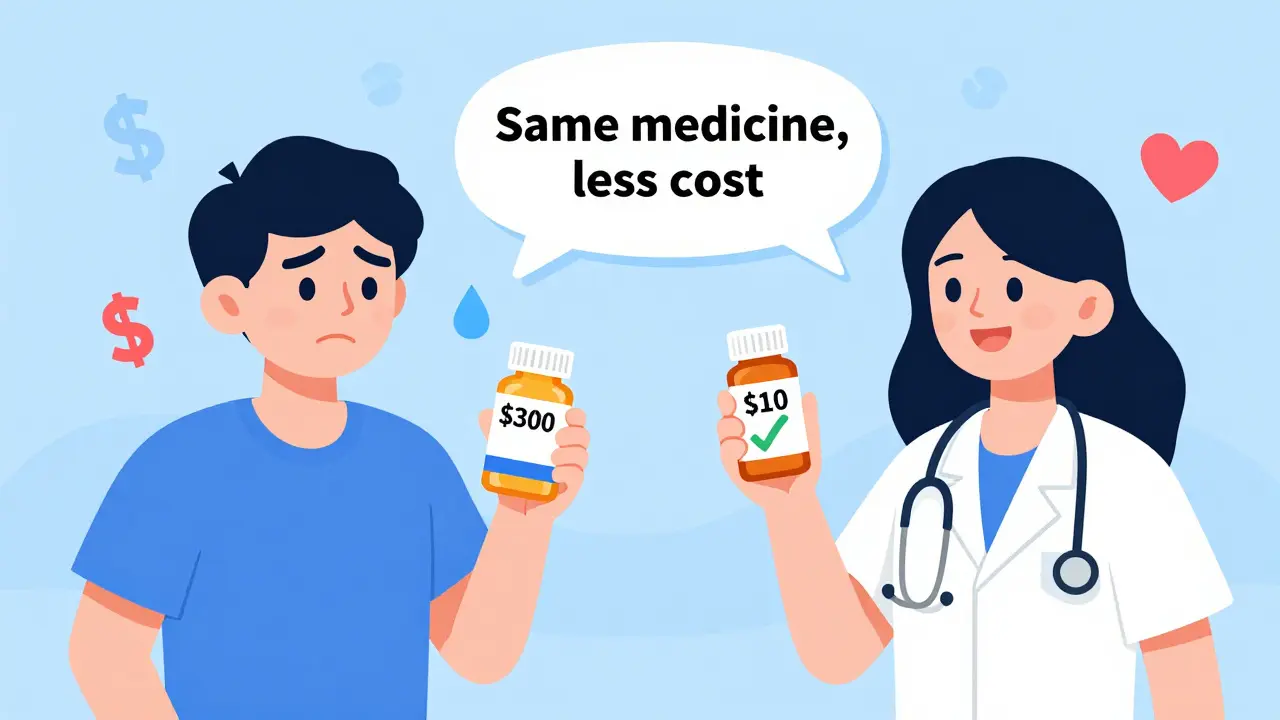
How Education Actually Changes Behavior
Simply handing out a PDF won’t work. A 2021 study in JAMA Internal Medicine compared two groups of doctors: one got a static fact sheet. The other got interactive, case-based training. Six months later, the group that learned through real patient scenarios had 42% higher knowledge retention. They didn’t just remember facts - they changed how they talked to patients. One key finding? When doctors explicitly say, “This generic is just as safe and effective as the brand,” patient-reported side effects drop by 18%. That’s not placebo. That’s the nocebo effect - when fear of a drug causes real symptoms. Education stops that fear in its tracks. At the University of California San Francisco, a targeted education program cut brand-name statin prescriptions by 37% in just one year. How? They didn’t just teach pharmacology. They trained doctors to have conversations. They showed them how to say, “I’ve prescribed this generic to hundreds of patients. It works the same. And it’ll save you $200 a month.”Where Education Falls Short
Not all programs work. In Tennessee, a Medicaid program spent $1.2 million on physician education and saw only an 8% increase in generic prescribing. Why? The materials weren’t tied to the electronic health record. Doctors didn’t see reminders when they were writing prescriptions. They didn’t get feedback. There was no integration. Time is another barrier. In a 2021 AMA survey, 89% of physicians said they didn’t have time to learn more about generics. But education doesn’t have to be long. Four 90-minute sessions spaced over six months boosted retention by 52% compared to one-hour lectures. Short, repeated, relevant - that’s the formula. And then there’s the biologic confusion. Biosimilars aren’t generics. They’re complex, large-molecule drugs that mimic biologics like Humira or Enbrel. Only 31% of providers could correctly explain the difference in a 2023 FDA survey. That’s a problem. Prescribing a biosimilar like a generic can lead to real clinical errors.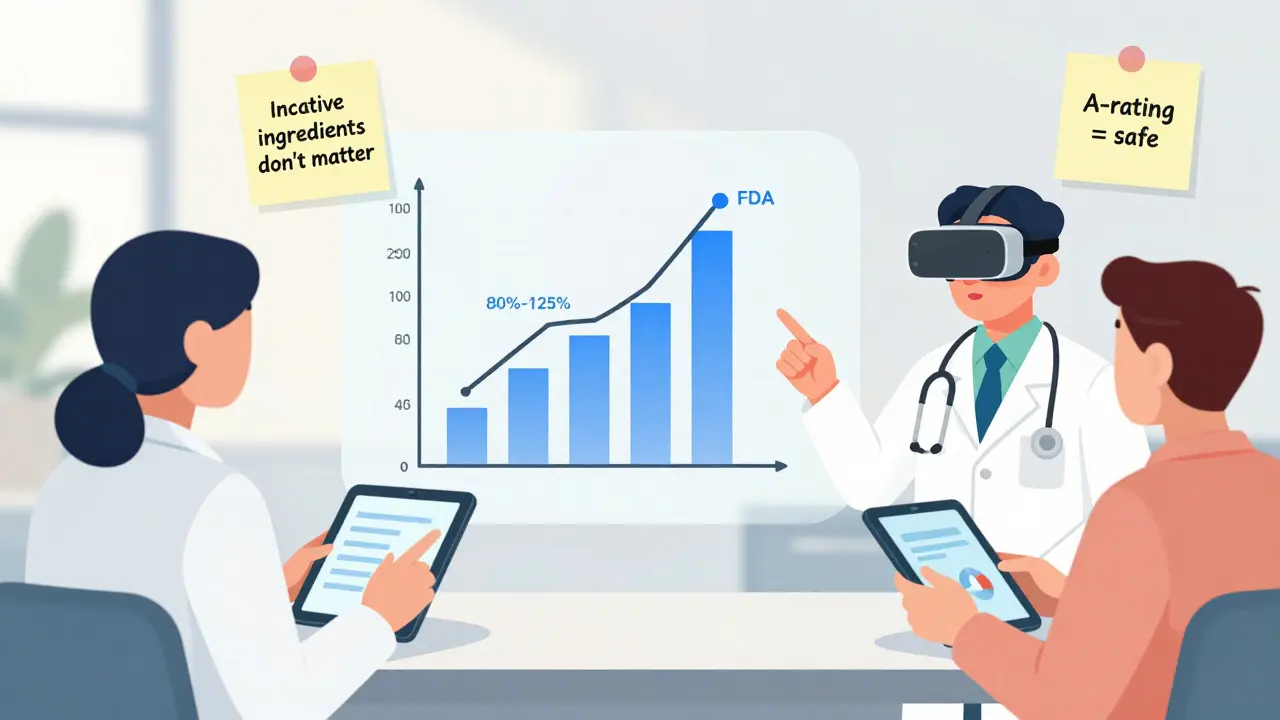
What Clinicians Need to Know - and How to Learn It
Here’s what every prescriber should understand:- Generics must have the same active ingredient, strength, dosage form, and route of administration as the brand.
- Bioequivalence is proven with a 90% confidence interval of 80-125% for AUC and Cmax.
- Inactive ingredients can differ - but they cannot affect safety or efficacy.
- The FDA’s Orange Book uses A and B ratings. Only A-rated generics are interchangeable.
- Therapeutic substitution rules vary by state. Thirty-four states let pharmacists substitute without asking the doctor.
- When you say, “This is just as good,” patients believe you - and take their meds.
- Download the FDA’s Generic Drugs Stakeholder Toolkit - it’s free and includes real-world talking points.
- Use the Orange Book online to check ratings before prescribing.
- Ask your pharmacy: “What’s the generic name for this?” - then use it in your notes.
- Join a CME course on generics. Many are now available online for free.
- Try the new FDA VR modules - they simulate patient conversations and help you practice.
The Future Is Personalized
The next wave of education isn’t one-size-fits-all. UnitedHealthcare’s 2024 pilot uses AI to track which doctors prescribe few generics. Then it sends them personalized videos, case studies, and reminders - right inside their EHR. The result? A 28% increase in generic prescribing. By 2025, Medicare’s MIPS program will start measuring generic prescribing rates as a quality metric. That means your prescribing habits will affect your reimbursement. It’s no longer optional. It’s accountability.What You Can Do Tomorrow
You don’t need a big program. You don’t need a grant. You just need to change one habit. Start by writing the generic name first in your prescription notes. Say it out loud to your patient. “I’m prescribing metoprolol, the generic version of Lopressor. It’s the same drug, cheaper, and just as safe.” Then check the Orange Book once a week. Just one drug. See if it’s rated A. Notice how many are. And if a patient asks, “Is this the same?” - don’t say, “It’s FDA-approved.” Say, “Yes. It’s the same medicine. I’ve prescribed it to dozens of my patients. They feel the same. And they save money.” That’s the power of education. Not just knowing. But saying.Are generic drugs really as effective as brand-name drugs?
Yes. The FDA requires generics to have the exact same active ingredient, strength, dosage form, and route of administration as the brand-name drug. They must also prove bioequivalence - meaning their absorption in the body falls within 80-125% of the brand. This isn’t a guess. It’s tested in clinical trials. Over 90% of prescriptions in the U.S. are for generics, and they’ve been safely used for decades.
Why do some doctors still prefer brand-name drugs?
Many doctors were trained when generics were newer, and outdated myths persist. Some believe inactive ingredients affect performance, or that manufacturing standards are lower. Others are simply used to writing brand names and don’t know how to switch. A 2020 survey found that 62% of physicians still use brand names most of the time - not because they think it’s better, but because it’s habitual.
Can pharmacists substitute generics without a doctor’s permission?
In 34 states, yes. Pharmacists can substitute an FDA-approved generic for a brand-name drug unless the prescriber writes “dispense as written” or “do not substitute.” But even in those states, patients often don’t know this - and may refuse the generic if they’re not prepared. That’s why provider education matters: if the doctor explains it upfront, the patient is more likely to accept the switch.
Are biosimilars the same as generics?
No. Generics are copies of small-molecule drugs - like metformin or lisinopril - made from chemical compounds. Biosimilars are copies of large, complex biological drugs - like Humira or Enbrel - made from living cells. They’re not exact copies, but they’re very similar and approved through a different process. Only 31% of providers could correctly explain this difference in a 2023 FDA survey. Confusing them can lead to prescribing errors.
How can I learn more about generics without spending hours?
Start with the FDA’s free Generic Drugs Stakeholder Toolkit. It includes short fact sheets, patient handouts, and prescriber guides. Spend 15 minutes a week reading one section. Use the Orange Book to check one drug you prescribe regularly. Join a free CME module - many are now offered by medical societies and take under an hour. The goal isn’t to become an expert. It’s to become confident enough to explain it to your patient.
Will switching to generics hurt my patients?
Not if you do it right. Studies show patients on generics have better adherence - they take their meds more consistently. That leads to fewer hospital visits, fewer complications, and better outcomes. The only risk is if you don’t explain the switch. If a patient thinks they’re getting a “weaker” version, they may stop taking it. That’s why your words matter more than the pill.


Post A Comment