
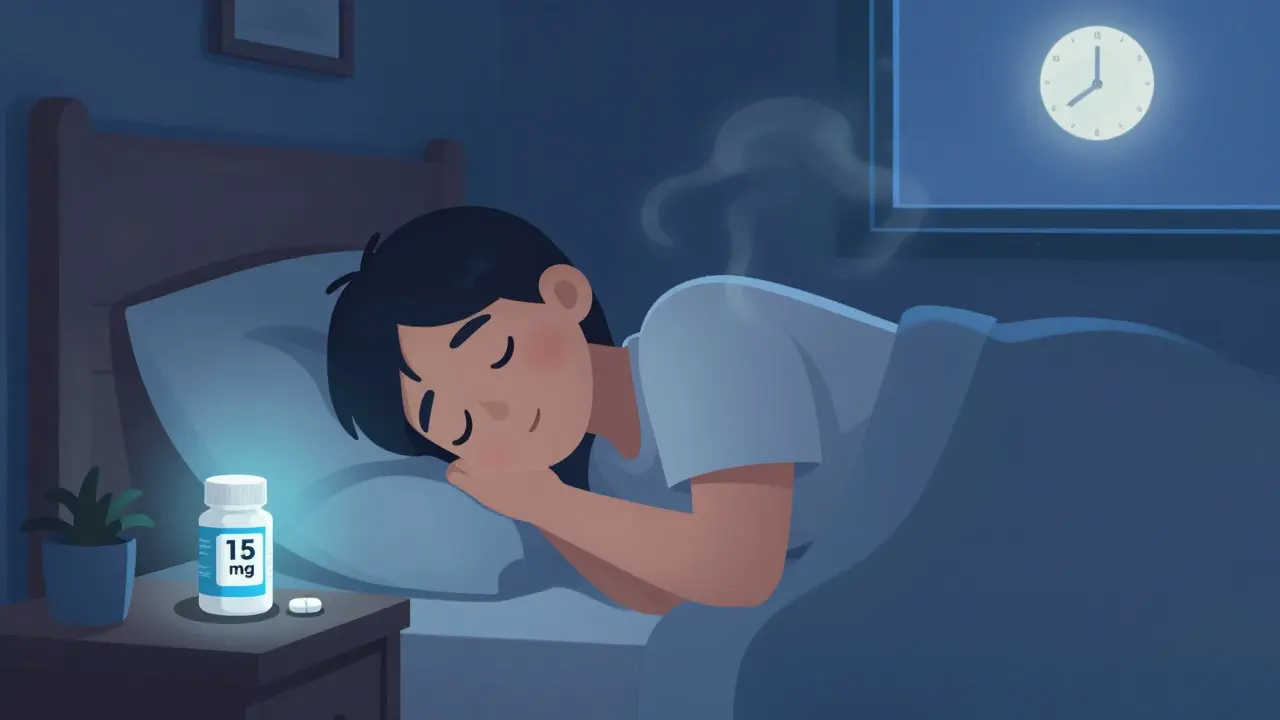
Mirtazapine Dose-Sedation Calculator
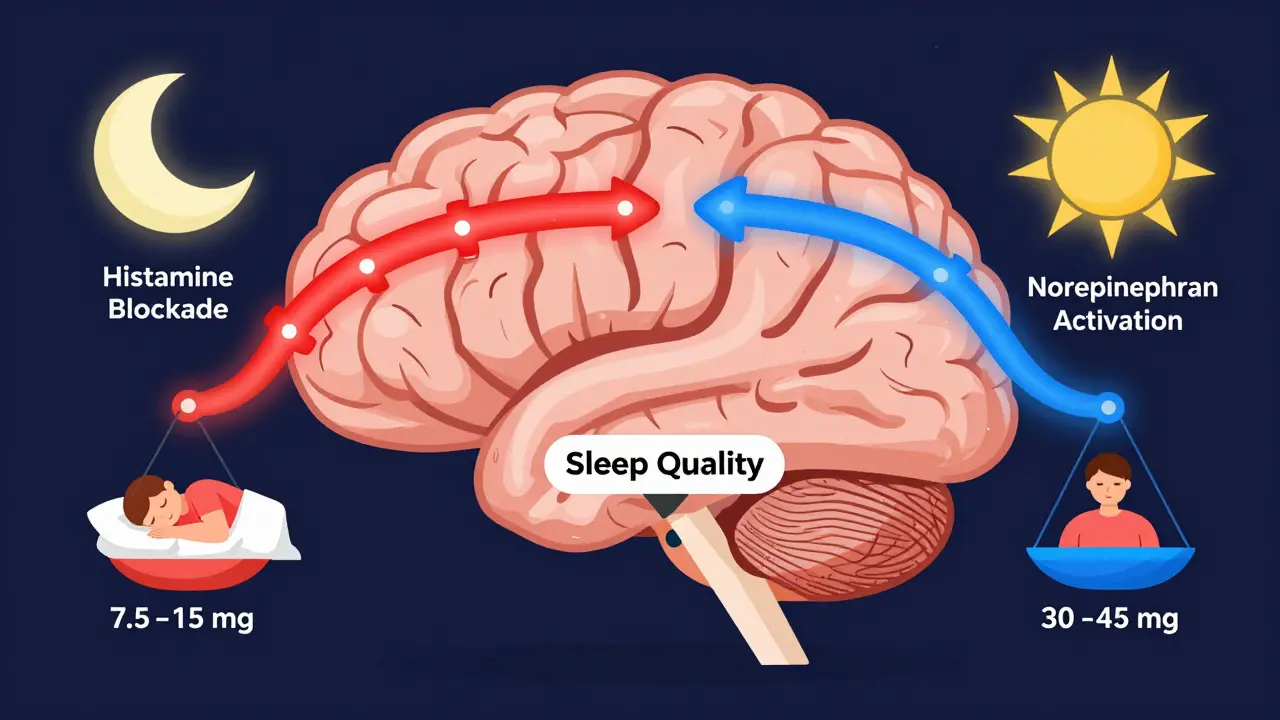
Mirtazapine works differently than other antidepressants. Lower doses (7.5mg-15mg) produce stronger sedation while higher doses (30mg+) reduce sleepiness but may increase daytime grogginess.
Many people start taking mirtazapine for depression and quickly realize one thing: they feel like they’ve been hit by a truck by mid-afternoon. It’s not just fatigue-it’s heavy, brain-fogging drowsiness that makes driving, working, or even talking feel impossible. But here’s the twist: the very thing that makes mirtazapine feel so overwhelming during the day is also what makes it work so well for sleep. The key isn’t avoiding sedation-it’s controlling it.
Why Mirtazapine Makes You So Sleepy
Mirtazapine doesn’t work like most antidepressants. While SSRIs like sertraline or fluoxetine mostly tweak serotonin levels, mirtazapine blocks histamine receptors in your brain. Histamine is the chemical that keeps you awake. When it’s blocked, you get sleepy-fast. This isn’t a side effect; it’s the main reason the drug was designed this way. The FDA label confirms it: mirtazapine is a potent H1 receptor antagonist, and that’s exactly why it knocks you out.What makes it different from other sleep aids? Unlike benzodiazepines or even trazodone, mirtazapine doesn’t just help you fall asleep-it helps you stay asleep. In clinical studies, people taking 15 mg of mirtazapine fell asleep 28.7 minutes faster than those on placebo. That’s not minor. That’s life-changing for someone who’s spent years staring at the ceiling.
The Strange Dose-Sedation Paradox
Here’s where things get counterintuitive. Most drugs get stronger as you increase the dose. Mirtazapine does the opposite when it comes to sleepiness.At 7.5 mg or 15 mg, the histamine-blocking effect dominates. You feel deeply sedated-perfect for bedtime. But when you jump to 30 mg or 45 mg, something else kicks in: noradrenaline activity. This part of the drug starts fighting back against the sleepiness. The result? You get more antidepressant power, but less sleep aid.
Many patients make this mistake: they start at 15 mg, feel great sleep, but then their depression doesn’t fully lift. So they up the dose to 30 mg hoping for better mood results-and end up sleeping worse. Why? Because the sedative effect drops by 30-40% at higher doses. A 2022 study in the Journal of Clinical Psychopharmacology showed that 30 mg users reported less sleep quality than those on 15 mg, even though their depression improved more.
Bedtime Dosing: The Only Smart Way to Take It
There’s no gray area here: if you’re taking mirtazapine for depression with insomnia, you take it at bedtime. Always. No exceptions.Why? Because mirtazapine hits peak levels in your blood about 2 hours after you swallow it. If you take it at 10 p.m., you’re hitting your deepest sleep phase right when the drug is strongest. That’s ideal. If you take it at 8 a.m., you’re dumping a powerful sedative into your system right when you need to be alert.
The American Psychiatric Association’s 2020 guidelines say it clearly: start with 7.5-15 mg at bedtime for patients with both depression and insomnia. Most psychiatrists follow this. In a 2022 Medscape survey, 85% of prescribers said this was their first move.
And it works. Reddit threads from over 1,200 users show that 68% of people on 15 mg at night reported “life-changing” sleep improvement with minimal next-day grogginess. One user wrote: “15 mg at 10 p.m. puts me out until 7 a.m. with no grogginess. I haven’t slept like that since I was 18.”
Daytime Drowsiness: Why It Happens and How to Fix It
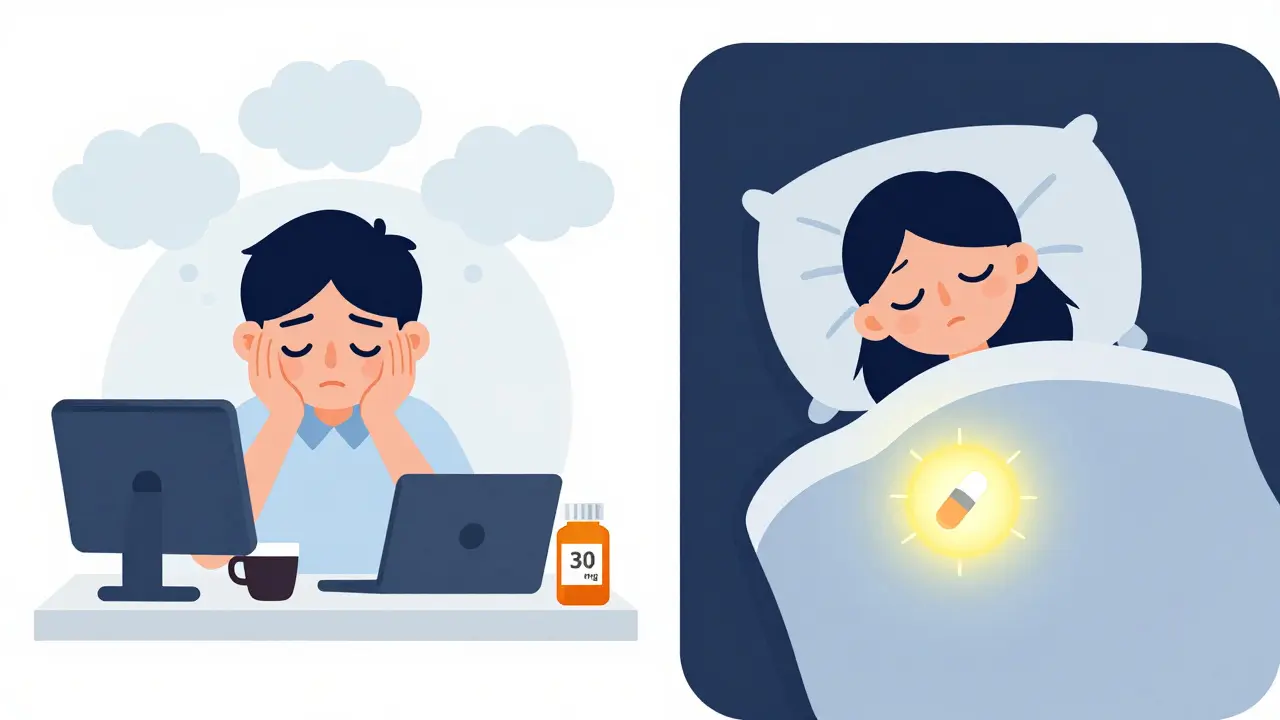
Even with perfect timing, some people still feel foggy through the afternoon. That’s not normal-and it’s fixable.Here’s what causes it:
- Taking too high a dose (30 mg or more)
- Taking it too late (after 11 p.m.)
- Not giving your body time to adjust
Most people don’t realize that the sedation fades over time. In 7-14 days, your brain adapts. This is called tachyphylaxis. A 2018 case study tracked a patient who went from sleeping 10 hours straight to 7 hours after just 10 days on mirtazapine-even though the dose stayed the same. That’s not tolerance in the addiction sense; it’s your brain recalibrating.
But if you’re still groggy past two weeks, here’s what to do:
- Drop the dose to 7.5 mg. In clinical trials, 63% of patients who reduced from 15 mg to 7.5 mg saw less daytime drowsiness without losing sleep benefits.
- Move your dose earlier. If you’re taking it at midnight, try 9:30 p.m. That way, peak levels hit before deep sleep, not during REM.
- Don’t assume higher dose = better mood. At 30 mg, you might feel more alert during the day, but you’ll lose the sleep advantage. That’s why 15 mg is the sweet spot for most.
GoodRx reviews from over 1,000 users show that 32% of people on 30 mg or higher reported grogginess lasting until noon. That’s not acceptable. That’s a dosing error.
Mirtazapine vs. Other Sleep-Inducing Antidepressants
How does mirtazapine stack up against other options?Compared to SSRIs like sertraline, mirtazapine is far more sedating. Sertraline barely touches histamine receptors-so it doesn’t help sleep much. But it also doesn’t cause drowsiness. If you need energy during the day, SSRIs win. If you need sleep, mirtazapine wins.
Trazodone is often used off-label for sleep too. It’s sedating, but it’s weaker than mirtazapine at H1 blockade. Plus, trazodone causes more dizziness, dry mouth, and weird dreams. Mirtazapine? Fewer of those issues.
Amitriptyline, an old tricyclic, is even more sedating than mirtazapine-but it also causes constipation, weight gain, and heart rhythm problems. Not worth it for most.
The real advantage? Sexual side effects. SSRIs cause sexual dysfunction in 30-40% of users. Mirtazapine? Only 2%. That’s huge for long-term adherence.
Who Should Avoid Mirtazapine for Sleep?
It’s not for everyone.- People with sleep apnea: The sedation can worsen breathing pauses.
- Older adults: Increased risk of falls due to dizziness and drowsiness.
- Those with liver problems: Mirtazapine is processed by the liver. High doses can build up.
- People with primary insomnia (no depression): The drug’s long half-life means residual sedation can linger for 24+ hours. Newer sleep drugs like lemborexant are safer here.
And if you’re looking for a quick fix for occasional insomnia? Don’t use mirtazapine. It’s not meant for that. It’s for chronic depression with sleep disruption.
The Bottom Line: Less Is More
Mirtazapine’s sedation isn’t a bug-it’s the feature. But only if you use it right.Start low: 7.5 mg or 15 mg at bedtime. Don’t go higher unless your depression doesn’t improve after 4-6 weeks. Even then, monitor sleep quality. If you’re sleeping less or waking up exhausted, you’re on too much.
Most people don’t need more than 15 mg. The extra 15 mg doesn’t give you more sleep-it steals your daytime clarity. And that’s not a trade-off worth making.
With the right dose and timing, mirtazapine can turn years of sleepless nights into restful, healing sleep. But only if you respect its power-and its limits.
Is it safe to take mirtazapine in the morning?
Taking mirtazapine in the morning is not recommended unless you’re using it solely for depression without sleep issues, and even then, it’s risky. The drug peaks in your system about 2 hours after ingestion, which means you’ll likely feel drowsy during work or driving hours. Morning dosing can cause dangerous daytime sedation, especially at doses above 15 mg. If you must take it in the morning (e.g., due to nighttime dosing causing insomnia), start at 7.5 mg and monitor for grogginess. But bedtime dosing remains the gold standard.
Why does mirtazapine make me sleepy at first but not after a week?
This is called tachyphylaxis-a rapid decrease in response to a drug’s sedative effects. Your brain adapts to the histamine blockade within 7-14 days. The antidepressant effects remain, but the sleepiness fades. That’s normal. It doesn’t mean the drug stopped working. It means your body adjusted. If you still need help sleeping after two weeks, talk to your doctor about staying at a lower dose (7.5-15 mg) or adding a non-pharmacological sleep strategy like CBT-I.
Can mirtazapine cause next-day grogginess even at low doses?
Yes, especially if you take it too late (after 11 p.m.), have a slow metabolism, or take it with alcohol or other sedatives. Even at 7.5 mg, some people feel foggy until noon, particularly if they’re older or have liver issues. The drug has a half-life of 20-40 hours, meaning up to 40% can still be in your system the next day. If grogginess lasts more than 24 hours, reduce the dose or take it earlier at night.
Does mirtazapine help with anxiety as well as depression and sleep?
Yes. Mirtazapine is effective for anxiety disorders, especially generalized anxiety and PTSD, because of its impact on serotonin and norepinephrine pathways. Many patients report reduced racing thoughts and physical tension within 1-2 weeks. Its sedative effect also helps with anxiety-related insomnia, making it a triple-action tool: mood, sleep, and calm. However, it’s not a first-line treatment for pure anxiety without depression-SSRIs are preferred there.
How long does it take for mirtazapine to work for depression?
Sleep improvements often show up in 3-7 days. But full antidepressant effects usually take 4-6 weeks. That’s why doctors don’t judge the drug too early. If you’re not feeling better after 6 weeks on 15-30 mg, your doctor may switch you or add another treatment. Don’t stop abruptly-withdrawal can cause nausea, dizziness, or irritability. Always taper under medical supervision.
Is mirtazapine addictive?
No, mirtazapine is not addictive. It doesn’t produce euphoria or cravings. Unlike benzodiazepines or sleep aids like zolpidem, there’s no risk of dependence or abuse. However, stopping suddenly can cause withdrawal symptoms like dizziness, nausea, or sleep disruption because your brain has adapted to its presence. That’s why you should always taper slowly-usually over 2-4 weeks-under your doctor’s guidance.
Can I drink alcohol while taking mirtazapine?
No. Alcohol multiplies mirtazapine’s sedative effects, increasing the risk of extreme drowsiness, impaired coordination, and dangerous breathing suppression. Even one drink can make you feel like you’ve taken a sleeping pill. It also raises the risk of falls and accidents. Avoid alcohol completely while on this medication, especially in the first few weeks.
What’s the cheapest way to get mirtazapine?
Mirtazapine has been generic since 2004. At most pharmacies, 30 tablets of 15 mg cost around $4-$7 without insurance. Prices vary slightly by location, but it’s one of the most affordable antidepressants available. Check GoodRx or SingleCare for coupons. Avoid brand-name Remeron unless you have a specific reason-it’s the same drug, just more expensive.
Next Steps: What to Do If You’re Struggling
If you’re on mirtazapine and still struggling with daytime drowsiness:- Track your dose and timing for one week. Write down when you take it, how sleepy you feel at 10 a.m. and 3 p.m., and how well you slept.
- If grogginess lasts past noon, try dropping to 7.5 mg.
- If sleep is still poor after two weeks, talk to your doctor about CBT-I (Cognitive Behavioral Therapy for Insomnia)-it’s proven to work better than meds long-term.
- If your depression hasn’t improved after 6 weeks, don’t just raise the dose. Ask about adding therapy or switching.
Mirtazapine isn’t magic. But when used correctly, it’s one of the most effective tools we have for depression with insomnia. The key isn’t fighting the sleepiness-it’s using it wisely.


Post A Comment