
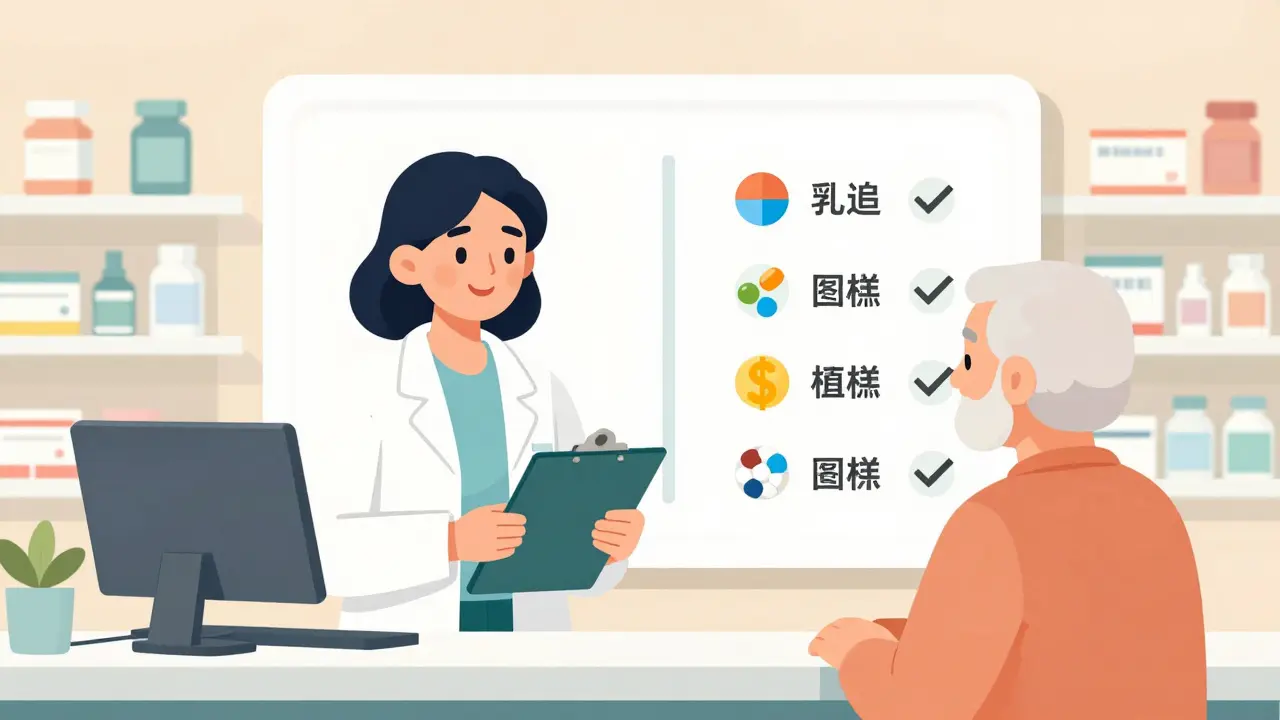
When you pick up a prescription, you might think the pharmacist’s job is just to count pills and hand over a bottle. But if you’re on multiple medications-especially chronic ones like blood pressure, diabetes, or cholesterol drugs-your pharmacist might be doing far more. They could be saving you hundreds of dollars a month by switching you to a generic version that works just as well. This isn’t guesswork. It’s medication therapy management (MTM), and it’s one of the most underused tools in modern healthcare.
What Is Medication Therapy Management?
Medication Therapy Management, or MTM, is a structured service where pharmacists review all your medications-prescription, over-the-counter, and supplements-to make sure they’re safe, effective, and necessary. It’s not about filling prescriptions. It’s about fixing problems you didn’t even know you had.The American Pharmacists Association defines MTM as a patient-centered service designed to improve how you use your meds. Pharmacists don’t just check for drug interactions. They ask: Is this drug still needed? Is there a cheaper version that works just as well? Are you taking it correctly? And most importantly-are you even taking it at all?
Since 2006, Medicare Part D has required all its plans to offer MTM to high-risk patients. That means if you’re on five or more chronic medications, take drugs that cost over $1,000 a year, or have been hospitalized recently, you’re eligible. Yet only about one in three eligible people actually use it. Why? Most don’t know it’s free.
Why Pharmacists Are the Experts on Generic Drugs
Generic drugs aren’t second-rate. They’re exact copies of brand-name drugs, approved by the FDA with the same active ingredient, strength, dosage form, and route of administration. The only differences? The color, shape, and price. Generic versions typically cost 80-85% less than their brand-name counterparts.But here’s the catch: not all generics are created equal in patients’ minds. Many believe generics are weaker, less effective, or even unsafe. A 2021 study found that 26% of people skip or delay doses because they’re worried about generics. That’s where pharmacists come in.
Pharmacists use the FDA’s Orange Book to check therapeutic equivalence ratings. Drugs rated “A” are considered interchangeable with the brand. For drugs with a narrow therapeutic index-like warfarin, levothyroxine, or phenytoin-pharmacists dig deeper. They look at bioequivalence data, patient history, and even lab results before suggesting a switch.
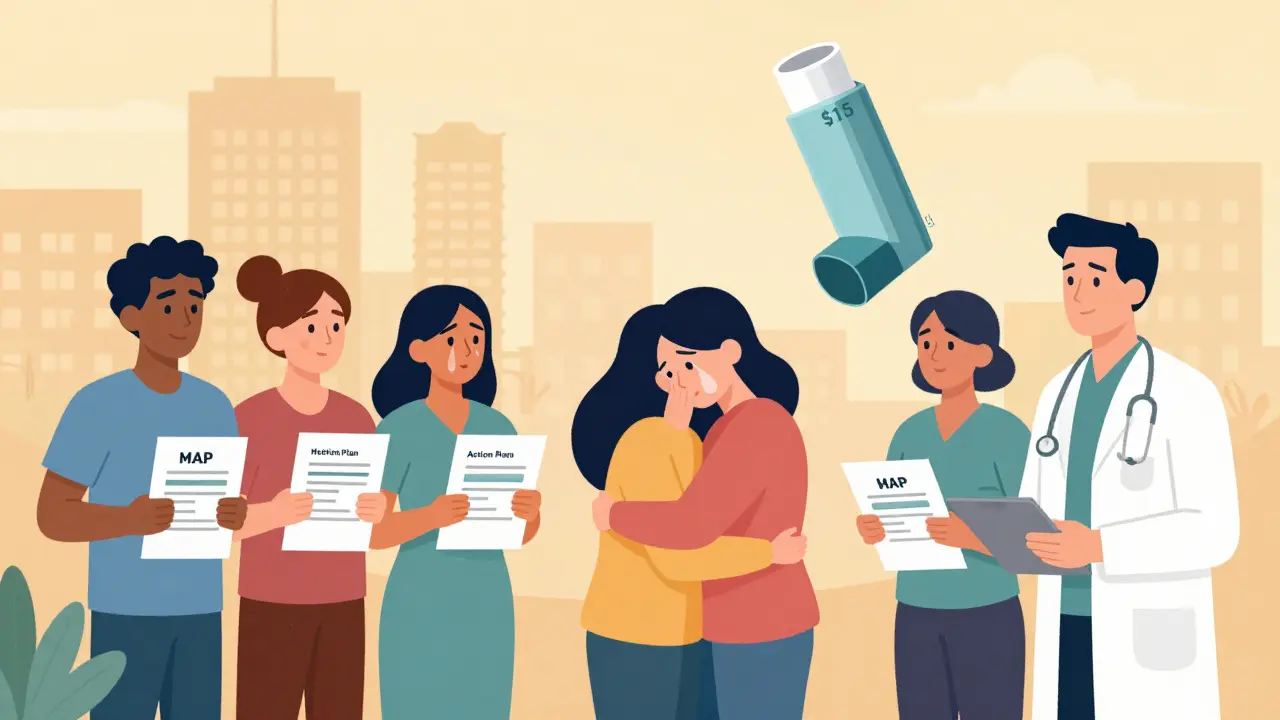
One HealthPartners study showed that when pharmacists actively recommended generic substitutions during MTM sessions, patients saved an average of 32% on their monthly drug costs. In one case, a woman was paying $400 a month for a brand-name inhaler. Her pharmacist found a generic equivalent with the same active ingredient that cost $15. That’s a $385 monthly savings. She didn’t have to choose between her medication and groceries anymore.
How MTM Works: The Process Behind the Scenes
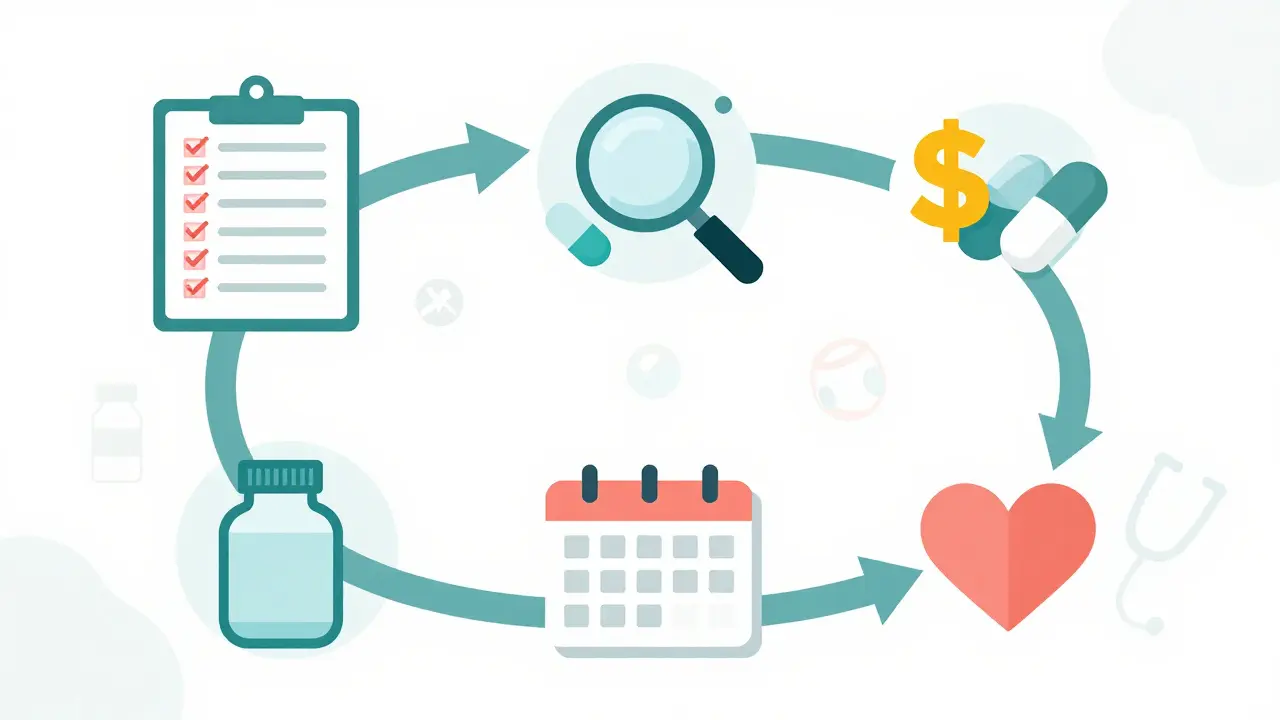
An MTM session isn’t a quick chat at the counter. It’s a full review, usually done in person or over video. Here’s what happens:- Collect information: The pharmacist gathers your full medication list, including supplements and OTCs. They ask about side effects, missed doses, and how you take your meds.
- Identify problems: On average, each review uncovers 4.2 medication-related issues. That could be duplicate drugs, unnecessary prescriptions, or dangerous interactions.
- Recommend solutions: This is where generics come in. The pharmacist checks if any brand-name drugs can be switched to generics without losing effectiveness. They also flag cost barriers that might be causing non-adherence.
- Create a plan: You get a written Medication-Related Action Plan (MAP). It lists what to do, what to watch for, and who to contact.
- Follow up: A 10-20 minute check-in a few weeks later ensures the plan is working.
Each session takes 20-40 minutes. Documentation takes another 5-15 minutes. That’s a lot of time for a pharmacy that’s used to dispensing 150 prescriptions a day. But the results speak for themselves.
MTM vs. Traditional Pharmacy: Big Differences
Traditional pharmacy work is transactional. You hand over a script. They fill it. You pay. You leave. The average interaction lasts 1.7 minutes.MTM is proactive. It’s preventative. Pharmacists don’t wait for you to have a problem-they look for it before it happens. In one study, pharmacist-led MTM reduced medication errors by 61% and cut hospital readmissions by 23% within 30 days.
And the cost savings? A 2022 review of 47 studies found MTM improved medication adherence by an average of 18.7 percentage points. That’s huge. When people take their meds as prescribed, ER visits drop, hospital stays shorten, and overall costs fall by $1,247 per patient per year.
But here’s the kicker: 37% of those savings came directly from switching to generic drugs. Pharmacists aren’t just helping you stay healthy. They’re helping you stay financially solvent.
Why MTM Isn’t More Common
Despite the evidence, MTM isn’t everywhere. Why?First, reimbursement is messy. Medicare pays $50-$150 per Comprehensive Medication Review. But private insurers? Often only $25-$75. Many pharmacies can’t afford the staff time unless they’re reimbursed properly.
Second, patient awareness is low. A 2022 CMS survey found only 15-25% of eligible beneficiaries even know MTM exists. Most think it’s a billing trick or a sales pitch.
Third, technology gaps remain. Only 38% of community pharmacies have seamless electronic health record integration. That means pharmacists often have to manually enter data, which slows things down.
And then there’s the stigma. Some patients still think generics are “cheap” or “inferior.” Pharmacists have to spend time educating-not just prescribing.
Real Stories: What MTM Actually Does for People
On Reddit, a pharmacist named u/PharmacistJen shared a story about a patient who broke down in tears because she couldn’t afford her brand-name inhaler. The pharmacist found a generic with the same active ingredient-$15 instead of $400. The patient cried again, but this time from relief.Another patient on the HealthPartners portal wrote: “My MTM pharmacist found three medications I was paying too much for. Switching to generics saved me $287 a month. I didn’t even know I could do that.”
These aren’t rare cases. A 2022 survey of 1,247 MTM participants found:
- 89% understood their meds better
- 76% took them more consistently
- 68% paid less out of pocket
Average monthly savings? $214.37.
What Pharmacists Need to Do MTM Right
Not every pharmacist is trained for MTM. It takes specialized knowledge:- Therapeutic equivalence assessment
- Pharmacoeconomic analysis
- Communication skills to explain generics without sounding dismissive
- Use of tools like the Medication Appropriateness Index (MAI), which rates drugs on 10 criteria including indication, effectiveness, and cost
Many pharmacists get certified through the Board Certified Pharmacotherapy Specialist (BCPS) or Board Certified Ambulatory Care Pharmacist (BCACP) programs. These require 40-60 hours of training and a certification exam.
Documentation matters too. MTM notes must follow the SOAP format: Subjective (what the patient says), Objective (lab results, vitals), Assessment (what’s wrong), and Plan (what to do). And yes-every generic switch needs to be recorded clearly.
The Future of MTM and Generic Drugs
MTM is growing. In 2022, over 12.7 million Medicare beneficiaries received MTM services. Commercial plans cover another 85 million Americans. Employers see a $3.17 return for every $1 spent on MTM.Telehealth has helped. Since the pandemic, 63% of MTM programs now offer virtual visits. That’s a game-changer for rural or mobility-limited patients.
And now, pharmacists are starting to use pharmacogenomics-testing how your genes affect how you metabolize drugs-to decide whether a brand or generic is better for you personally. That’s the next frontier.
The Pharmacist Medicare Benefits Act, passed by the House in 2021, could expand MTM access to 38 million more people if it becomes law. It would allow pharmacists to bill Medicare directly for MTM, not just through insurance plans.
By 2025, 78% of health systems plan to expand pharmacist roles in MTM. The Bureau of Labor Statistics predicts 4.6% growth in pharmacist jobs through 2032-mostly because of clinical services like this.
What You Can Do
If you’re on multiple medications, especially chronic ones:- Ask your pharmacy if they offer MTM. It’s free if you’re on Medicare Part D.
- Bring your full list of meds-every pill, capsule, and supplement.
- Ask: “Are there cheaper generic versions of these drugs that work just as well?”
- Don’t assume your doctor knows all your meds. Pharmacists see everything.
You don’t need a referral. You don’t need to be sick. You just need to be on meds. And if you’re paying more than you should, your pharmacist might be the only one who can help you fix it.
Is medication therapy management free?
Yes, if you’re enrolled in Medicare Part D and meet eligibility criteria (taking five or more chronic medications, spending over $1,000 annually on prescriptions, or having been hospitalized). MTM is a required benefit under Medicare, so there’s no extra charge. Some private insurers also cover it at no cost to patients.
Are generic drugs really as good as brand-name drugs?
Yes. The FDA requires generics to have the same active ingredient, strength, dosage form, and route of administration as the brand-name drug. They must also meet the same strict manufacturing standards. The only differences are inactive ingredients (like fillers or dyes), packaging, and price. For 95% of drugs, generics are equally effective and safe. Pharmacists use the FDA’s Orange Book to confirm therapeutic equivalence before recommending a switch.
Can pharmacists change my prescriptions?
No, pharmacists can’t change your prescription without talking to your prescriber. But they can identify problems-like a more affordable generic option, a duplicate drug, or a dangerous interaction-and recommend a change. They’ll contact your doctor, explain the clinical rationale, and ask for approval. Most doctors agree when the evidence is clear.
Why don’t all pharmacies offer MTM?
Reimbursement is inconsistent. Medicare pays $50-$150 per session, but many private insurers pay only $25-$75. The time required-30-60 minutes per patient-makes it hard to justify without proper payment. Also, only 38% of community pharmacies have electronic health record systems that integrate smoothly with MTM documentation, making the process slower and more cumbersome.
How do I know if I qualify for MTM?
If you’re on Medicare Part D, you likely qualify if you take five or more Medicare-covered chronic medications, spend over $1,000 a year on prescriptions, or have been hospitalized in the past year. Your plan should notify you if you’re eligible. If you’re not sure, call your pharmacy or insurance plan directly. Even if you’re not on Medicare, some private insurers or employer plans offer MTM-ask your pharmacist.


Post A Comment