
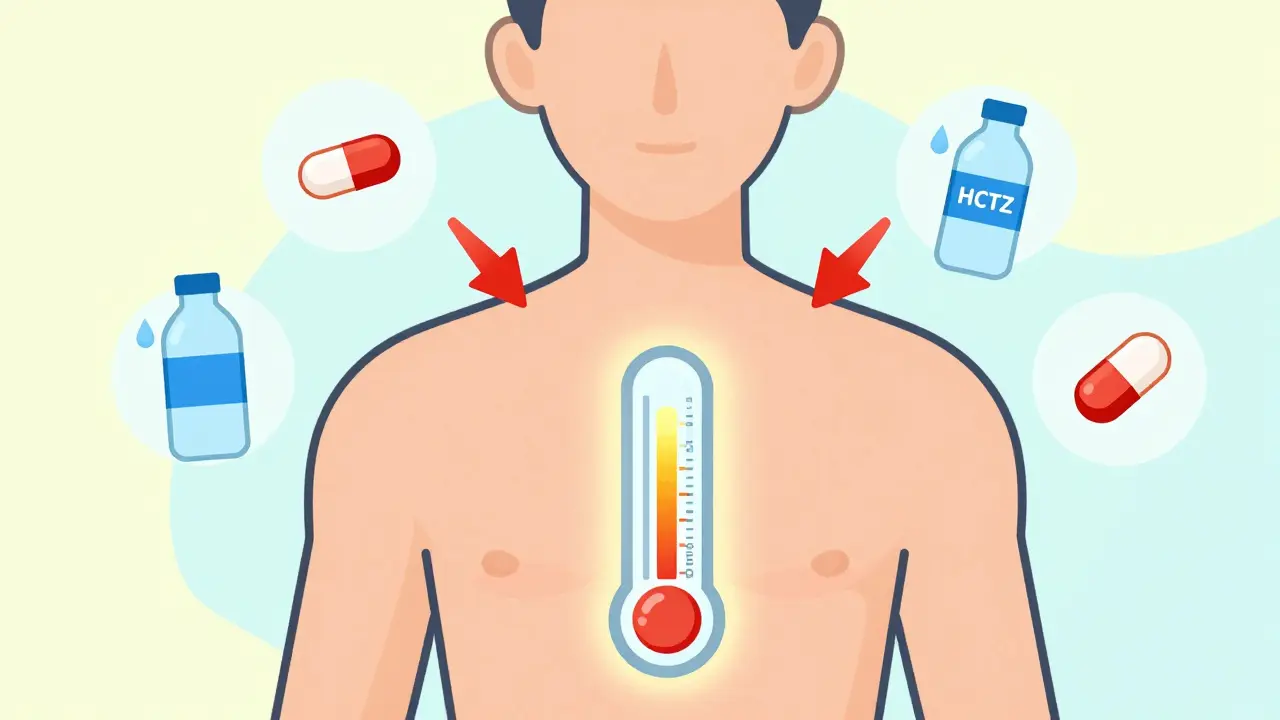
When you’re taking lithium for bipolar disorder, even small changes in your body can turn a safe dose into a dangerous one. Lithium isn’t like most medications. It works in a very narrow window - between 0.6 and 1.2 mmol/L in your blood. Go just a little above that, and you risk serious, even life-threatening toxicity. And the biggest threats? Common drugs you might not think twice about: NSAIDs, diuretics, and dehydration.
Why Lithium Is So Sensitive
Lithium doesn’t get broken down by your liver. Almost all of it - 95% - is cleared by your kidneys. That means anything that affects kidney function or fluid balance can change how much lithium stays in your system. Even mild dehydration can cause lithium levels to jump by 15-25%. That’s why staying hydrated isn’t just a good idea - it’s medical necessity.Older adults, especially those over 65, are at 3.2 times higher risk of lithium toxicity. People with kidney problems, heart failure, or diabetes are also more vulnerable. But even if you’re young and healthy, mixing lithium with certain medications can still push you into danger.
NSAIDs: The Silent Lithium Booster
NSAIDs - like ibuprofen, naproxen, and diclofenac - are everywhere. People take them for headaches, arthritis, or muscle pain. But if you’re on lithium, these drugs can be risky.NSAIDs block prostaglandins, which help keep your kidneys working properly. When those are blocked, your kidneys hold onto more lithium instead of flushing it out. The result? Lithium levels rise, often within just a few days of starting the NSAID.
Not all NSAIDs are equal. Indomethacin can raise lithium levels by 30-60%. Ibuprofen? Around 25-40%. Celecoxib is a bit safer, but still risky - it can bump levels up by 15-30%. Even a single dose of an NSAID after months of stable lithium can cause trouble.
One fatal case in New Zealand involved a 72-year-old woman taking lithium, an ACE inhibitor, and an NSAID. Her lithium levels weren’t checked regularly. She developed severe toxicity and died. That’s not rare. It’s preventable.
Diuretics: The Bigger Threat Than You Think
Diuretics - water pills - are used for high blood pressure, swelling, or heart failure. But they’re one of the most dangerous combos with lithium.Thiazide diuretics like hydrochlorothiazide are the worst offenders. They can increase lithium levels by 25-50% within 7-10 days. That’s why doctors often avoid prescribing them to people on lithium. If you’re already on lithium and your doctor adds a thiazide, your lithium dose may need to be cut by 20-40% - and your blood levels need to be checked weekly for at least a month.
Loop diuretics like furosemide (frusemide) are less risky, but still dangerous. They can raise lithium by 10-25%. Potassium-sparing diuretics like spironolactone? The data is unclear, so treat them with caution.
Here’s the twist: some diuretics actually lower lithium levels. Osmotic diuretics like mannitol and carbonic anhydrase inhibitors like acetazolamide increase lithium excretion. That’s not safer - it just changes the risk. Too little lithium means your mood can swing back out of control.
Dehydration: The Hidden Trigger
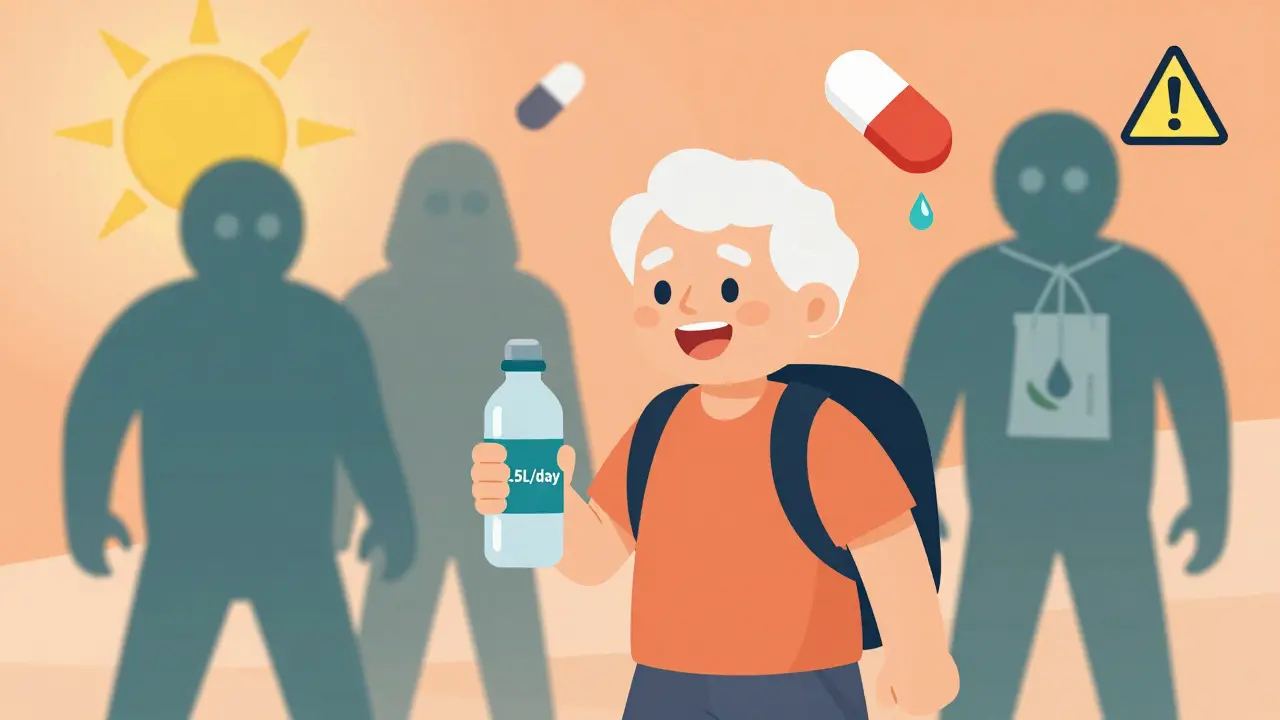
You don’t need to be hospitalized to be at risk. Just a few days of not drinking enough - or losing fluids from fever, vomiting, diarrhea, or even sweating too much - can spike your lithium levels.Even a 2-3% drop in body weight from fluid loss can raise lithium concentrations by 15-25%. That’s why travel, heat, or illness are red flags. If you’re flying long-haul, hiking in the heat, or coming down with the flu, your lithium levels could rise without you realizing it.
And it’s not just water. Sodium intake matters too. Eating less salt - maybe because you’re trying to be healthier - can increase lithium levels by 10-20%. Eating more salt can lower them. That’s why doctors tell patients to keep their salt intake steady. No sudden low-salt diets. No extreme salt binges.
Herbal and ‘Natural’ Diuretics: A Dangerous Myth
You might think herbal teas, weight-loss supplements, or “natural” diuretics are safe. They’re not. Products with dandelion, parsley, green tea extract, or caffeine can act like diuretics. They don’t show up on most drug interaction checkers, but they still cause dehydration and lithium buildup.One patient in Australia started taking a “detox tea” with dandelion root and ended up in the ER with lithium toxicity. Her doctor didn’t know she was taking it. She didn’t think it counted as a drug. But it was enough to push her over the edge.
What to Do If You’re on Lithium
If you take lithium, here’s what you need to do - no exceptions:- Avoid NSAIDs unless your doctor says it’s okay. Use paracetamol (acetaminophen) for pain instead.
- Never start a diuretic without talking to your psychiatrist or nephrologist. If you’re prescribed one, expect more frequent blood tests.
- Drink water consistently. Don’t wait until you’re thirsty. Aim for 1.5-2 liters a day, more if you’re sweating or sick.
- Keep your salt intake stable. Don’t go low-sodium unless your doctor advises it.
- Report symptoms early. Diarrhea, drowsiness, lightheadedness, or tremors aren’t just side effects - they could be early signs of toxicity.
- Check all supplements. Tell your doctor about every herb, tea, or weight-loss product you use.
Monitoring Is Non-Negotiable
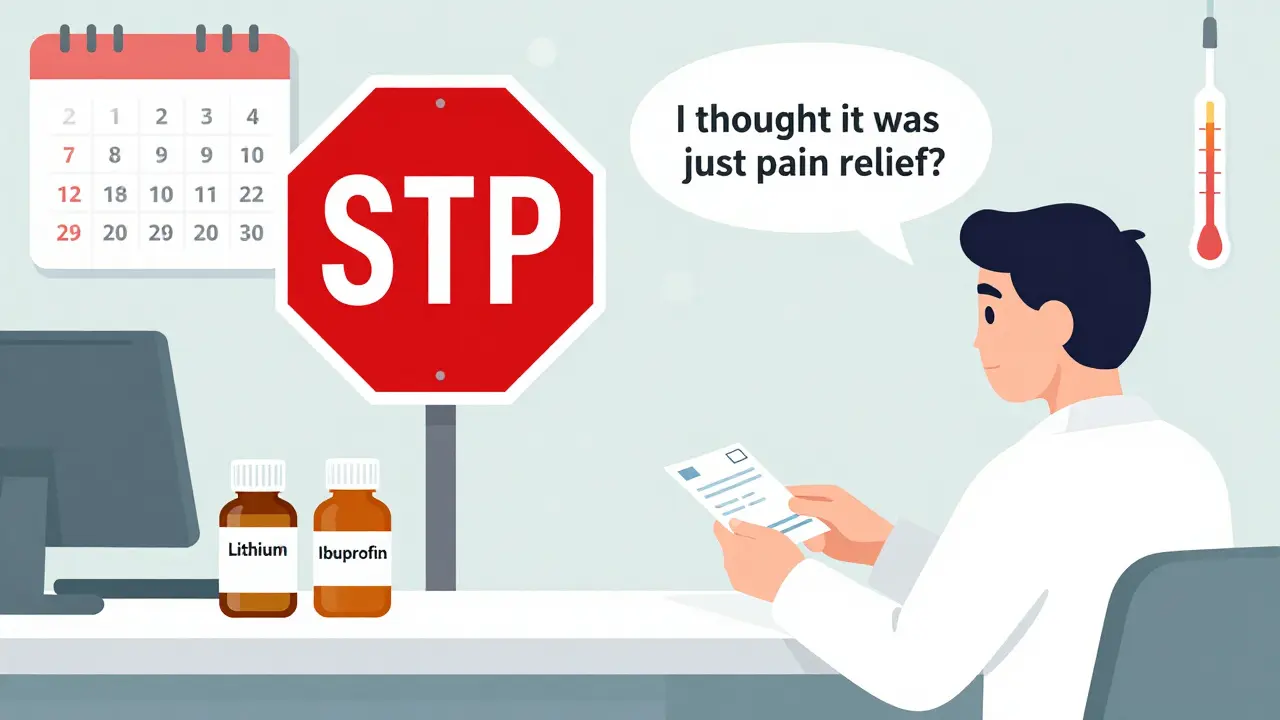
Blood tests aren’t optional. If you start an NSAID or diuretic, lithium levels should be checked within 5-7 days and again after 1-2 weeks. For high-risk patients - elderly, kidney issues, multiple meds - testing every week for the first month is standard.Some doctors skip follow-ups. Don’t let that happen to you. If you’re not getting scheduled tests, ask. If your doctor says it’s not needed, get a second opinion.
Electronic alerts in medical systems flag these interactions - but they’re not foolproof. The New Zealand case report showed that even with alerts, lithium levels were only checked “sporadically.” You have to be your own advocate.
What Happens If Toxicity Strikes
Early symptoms include:- Diarrhea (68% of cases)
- Drowsiness (47%)
- Lightheadedness (52%)
- Tremors or muscle weakness
- Blurred vision (31%)
- Ringing in the ears (29%)
If you feel any of these, stop taking NSAIDs or diuretics, drink water, and call your doctor immediately. Severe toxicity can lead to seizures, kidney damage, coma, or death. And in older adults, kidney damage from lithium toxicity can be permanent.
Bottom Line
Lithium saves lives. But it demands respect. NSAIDs, diuretics, and dehydration aren’t just side notes in your treatment plan - they’re major risk factors. You don’t need to avoid all medications. You just need to know which ones are dangerous, how to spot trouble early, and how to protect yourself.Stay hydrated. Keep your salt steady. Avoid NSAIDs unless approved. Tell every doctor you see that you’re on lithium. And never assume a drug is safe just because it’s over-the-counter or labeled “natural.”
Your mood stability depends on it.
Can I take ibuprofen if I’m on lithium?
It’s not recommended. Ibuprofen can raise lithium levels by 25-40%, increasing your risk of toxicity. Use paracetamol (acetaminophen) instead for pain relief. If you absolutely need ibuprofen, your doctor must lower your lithium dose and check your blood levels within 5-7 days.
What diuretics are safe with lithium?
No diuretic is completely safe. Thiazides like hydrochlorothiazide are the most dangerous, raising lithium by 25-50%. Furosemide (frusemide) is less risky but still requires close monitoring. If you need a diuretic, your doctor may switch you to a different blood pressure medication or adjust your lithium dose with frequent blood tests.
How much water should I drink daily on lithium?
Aim for 1.5 to 2 liters per day, even if you’re not thirsty. In hot weather, during illness, or after exercise, increase your intake. Dehydration as small as 2-3% of your body weight can raise lithium levels by 15-25%. Don’t wait for symptoms - drink steadily throughout the day.
Can I use herbal diuretics like dandelion tea?
No. Herbal diuretics - including dandelion, parsley, green tea, or weight-loss teas - can cause dehydration and raise lithium levels just like prescription diuretics. They’re not regulated, so their strength varies. Even “natural” doesn’t mean safe. Always tell your doctor what supplements you’re taking.
What should I do if I get sick with vomiting or diarrhea?
Stop taking NSAIDs and diuretics immediately. Drink small sips of water or oral rehydration solution. Contact your doctor right away - your lithium level may need to be checked within 24 hours. Do not wait for symptoms like dizziness or tremors. Early action can prevent hospitalization.
Does salt intake really affect lithium levels?
Yes. Lithium and sodium compete for reabsorption in the kidneys. If you eat less salt, your body holds onto more lithium. A drop of 20-30 mmol/day in sodium intake can raise lithium levels by 10-20%. Don’t go on low-salt diets without medical advice. Keep your salt intake consistent.
How often should lithium levels be checked?
When you first start lithium, levels are checked weekly for 4-6 weeks. After that, every 3-6 months if stable. But if you start an NSAID, diuretic, or experience illness, dehydration, or major dietary changes, check levels within 5-7 days and again after 1-2 weeks. High-risk patients may need weekly checks for a month.


Post A Comment