
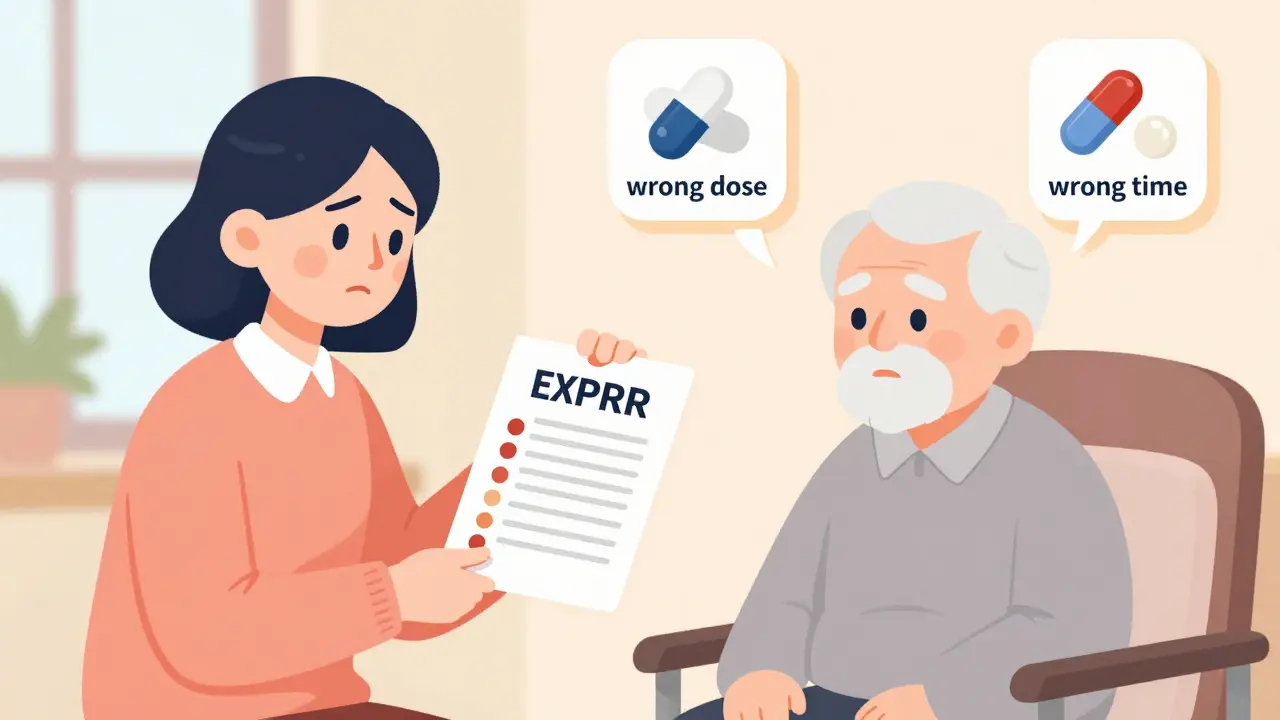
Every year, over 250,000 medication errors happen in U.S. nursing homes - and most go unreported. For older adults taking five, ten, or even fifteen different pills, a single mistake can mean a fall, a hospital stay, or worse. These aren’t just accidents. They’re preventable. And if you’re caring for an elderly loved one, knowing how to spot and report these errors could save their life.
What Counts as a Medication Mistake?
A medication error isn’t just giving the wrong pill. It’s anything that goes wrong between when a drug is prescribed and when it’s taken. In seniors, the most common types include:- Wrong dose - too much or too little, especially with blood thinners, diabetes meds, or painkillers
- Wrong time - giving a pill meant for morning at night, or skipping doses
- Wrong medication - handing out acetaminophen when they’re already on it under a different brand name
- Wrong route - swallowing a patch meant for the skin, or injecting an oral liquid
- Missing monitoring - not checking blood pressure, kidney function, or blood sugar after starting a new drug
- Expired or damaged pills - still being given because they’re “just sitting there”
- Medication not given but documented as given - a dangerous paper trail that hides real harm
According to the Medication Error Quality Initiative, nearly half of all nursing home errors involve dosage mistakes. And the most dangerous? Giving two drugs that interact badly - like combining an anti-inflammatory with blood pressure medicine. That’s not a slip. That’s a system failure.
How to Spot a Mistake Before It’s Too Late
You don’t need to be a pharmacist to catch a problem. Start with the Five Rights:- Right patient - Is this pill for your mom or the person in the next bed?
- Right drug - Does the label match what the doctor said? Check the name, color, shape.
- Right dose - Is it 5 mg or 50 mg? Look at the pill. Compare it to the last bottle.
- Right route - Is it supposed to be swallowed, placed under the tongue, or applied to the skin?
- Right time - Was it given at the right hour? Are doses being skipped or doubled?
Use a simple checklist. Write down every medication your loved one takes - including over-the-counter drugs, vitamins, and herbal supplements. Update it every time a doctor changes something. Bring this list to every appointment. Most doctors won’t ask. You have to volunteer it.
Watch for signs of trouble:
- Sudden confusion or drowsiness - could be a sedative overdose
- Unexplained bruising or bleeding - possible blood thinner issue
- Loss of appetite or nausea - could be a reaction to a new statin or antibiotic
- Slurred speech or weakness - might be low blood sugar from diabetes meds
- Repeated falls - often tied to dizziness from blood pressure or anxiety meds
The American Geriatrics Society’s Beers Criteria® lists 34 drugs that are too risky for seniors. If your loved one is still on one of these - like benzodiazepines, anticholinergics, or certain NSAIDs - ask why. There’s almost always a safer alternative.
Why Reporting Matters - And Why It’s So Hard
Most families don’t report because they’re afraid. They think: “If I complain, they’ll give my mom worse care.” Or: “They’ll say I’m just being paranoid.”The truth? Facilities often hide errors. A 2022 GAO report found rural nursing homes report 63% fewer errors than urban ones - not because they’re safer, but because staff fear punishment. Families report being told, “Your mom was confused,” or “It was just a one-time mistake.”
But here’s what they won’t tell you: reporting saves lives. The MEDMARX voluntary reporting system, used by over 1,800 facilities, captures 83.6% of errors - compared to just 14.3% in mandatory systems. Why? Because people feel safe. No one gets fired for speaking up. The focus is on fixing the system, not blaming the nurse.
And it works. Facilities that use MEDMARX see 78.3% of their teams make real changes within 90 days - like better labeling, double-checking high-risk meds, or training staff on the Five Rights.

How to Report a Medication Error - Step by Step
If you see something wrong, don’t wait. Here’s how to act:- Stop the error - If you’re holding the pill and it doesn’t look right, don’t let it be given. Say, “I think this is wrong.”
- Document everything - Write down: what happened, when, who was involved, what the pill looked like, and what the patient experienced. Take a photo of the label if you can.
- Notify the prescribing doctor - Call immediately if it’s life-threatening (like a double dose of warfarin). Ask them to confirm the correct dose and update the prescription.
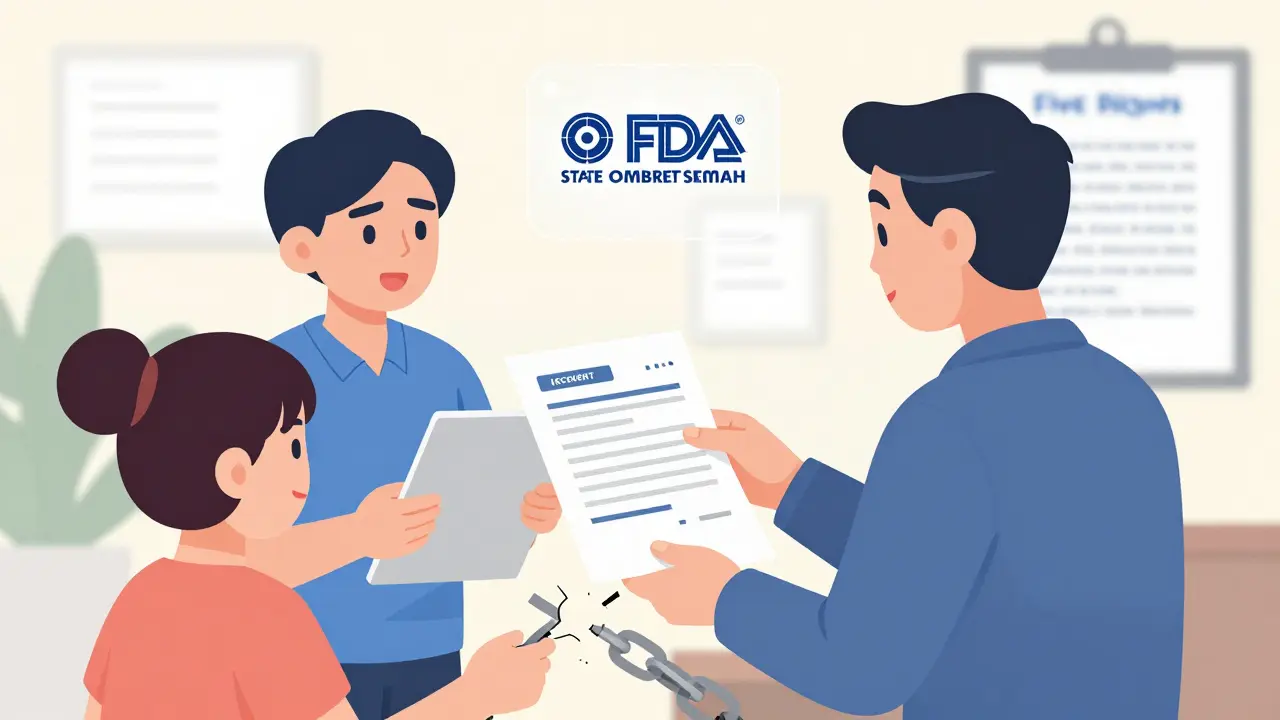
- File an incident report - Ask the facility for their official Medication Error Reporting Form. Insist on a copy. If they refuse, say, “I’m filing this with the state ombudsman.”
- Contact your state’s Long-Term Care Ombudsman - Call 1-800-677-1116. They’re federally funded, independent, and legally required to investigate. Families who use them report 68.4% of issues resolved within 72 hours.
- Report to the FDA - For serious reactions or expired drugs, use MedWatch (www.fda.gov/medwatch). This feeds into national safety data.
Don’t wait for permission. You have the right to know what happened. You have the right to see the report. And you have the right to demand change.
What’s Being Done to Fix This?
The system is slowly improving. By December 2025, every nursing home in the U.S. must use electronic medication administration records (eMAR) - digital systems that scan pills and match them to patient wristbands. This cuts administration errors by 86%.Some places are using AI tools like MedAware, which flags dangerous prescriptions before they’re written. Hospitals are using barcode scanners and clinical decision support systems that warn doctors if a senior is getting a drug on the Beers list.
But here’s the gap: Only 54.7% of nursing homes have barcode systems. Most still rely on handwritten charts and tired staff. The average nursing home has just 2.1 nurses for every 100 residents. That’s not enough to check five pills per person, twice a day.
That’s why your role matters. Technology helps - but people still have to notice, speak up, and demand accountability.
What to Do If You’re Ignored
If the facility denies your report, threatens retaliation, or disappears your paperwork:- Call your state’s Department of Health. They license nursing homes and investigate complaints.
- File a formal complaint with the Centers for Medicare & Medicaid Services (CMS) via their online portal.
- Reach out to the National Consumer Voice for Long-Term Care. They help families navigate the system.
- Document every interaction. Dates, names, what was said. This builds a paper trail.
One family on Reddit shared: “When I caught the nurse giving my mother double doses of blood pressure medication, the facility initially refused to file an incident report until I threatened to contact the state ombudsman - this is why families need to know their rights.”
They’re not being difficult. They’re being scared. And you’re not the problem. The system is.
Final Thoughts: You’re the Last Line of Defense
No algorithm, no scanner, no nurse can replace a family member who knows their loved one’s normal. If your mom usually eats breakfast and suddenly won’t touch her food - that’s a red flag. If your dad starts stumbling after a new painkiller - that’s not aging. That’s a warning.Medication errors kill more seniors than car crashes or falls. But they’re not inevitable. They’re preventable. And they only happen when no one is watching.
Be the one who watches. Be the one who asks. Be the one who reports.
What’s the most common medication mistake in elderly patients?
The most common mistake is giving the wrong dose - either too much or too little. According to the Medication Error Quality Initiative, 42.7% of nursing home errors involve dosage issues, especially with blood thinners, diabetes drugs, and pain medications. This often happens because multiple providers prescribe without knowing what else the patient is taking.
Can I report a medication error even if no harm occurred?
Yes - and you should. Many errors are caught before harm happens, but reporting them helps prevent future incidents. Systems like MEDMARX track near-misses to find patterns. A wrong dose that was caught in time still counts as a critical safety event. Reporting helps fix the system, not just punish the person.
What should I do if the nursing home refuses to give me a copy of the incident report?
You have a legal right to access records related to your loved one’s care. If they refuse, contact your state’s Long-Term Care Ombudsman at 1-800-677-1116. They can demand the report on your behalf. Also, file a complaint with your state’s Department of Health. Facilities that block access are often hiding systemic problems.
How do I know if a medication is unsafe for my elderly loved one?
Check the American Geriatrics Society’s Beers Criteria® - it lists 34 drugs that are too risky for seniors over 65, including certain sleep aids, antihistamines, and anti-anxiety medications. If your loved one is on any of these, ask their doctor if there’s a safer alternative. Many are still prescribed out of habit, not medical need.
Is it safe to rely on the pharmacy to catch medication errors?
Pharmacists are helpful, but they can’t catch everything. Many elderly patients get prescriptions from multiple doctors, and pharmacies don’t always have full records. A 2022 JAMA study found that 43.8% of Medicare seniors were prescribed at least one drug on the Beers list - even though their pharmacy had access to their full history. Always double-check new prescriptions yourself.
What’s the fastest way to get help if a medication error causes a medical emergency?
Call 911 immediately. Then, report the incident to the National Response Center at 1-800-332-1088. This is the federal hotline for serious adverse drug events. Don’t wait for the facility to act - your loved one’s health is urgent. After the emergency, follow up with the FDA’s MedWatch program to ensure the event is recorded in national safety databases.


Post A Comment