
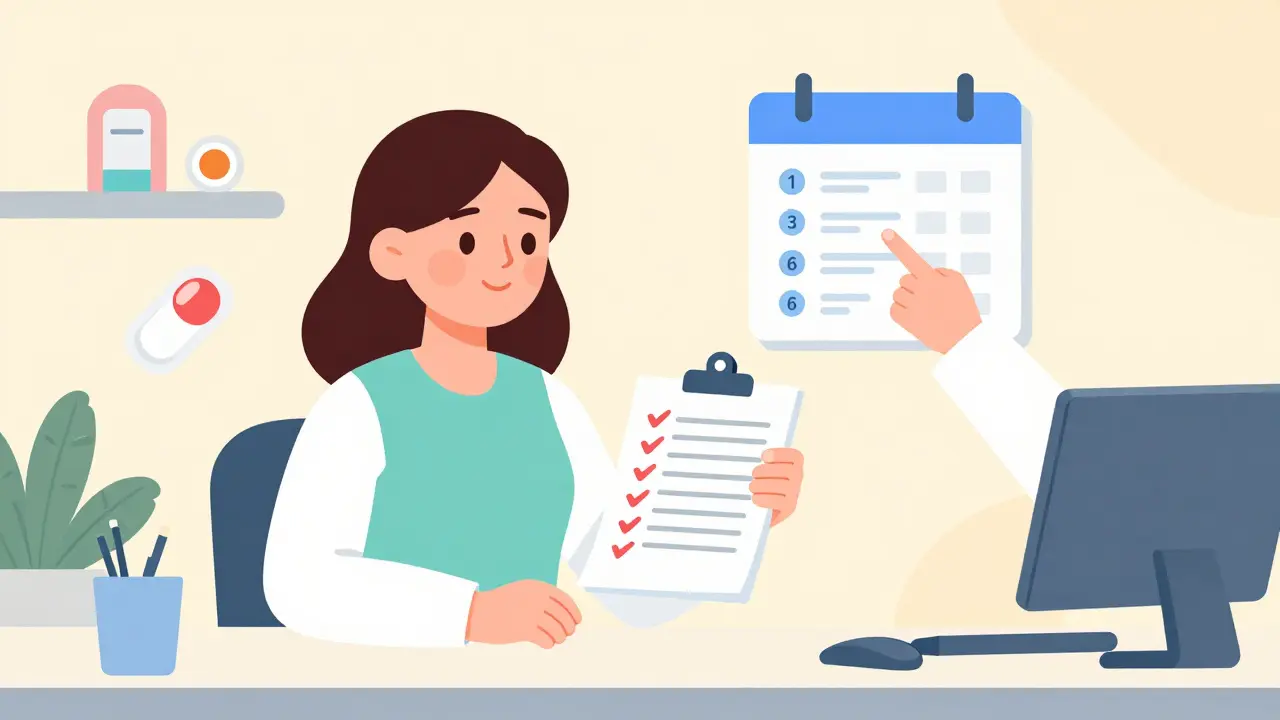
Planning for pregnancy isn’t just about taking prenatal vitamins or eating better. If you’re on any kind of medication - even something as simple as an acne pill or a thyroid drug - you need to talk to your doctor before you try to get pregnant. Why? Because the first eight weeks of pregnancy are the most dangerous time for your baby’s development, and you might not even know you’re pregnant yet.
Why Timing Matters More Than You Think
Most people think pregnancy starts when they miss a period. But biologically, it starts at conception. And by the time you realize you’re pregnant, your baby’s heart, brain, spine, and limbs have already formed. That’s the window between weeks 3 and 8. This is called the embryogenic period. Any medication you’re taking during this time can cross the placenta and interfere with how those organs develop.That’s why waiting until you’re pregnant to adjust your meds is too late. A 2021 study in the New England Journal of Medicine found that women who had their medications reviewed before conception had 28% fewer major birth defects than those who didn’t. This isn’t a suggestion - it’s medical fact.
Think about this: 45% of pregnancies in the U.S. are unplanned. If you’re sexually active and not using birth control, you could be pregnant right now - even if you don’t think you are. That’s why experts recommend starting this conversation at least 3 to 6 months before you plan to try.
What Medications Are Risky?
Not all drugs are dangerous, but some carry clear risks. Here are the big ones you need to know about:- Valproic acid (used for epilepsy and bipolar disorder): Linked to a 10.7% chance of major birth defects, including neural tube defects and facial malformations. It should be avoided entirely if possible.
- Lithium (for mood disorders): Can cause Ebstein’s anomaly, a rare heart defect. The risk is low - about 1 in 2,000 - but still significant enough to warrant switching meds.
- Topiramate (for seizures or migraines): Doubles the risk of cleft lip or palate in babies.
- Methotrexate (for autoimmune diseases like rheumatoid arthritis): Causes miscarriage and severe birth defects. You need to stop it at least 3 months before trying to conceive.
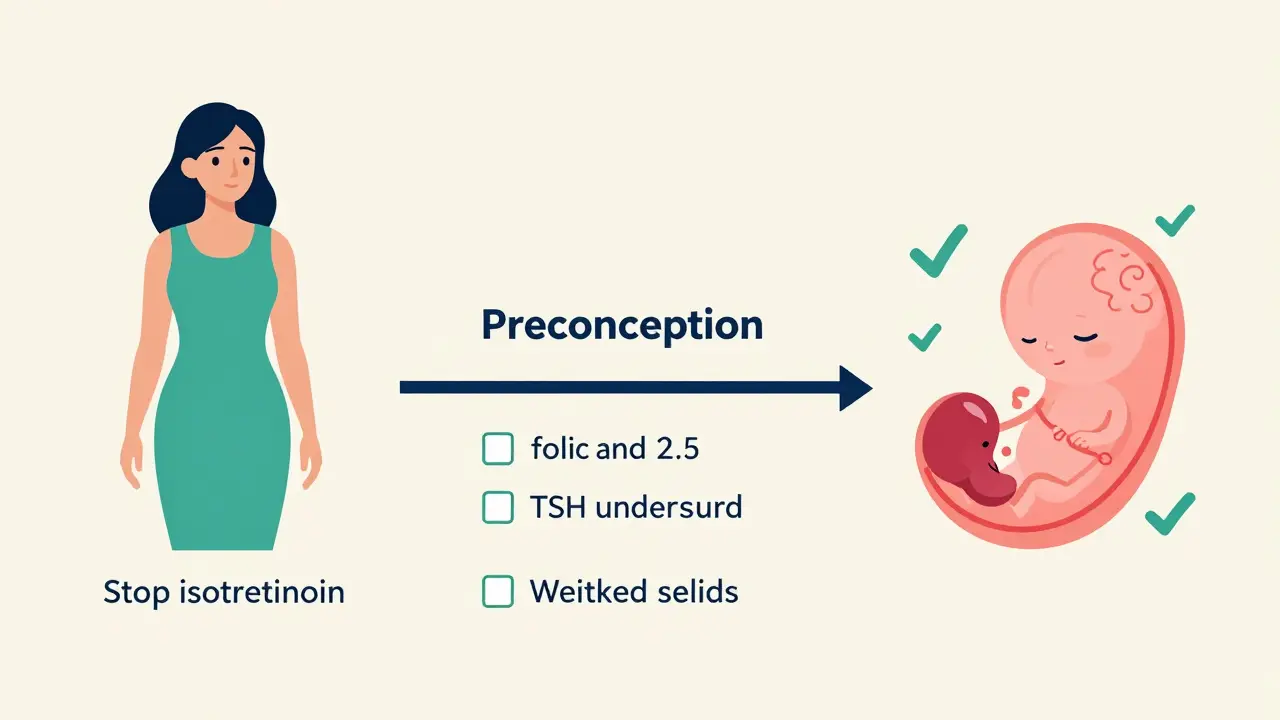
- Isotretinoin (Accutane for acne): One of the most dangerous drugs in pregnancy. Even one dose can cause serious defects. You must use two forms of birth control for a full month after stopping it.
- Warfarin (blood thinner): Can cause fetal warfarin syndrome - bone deformities, vision and hearing loss. Must be switched to heparin before 6 weeks of pregnancy.
Some medications are safe. Others aren’t. And some are okay at low doses but dangerous at higher ones. That’s why you need a personalized plan.
Folic Acid: The One Supplement Everyone Needs
Folic acid isn’t optional. It’s non-negotiable. The World Health Organization recommends 400 mcg daily for all women aged 15 to 49 - no matter what.But if you have certain conditions, you need more:
- For epilepsy, diabetes, obesity, or a history of neural tube defects: 4 to 5 mg daily.
- For those taking anticonvulsants like valproic acid: 5 mg daily - because these drugs block folic acid absorption.
Start taking it at least 3 months before conception. Don’t wait until you’re pregnant. Studies show that taking folic acid before conception reduces neural tube defects by up to 70%. That’s not a guess. That’s data from the CDC and WHO.
Thyroid, Blood Pressure, and Other Chronic Conditions
If you have hypothyroidism, your body needs more levothyroxine during pregnancy. But here’s the catch: you should already be at a stable dose before you conceive. Your TSH (thyroid hormone level) should be under 2.5 mIU/L. If it’s higher, your risk of miscarriage jumps by 60%.Once you’re pregnant, you’ll need a 30% increase in your dose. But if you wait until you’re pregnant to adjust it, you’ve already missed the critical window for your baby’s brain development.
Same goes for high blood pressure. Medications like ACE inhibitors and ARBs are dangerous in pregnancy. They can cause kidney damage and low amniotic fluid. You need to switch to safer options like labetalol or nifedipine before conception.
How to Build Your Medication Plan
Here’s a step-by-step process you can follow:- Make a full list of everything you take - prescriptions, over-the-counter meds, supplements, herbal remedies, and even vitamins. Don’t forget the ibuprofen you take for headaches or the fish oil you think is harmless.
- Set up a preconception visit with your OB/GYN or primary care provider. If you have a chronic condition (epilepsy, diabetes, lupus, etc.), also see your specialist - neurologist, rheumatologist, endocrinologist - at least 4 to 8 weeks before trying.
- Ask about alternatives. For example, if you’re on lithium, is there another mood stabilizer that’s safer? If you’re on topiramate, can you switch to lamotrigine?
- Check timing. Some drugs need months to clear your system. Methotrexate? Wait 3 months. Isotretinoin? Wait 1 month. Don’t guess - ask for the exact washout period.
- Start folic acid. 400 mcg minimum. 5 mg if you’re high-risk. No exceptions.
- Review contraception. If you’re on seizure meds like carbamazepine, birth control pills might not work. Ask about IUDs or progestin-only options.
- Document it. Use ICD-10 code Z31.69 if your provider is coding properly. Keep a copy of the plan for your records.
What If You Can’t Change Your Meds?
Sometimes, switching isn’t possible. Maybe you have severe epilepsy, or your depression is controlled only by lithium. In those cases, the goal isn’t to stop the medication - it’s to manage the risk.For epilepsy, use the lowest effective dose of a single drug. Never combine anticonvulsants unless absolutely necessary. For mood disorders, work with a psychiatrist who understands pregnancy risks. The key is minimizing exposure - not eliminating treatment.
And always, always keep taking folic acid. It’s your best defense.
Why So Few Women Do This
It’s not because people don’t care. It’s because the system doesn’t make it easy.Only 24% of obstetric providers in the U.S. routinely review medications before pregnancy. Even though 89% of them say it’s important, they don’t have the time. A typical 15-minute appointment doesn’t leave room for a deep dive into your 10 medications.
And if you’re not seeing an OB/GYN regularly? You might never get the conversation. Only 38% of women with chronic conditions get documented preconception reviews, according to CDC data.
That’s why you can’t wait for your doctor to bring it up. You need to be the one to ask. Bring your list. Say: “I’m thinking about getting pregnant. Can we go over my meds?”
What’s New in 2026?
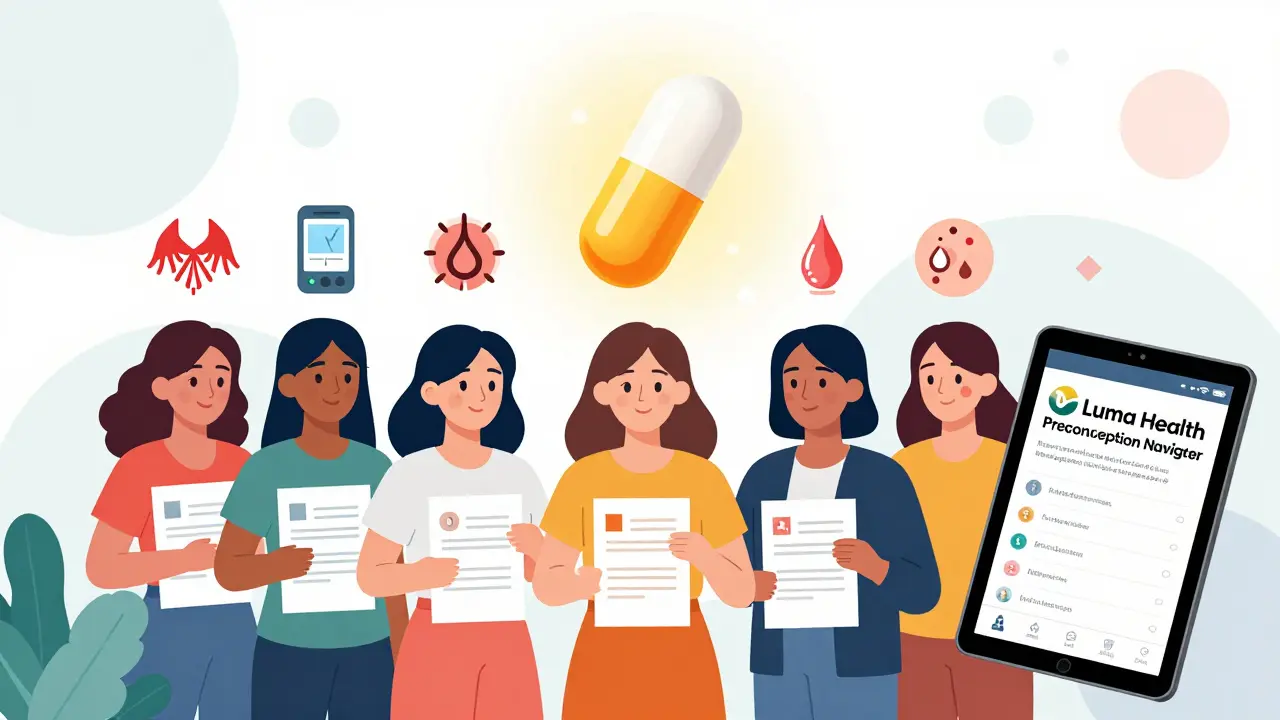
In January 2023, the FDA approved the first digital tool for preconception planning: Luma Health’s Preconception Navigator. It uses AI to cross-check over 1,200 drugs against teratogenicity databases. If you’re unsure about a medication, this tool can give you a risk level in seconds.Also, new guidelines now include women with BMI over 30. Weight-loss drugs like liraglutide (Ozempic) aren’t safe in pregnancy. You need to stop them at least 2 months before trying.
The NIH is also running a study called PharmaTox (NCT05823456) to build personalized risk models using your genetics and how your body processes drugs. This is the future - but right now, the basics still work.
Final Takeaway
You don’t need to be perfect. You just need to be proactive. A medication plan before conception isn’t about fear. It’s about control. It’s about giving your future child the best possible start - even before they’re born.Don’t wait for pregnancy to happen. Don’t assume your doctor will bring it up. Take your list. Schedule the appointment. Ask the questions. Start the folic acid. Make the switch. You have time. Use it.
How long before conception should I start planning my medication changes?
Experts recommend starting at least 3 to 6 months before you plan to conceive. This gives your body time to adjust to new medications, allows for proper washout periods for dangerous drugs like methotrexate or isotretinoin, and ensures your folic acid levels are optimized. Some conditions, like epilepsy or autoimmune disorders, may require even more time - especially if you’re switching medications or adjusting doses.
Is it safe to continue taking my antidepressants while trying to get pregnant?
Some antidepressants are safer than others. SSRIs like sertraline and citalopram are generally considered low-risk during pregnancy. But medications like paroxetine have been linked to a slightly higher risk of heart defects. Never stop your antidepressants abruptly - that can cause withdrawal or relapse. Talk to your psychiatrist and OB/GYN about switching to a safer option before conception, or adjusting your dose if needed.
Do I need to stop all supplements before getting pregnant?
No - but you should review them. Some herbal supplements like black cohosh, goldenseal, or dong quai can stimulate uterine contractions or interfere with hormones. Even high-dose vitamin A (over 10,000 IU daily) can cause birth defects. Stick to prenatal vitamins with folic acid and avoid unregulated herbal products. Always check with your provider before continuing any supplement.
Can I still get pregnant if I have a chronic illness like lupus or diabetes?
Yes - but only if your condition is well-managed before conception. Poorly controlled diabetes increases the risk of miscarriage, stillbirth, and birth defects. Lupus flares during pregnancy can lead to preeclampsia or premature birth. Work with your specialist to stabilize your condition, adjust medications, and ensure your labs are in the target range before trying to conceive. Many women with chronic illnesses have healthy pregnancies - but planning makes all the difference.
What if I’m on birth control and just found out I’m pregnant?
Don’t panic. Most birth control pills, patches, and IUDs don’t cause birth defects. If you got pregnant while on hormonal contraception, the risk to your baby is very low. The real issue is whether you were on any other medications that are harmful in early pregnancy. Contact your provider right away to review everything you’ve taken. Start taking 5 mg of folic acid immediately, and schedule a prenatal visit as soon as possible.


Post A Comment