
When you pick up a prescription for a generic drug, you probably don’t think about how it ended up on your insurer’s list of covered medications. But behind every low copay is a complex, data-driven system that decides which generics get covered - and which don’t. Insurers aren’t picking generics at random. They’re following strict rules shaped by science, cost, and regulation. And if you’ve ever been denied coverage for a generic, or switched to one that didn’t work well, you’ve felt the real-world impact of those decisions.
How Generic Drugs Get Approved for Coverage
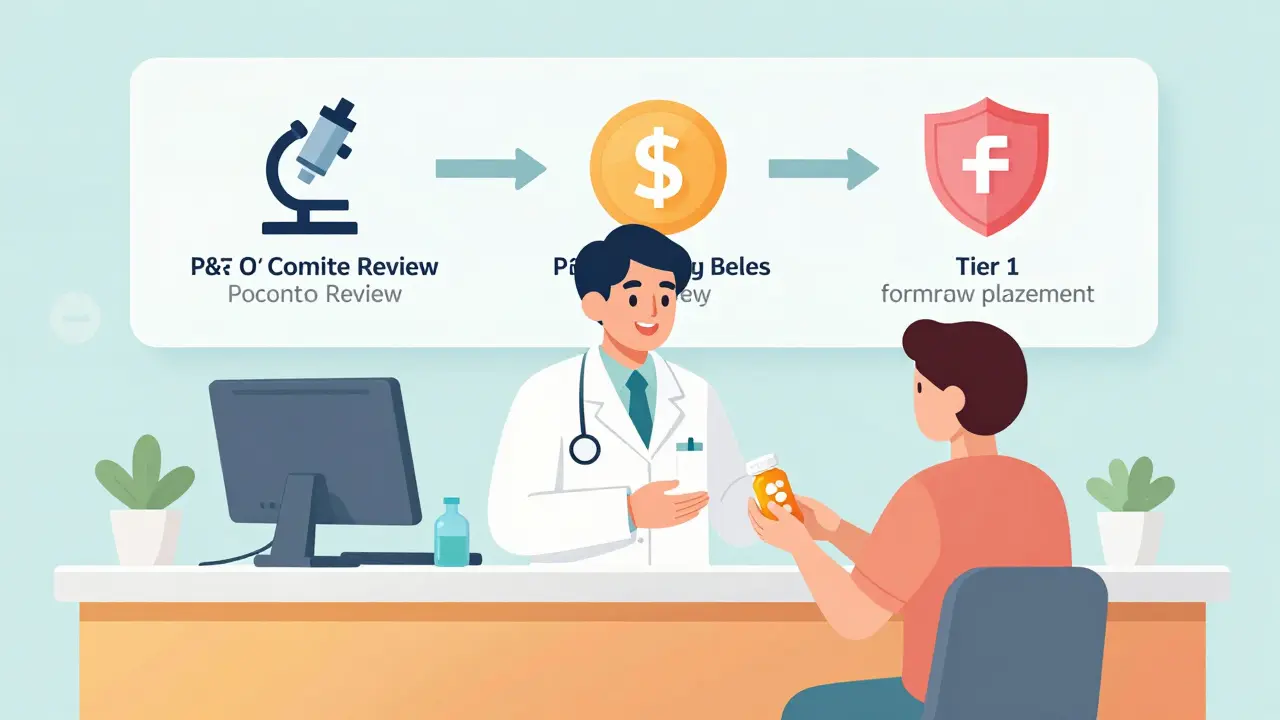
Every insurance plan, whether it’s Medicare Part D, a private employer plan, or Medicaid, uses something called a formulary. This is just a list of drugs the plan agrees to pay for. And for generics, the process starts long before you see the pill bottle. The first gatekeeper is the FDA. Before an insurer even considers covering a generic, it must be approved as therapeutically equivalent to the brand-name version. That means it has the same active ingredient, strength, dosage form, and route of administration. It must also meet the same strict manufacturing standards. The FDA doesn’t just approve generics - it certifies them as interchangeable. Insurers rely on this certification. If the FDA doesn’t say it’s equivalent, the insurer won’t cover it. Once the FDA says yes, the real decision-making begins. That’s where the Pharmacy & Therapeutics (P&T) committee comes in. Every major insurer has one. These are panels of doctors, pharmacists, and sometimes patient advocates. They don’t meet once a year. They review new drugs monthly, sometimes weekly. Their job? To answer three questions: Does it work? Is it safe? And is it worth the cost?The Three Rules Insurers Use to Pick Generics
It’s not just about price. While cost is a huge factor, insurers don’t just pick the cheapest generic on the shelf. Here’s what actually matters:- Clinical effectiveness - Does this generic actually treat the condition as well as the brand? P&T committees look at real-world studies, not just clinical trials. If a generic has been used by thousands of patients with consistent results, it gets priority. If there’s conflicting data, they wait for more evidence.
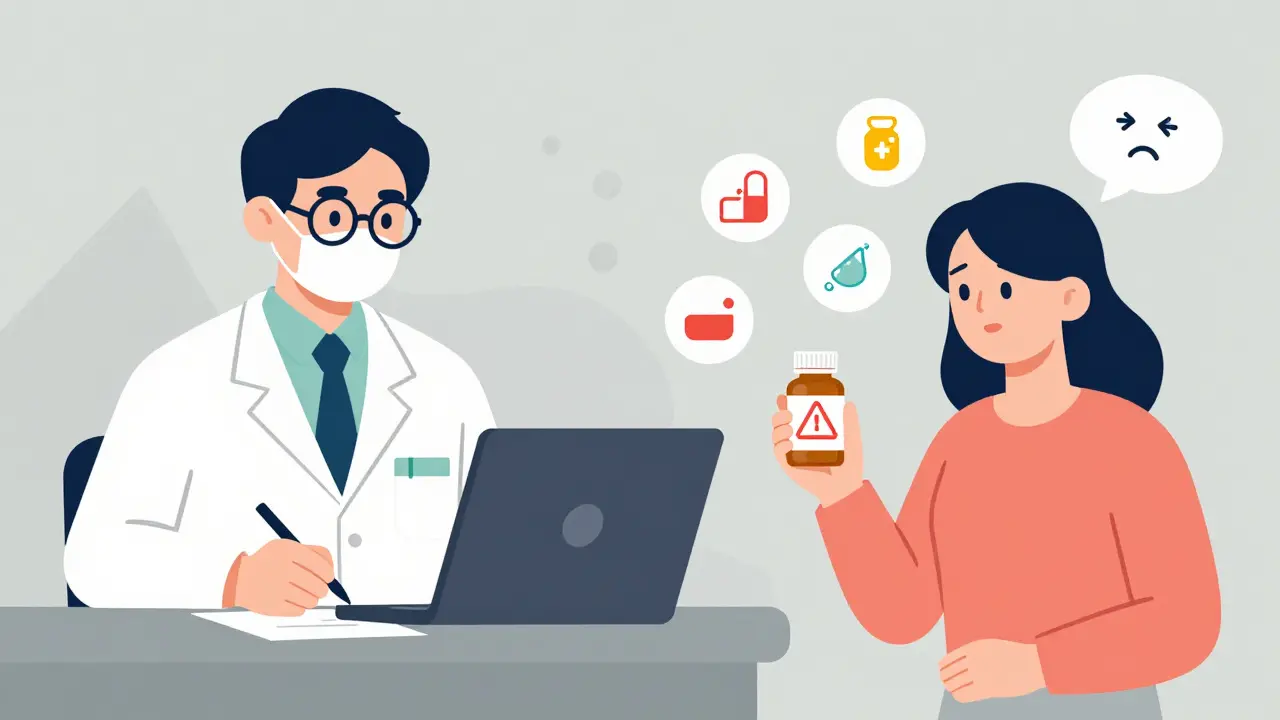
- Safety profile - Some generics may have different inactive ingredients (fillers, dyes, coatings). These don’t affect how the drug works, but they can trigger allergies or side effects in sensitive patients. If a generic has a history of more adverse reactions - even if rare - insurers may hold off or require prior authorization.
- Cost-effectiveness - This is where the numbers win. If two generics are equally effective and safe, the cheaper one gets covered. In many cases, one generic manufacturer offers a better price because they produce more volume or have lower overhead. Insurers lock in those deals. In fact, generics cost 80-85% less than brand-name drugs on average. That’s why Medicare Part D saved $141 billion in 2019 just from using generics.
Tiered Formularies: Why Your Copay Is So Low
If you’ve ever looked at your insurance explanation of benefits, you’ve seen tiers. Tier 1. Tier 2. Tier 3. Generics almost always live in Tier 1 - the lowest cost-sharing level. Why? Because it’s the most efficient way to control spending. Here’s how it breaks down:- Tier 1: Preferred generics - Usually $0-$15 for a 30-day supply. This is where 92% of Medicare Part D plans put generics. These are the drugs insurers push hardest because they’re proven, cheap, and safe.
- Tier 2: Non-preferred generics - Sometimes $15-$30. These are generics that work fine, but aren’t the cheapest option. Insurers still cover them, but they want you to try the preferred one first.
- Tier 3+: Brand-name drugs - $40-$100+. If your doctor prescribes a brand, you’ll pay more - unless you qualify for an exception.
What Happens When a Generic Isn’t Covered?
Sometimes, a generic you need isn’t on the formulary. Maybe it’s new. Maybe the insurer hasn’t negotiated a price yet. Or maybe they’re waiting for more safety data. That’s when you hit the exception process. You or your doctor can file a formulary exception request. The rules are clear: you need to show that the covered generic either:- Caused bad side effects
- Didn’t work for you
- Requires a dose higher than what the plan allows
Where the System Falls Short
The system works well for most people - but not everyone. There are cracks. One big issue is therapeutic substitution. That’s when the pharmacy automatically swaps your prescribed generic for another generic that’s cheaper - even if your doctor didn’t ask for it. In 78% of commercial plans, this happens at the counter. For most, it’s fine. But for some, it’s not. A 2023 Drug Topics survey found that 31% of patients reported adverse effects after being switched to a different generic. Why? Because even though two generics are “therapeutically equivalent,” their inactive ingredients can affect absorption or tolerance. A patient with Crohn’s disease or severe allergies might react to a dye or filler in one version but not another. Another problem? Transparency. Only 37% of insurers publicly share their full P&T committee decision criteria. You won’t find a detailed list of why one generic was chosen over another. That makes it hard for doctors to predict coverage - and harder for patients to plan.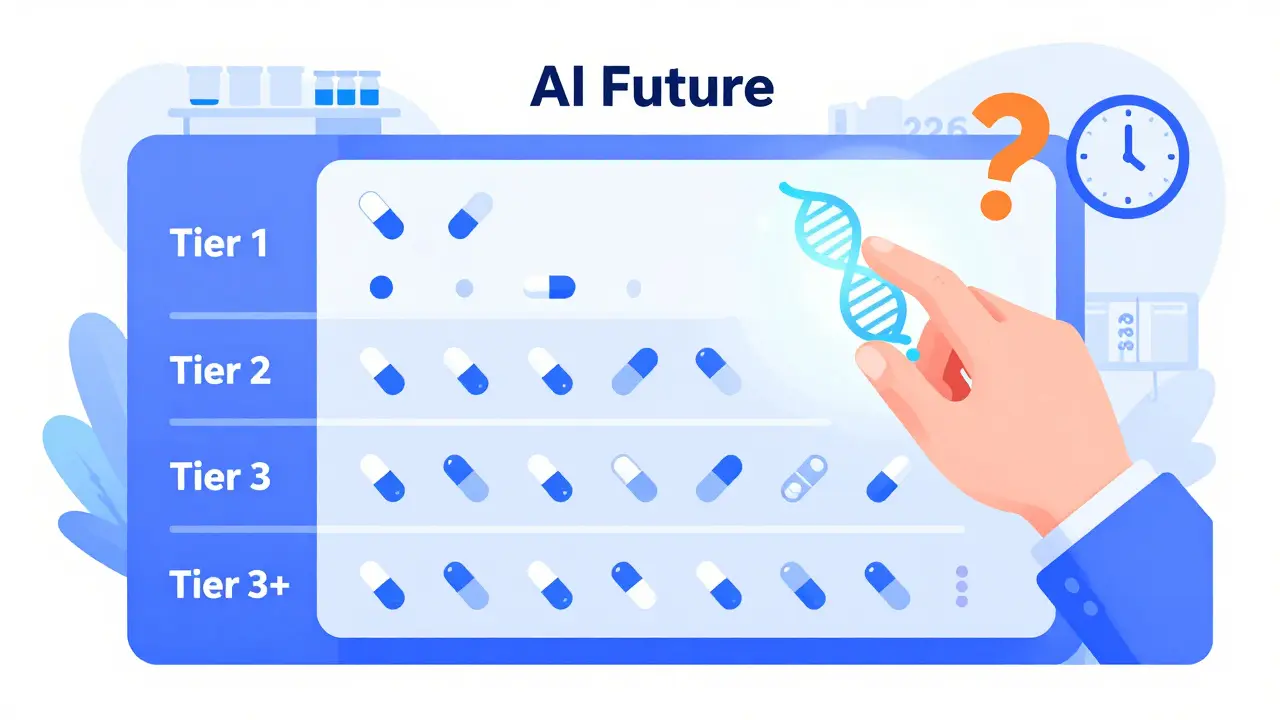
What’s Changing in 2026?
The rules are evolving. The Inflation Reduction Act of 2022 capped Medicare Part D out-of-pocket costs at $2,000 per year starting in 2025. That’s good for patients - but it’s forcing insurers to rethink their strategy. Instead of pushing expensive specialty drugs, they’re doubling down on high-volume generics to keep total costs down. The FDA is also speeding things up. Under GDUFA III, generic approvals are dropping from 42 months to 10 months. That means more generics will hit the market faster - and insurers will have more options to choose from. But new challenges are coming too. Drug shortages are rising. As of October 2023, 78% of the 372 active drug shortages in the U.S. were for generics. If a manufacturer can’t keep up, insurers have to scramble to find alternatives - sometimes switching patients mid-treatment. And then there’s the future: AI-driven personalized generics. These aren’t on the market yet, but P&T committees are already wondering how to evaluate them. If a drug is designed for your specific genetics, is it still a “generic”? How do you price it? These questions don’t have answers yet.What You Can Do
You don’t have to just accept whatever’s on the formulary. Here’s what actually helps:- Ask your pharmacist: “Is there a preferred generic on my plan?”
- Ask your doctor: “Can we try the generic your plan covers first?”
- If you have side effects or it doesn’t work: File an exception. Bring your records. Be specific.
- Check your plan’s formulary online every year during open enrollment. Things change.
Why do some generic drugs cost more than others on my plan?
Even though all generics have the same active ingredient, insurers negotiate different prices with manufacturers. The cheapest version gets labeled as “preferred” and placed in Tier 1. Others may be in Tier 2 and cost more. It’s not about quality - it’s about price deals.
Can my pharmacy switch my generic without telling me?
Yes, in many cases. In 78% of commercial insurance plans, pharmacies are allowed to substitute one generic for another if they’re considered equivalent. You’ll usually get the cheapest option unless your doctor writes “dispense as written” or “no substitution.” Always ask if your medication was switched.
What if my generic doesn’t work like the brand?
You’re not imagining it. Some patients do respond differently to generics due to inactive ingredients or absorption rates. If you notice changes in how you feel, tell your doctor. They can file an exception request for the brand or a different generic. You’re not required to tolerate side effects just because it’s cheaper.
Do all insurance plans cover the same generics?
No. Each insurer builds its own formulary based on negotiations, clinical data, and cost. A generic covered by Medicare Part D might not be on your employer plan, and vice versa. Always check your specific plan’s drug list before filling a prescription.
How long does it take to get a generic approved for coverage?
Once a generic is FDA-approved, insurers typically review it within 30-90 days. P&T committees meet regularly, and if the drug shows strong cost savings and safety data, it can be added quickly. Newer generics often take longer to get into formularies because insurers wait to see real-world results.


Post A Comment