
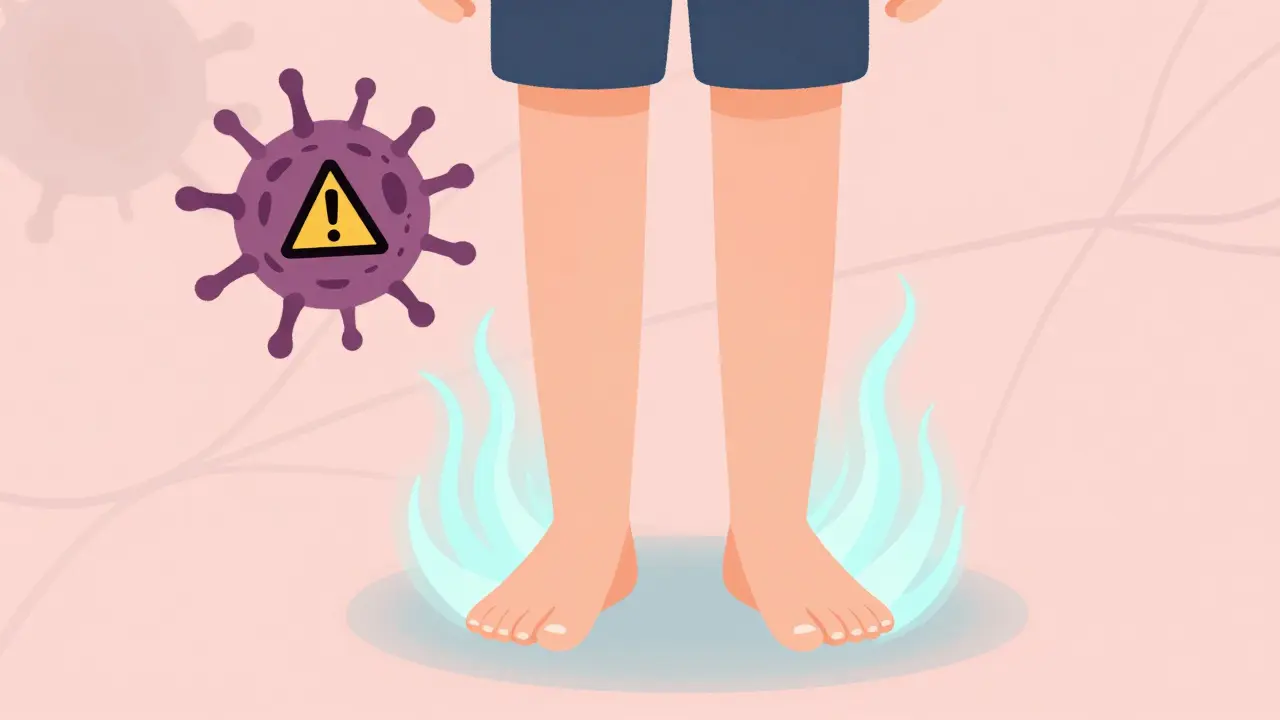
When muscle weakness hits suddenly-starting in your feet and climbing up your legs-it’s not just fatigue. It could be Guillain-Barré Syndrome (GBS), a rare but serious condition where your immune system turns against your own nerves. Think of it like a misfired alarm: your body, thinking it’s fighting an infection, starts attacking the protective coating around your nerves. The result? Rapid, symmetrical weakness that can turn a walk into a crawl, or even leave you unable to breathe. For many, the turning point comes not with a diagnosis alone, but with the start of IVIG treatment.
How GBS Starts: The Silent Surge
Most people with GBS don’t wake up weak. They notice something odd first-a tingling in the toes, or legs that feel heavy after a walk. Within days, that feeling spreads. By the time someone can’t lift their foot or hold a cup steady, it’s often already progressed. About 90% of cases follow this ascending pattern, moving from the legs up to the arms, face, and sometimes the breathing muscles. Around half of all patients develop trouble swallowing or speaking because the nerves controlling facial muscles get caught in the crossfire.
GBS doesn’t come out of nowhere. It usually follows an infection. In the U.S., one in every three to five cases is linked to Campylobacter jejuni, a bacteria often found in undercooked poultry or contaminated water. Other triggers include the flu, Epstein-Barr virus (mono), or even Zika. Even vaccines have been linked to a tiny fraction of cases-far fewer than the number of cases prevented by them. The body’s immune response to these infections somehow misfires, and that’s when the damage to peripheral nerves begins.
Why Time Matters: The 72-Hour Window
GBS isn’t something you can wait on. Every hour counts. Studies show that starting treatment within the first 7 to 14 days makes a real difference. After two weeks, the window for maximum benefit starts to close. Each day of delay reduces the treatment’s effectiveness by about 5%. That’s why hospitals with neurology teams act fast: if you show up with sudden weakness and absent reflexes, they order nerve tests and a spinal tap within 72 hours.
The spinal tap, or lumbar puncture, checks for something called albuminocytological dissociation-a fancy term meaning high protein levels in the spinal fluid without an increase in white blood cells. It’s a classic sign of GBS. Nerve conduction studies show whether the signals are slowing down (demyelination) or just failing to send at all (axonal damage). These tests help rule out mimics like botulism or myasthenia gravis, which can look similar but need completely different treatment.
IVIG: The First-Line Shield
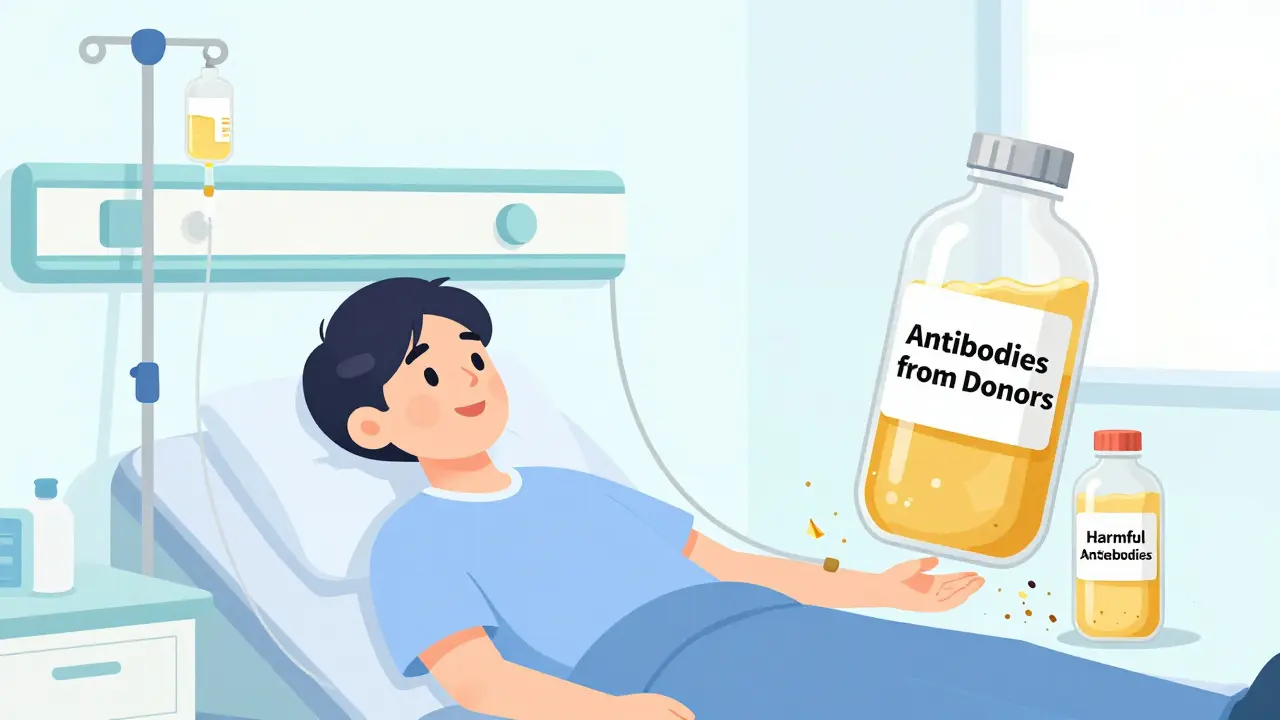
For decades, intravenous immunoglobulin (IVIG) has been the go-to treatment for GBS. It’s made from pooled plasma from thousands of healthy donors, rich in antibodies that help neutralize the harmful ones your body mistakenly made. The standard dose? 0.4 grams per kilogram of body weight, given daily for five days. That’s roughly 20 to 30 bags of fluid over five days, delivered through an IV line.
How does it help? IVIG doesn’t cure GBS. It doesn’t reverse nerve damage. What it does is stop the immune attack in its tracks. Clinical trials show patients on IVIG regain the ability to walk about three weeks faster than those who don’t get it. Sixty percent of those treated show clear improvement within two to four weeks, compared to only 40% without treatment. In one major study, patients receiving IVIG were twice as likely to be walking independently at four weeks.
It’s not magic. Side effects happen. About one in four patients get a bad headache during or right after the infusion-some describe it like a vice squeezing their skull. Fever, chills, and nausea are common. More serious risks include blood clots and kidney issues, especially in people with pre-existing conditions. For those with IgA deficiency, IVIG can trigger a dangerous allergic reaction. That’s why screening happens before treatment.
IVIG vs. Plasma Exchange: The Trade-Offs
Plasma exchange (plasmapheresis) is the other first-line option. It works by filtering your blood to remove the bad antibodies. You lie on a bed for hours while a machine pulls out your plasma, cleans your blood cells, and returns them. It usually takes four to five sessions over 10 to 14 days.
Studies show IVIG and plasma exchange are equally effective at improving recovery speed and strength. But in practice, IVIG wins for most patients. Why? Simplicity. IVIG just needs a regular IV. Plasma exchange requires a central line, which carries risks like infection, bleeding, or clotting. Recovery is easier with IVIG. One 2019 study found patients rated IVIG treatment satisfaction at 7.2 out of 10, while plasma exchange scored just 5.8. That matters. Feeling less stressed during treatment helps the body heal.
Still, plasma exchange has its place. In very severe cases-especially when someone is already on a ventilator-some neurologists prefer it because it removes antibodies faster. But even then, evidence is thin. Most hospitals now start with IVIG unless there’s a clear reason not to.
What Doesn’t Work: Steroids and Other Myths
Many assume steroids like prednisone would help. After all, they reduce inflammation. But multiple high-quality trials have shown they don’t. A 2017 meta-analysis of over 1,000 patients found no difference in recovery time between those on steroids and those on placebo. The same goes for antibiotics, antivirals, or alternative therapies. GBS isn’t caused by an ongoing infection-it’s caused by a mistaken immune response. You can’t treat it with drugs meant to kill bugs.
That’s why the focus stays on immune modulation. IVIG and plasma exchange are the only two treatments with strong, consistent evidence. Everything else? It’s either unproven or actively harmful.
Recovery: The Long Road
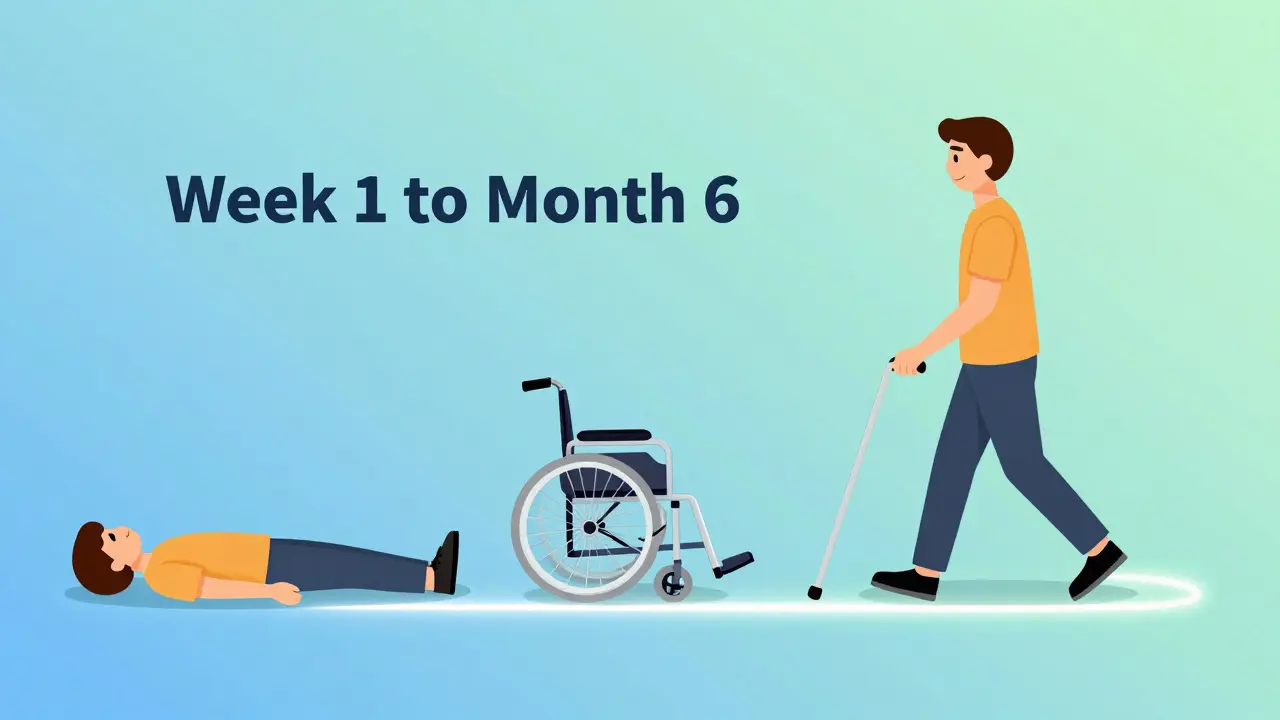
Even with treatment, recovery isn’t fast. Most people see progress in the first few weeks, but full recovery takes months-or even years. About 60% of patients return to normal function within six to twelve months. Another 30% have some lasting weakness, needing canes, braces, or occasional help. And about 10% remain severely disabled, unable to walk without assistance.
Residual symptoms vary. Some have chronic nerve pain. Others struggle with fatigue that doesn’t go away. A small number develop long-term breathing issues. The 2021 International GBS Outcome Study found that 20% of patients still had noticeable disability one year later. That’s why follow-up care is critical. Physical therapy, occupational therapy, and psychological support are just as important as the initial IVIG treatment.
One patient shared on a GBS support forum: “I started IVIG on day five. By day 12, I could wiggle my toes. Day 18, I stood with help. But the headaches? I took three painkillers just to sleep.” Stories like this aren’t rare. Recovery is messy, slow, and deeply personal.
What’s Next: Research and Hope
Scientists are looking beyond IVIG. A 2022 phase 2 trial tested eculizumab, a drug that blocks part of the immune system’s attack, and saw a 30% faster recovery rate. It’s not approved yet, but it’s promising. Researchers are also testing blood tests that detect specific antibodies-like anti-ganglioside markers-to predict who will respond best to IVIG. The goal? Personalized treatment. One size doesn’t fit all, and future protocols might match therapy to the patient’s immune profile.
There’s also work on subcutaneous immunoglobulin-shots under the skin instead of IV infusions. It’s already approved for a related condition, CIDP, and trials for GBS are underway. If successful, it could mean fewer hospital visits and more comfort during recovery.
Final Thoughts: Don’t Wait
Guillain-Barré Syndrome is rare, but it’s real. If you or someone you know suddenly loses strength in the legs, can’t stand on tiptoes, or has trouble breathing after an infection-get to a hospital. Don’t assume it’s a virus or muscle strain. Time is the most critical factor. IVIG treatment, when given early, can change the course of this disease. It’s not perfect. It’s not cheap. But for thousands each year, it’s the difference between long-term disability and walking again.
Can Guillain-Barré Syndrome be cured?
There’s no cure for GBS, but it’s treatable. Most people recover fully, though it can take months or even years. IVIG and plasma exchange don’t repair damaged nerves-they stop the immune system from attacking further. Recovery depends on how quickly treatment starts and how severe the initial damage was. About 60% of patients return to normal function within a year.
Is IVIG treatment safe for everyone?
No. IVIG isn’t safe for people with severe IgA deficiency, as it can cause life-threatening allergic reactions. It also carries risks for those with kidney disease, a history of blood clots, or heart failure. Side effects like headaches, fever, and nausea are common, but serious complications like kidney failure or stroke are rare-occurring in less than 1% of cases. Screening before treatment helps reduce these risks.
How long does IVIG treatment last?
The standard course is five daily infusions, each lasting 2 to 4 hours. The effects build over time, with most patients noticing improvement within 10 to 14 days. But the treatment itself is short-just one week. Recovery, however, takes much longer. Many patients need weeks or months of physical therapy after IVIG ends.
Can GBS come back after treatment?
Recurrence is rare, happening in only about 3% to 5% of cases. When it does, it’s often called chronic inflammatory demyelinating polyneuropathy (CIDP), a related but longer-lasting condition. Most people who recover from GBS don’t get it again. However, those with lingering symptoms or a second episode should be evaluated for CIDP.
Why isn’t plasma exchange used more often than IVIG?
Plasma exchange is just as effective as IVIG, but it’s more invasive. It requires a central line, takes longer per session, and has higher risks like infection or bleeding. IVIG is easier to give, requires less specialized equipment, and patients report better comfort. For these reasons, IVIG is now the first choice in most hospitals, unless the patient is in critical condition or has contraindications to IVIG.
Does insurance cover IVIG for GBS?
Yes, in most cases. IVIG is FDA-approved for GBS and is considered standard of care. Most private insurers and Medicare cover it, though prior authorization is often required. Out-of-pocket costs vary widely-from $0 with full coverage to $5,000 or more depending on the plan. Some patients may need help navigating appeals if coverage is denied.