
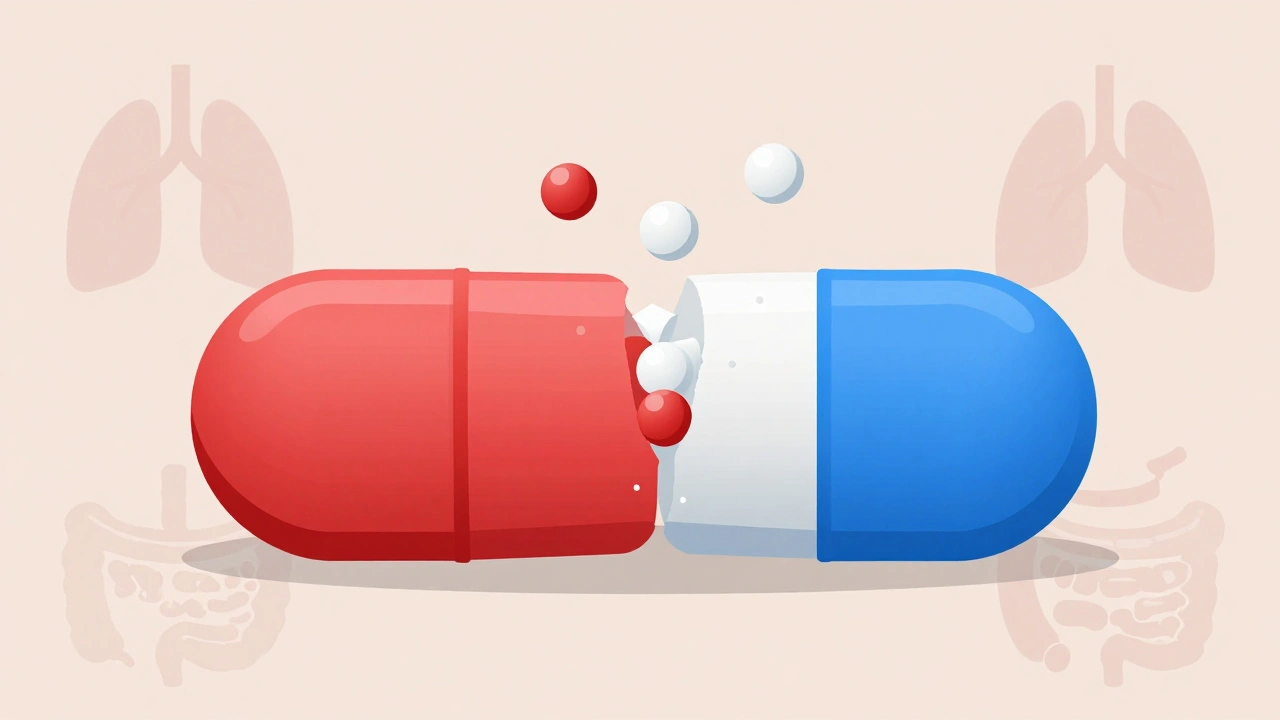
When you pick up a prescription for a generic combination drug, you expect the same results as the brand name version. After all, the active ingredients are identical. But what if the problem isn’t what’s in the pill-it’s what’s not in it? The truth is, generic combination drugs can differ from their brand-name counterparts in ways that actually affect how you feel. And for some people, those differences matter more than you’d think.
Same Active Ingredients, Different Everything Else
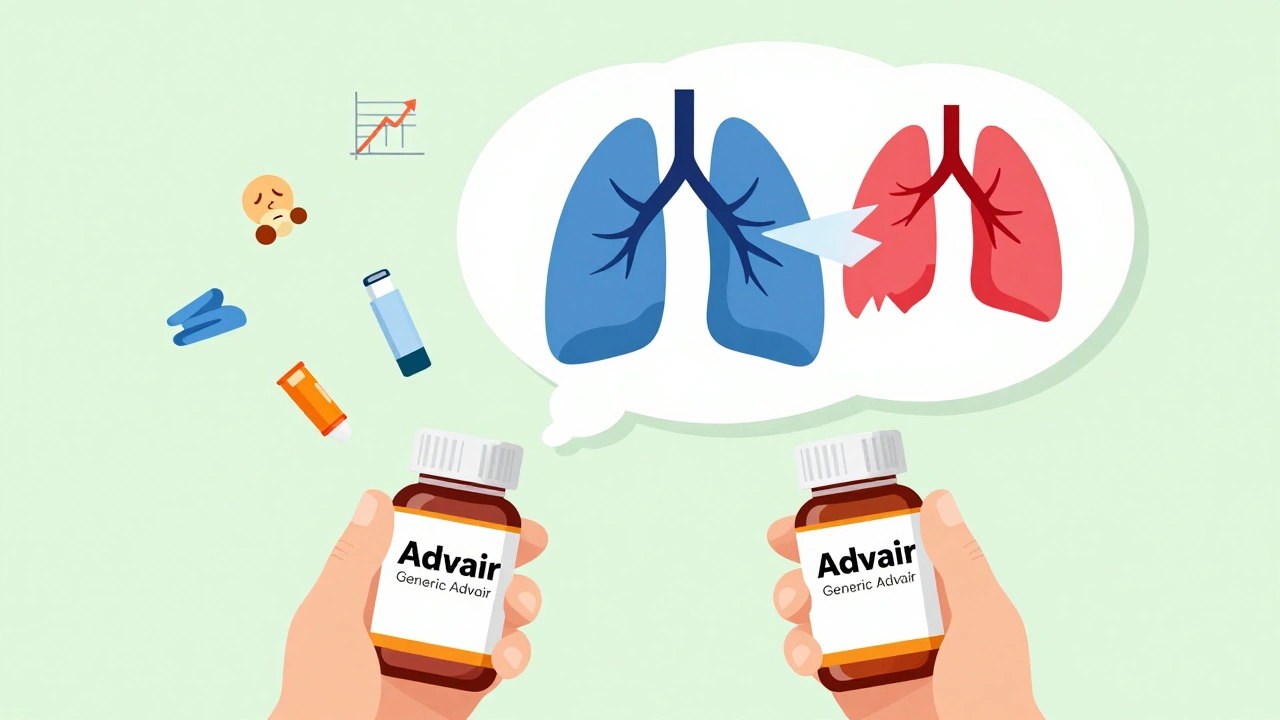
Generic drugs are required to contain the same active pharmaceutical ingredients (APIs) as the brand-name version, in the same strength and dosage form. That’s the law. But when it comes to everything else-fillers, binders, coatings, preservatives, and coloring agents-manufacturers have wide freedom. These are called inactive ingredients, and they’re not just harmless extras. They play a real role in how the drug dissolves, how quickly it’s absorbed, and even how your body reacts to it. For example, a generic version of a combination asthma inhaler might use magnesium stearate instead of lactose as a filler. That sounds minor, but lactose-sensitive patients can experience coughing or wheezing from the new formulation, even though the two active drugs (fluticasone and salmeterol) are unchanged. A 2021 study in Pharmacotherapy found that 23% of patients switching from Advair Diskus to a generic version reported using their rescue inhaler more often within 90 days. That’s not a coincidence. It’s a formulation issue.Why the FDA Allows This
The U.S. Food and Drug Administration (FDA) approves generics based on bioequivalence standards: the drug must deliver the same amount of active ingredient into the bloodstream within a narrow range-80% to 125% of the brand’s performance. That’s measured using two key metrics: AUC (total exposure) and Cmax (peak concentration). If the generic passes these tests, it’s considered therapeutically equivalent. But here’s the catch: these tests don’t measure how the drug behaves in your lungs, gut, or skin. They don’t check if the coating dissolves too slowly in acidic stomach fluid. They don’t test whether a different dye triggers a rash in someone with a rare sensitivity. And they definitely don’t account for how multiple inactive ingredients interact in combination products. A 2017 study in the Journal of the American Pharmacists Association found that nearly half of all generic combination drugs had different inactive ingredients than their brand counterparts. Magnesium stearate showed up in 38% of cases, lactose in 29%, and microcrystalline cellulose in 22%. These aren’t random choices. They’re cost-driven. Generic manufacturers pick cheaper, more available fillers. Sometimes, that’s fine. Sometimes, it’s not.Who’s at Risk?
For most people, switching to a generic combination drug is seamless. The American College of Clinical Pharmacy says 98.5% of substitutions cause no issues. But for a small group-about 1.2% of all prescription users-the stakes are much higher. These are patients taking drugs with a narrow therapeutic index (NTI). NTI drugs have a tiny window between effectiveness and toxicity. A little too little, and the condition flares up. A little too much, and you get serious side effects. Examples include:- Levothyroxine (for thyroid disease)
- Warfarin (a blood thinner)
- Phenytoin and carbamazepine (anti-seizure meds)
- Cyclosporine (for organ transplants)
What Pharmacists Are Seeing
Independent pharmacists are on the front lines. A 2022 survey by the National Community Pharmacists Association found that 34% of them had received patient complaints about generic combination drugs. The top issues? Gastrointestinal upset (41%), skin reactions (29%), and reduced effectiveness (22%). One pharmacist in Ohio told me about a patient on metformin/sitagliptin who developed severe bloating and diarrhea after switching to the generic. The brand version had no issues. The generic used a different binder that slowed dissolution in the small intestine, causing fermentation and gas. The patient didn’t know why it happened. The pharmacist had to call the prescriber, get a new prescription, and manually override the automatic substitution. These aren’t rare cases. In fact, Reddit’s r/pharmacy community logged 478 specific incidents of problems with generic combinations in 2022 alone. Most involved multi-drug pills for diabetes, hypertension, or depression.How to Protect Yourself
You don’t have to accept a bad substitution. Here’s what you can do:- Check the Orange Book-The FDA’s publication lists therapeutic equivalence ratings. Look for an “A” rating (therapeutically equivalent) or “B” (potential concern). If it’s a B-rated drug, ask your pharmacist why it’s being substituted.
- Ask about inactive ingredients-Most pharmacies can tell you what’s in the generic pill. If you’re allergic to lactose, corn starch, or dyes, speak up. Some generics use ingredients that trigger reactions even if the active drug is fine.
- Monitor your symptoms-If you feel different after a switch-more fatigue, more anxiety, worse control of your condition-don’t brush it off. Track your symptoms for 2-4 weeks and report them to your doctor.
- Request the brand or an authorized generic-Authorized generics are made by the brand company but sold under a generic label. They’re identical in every way, including inactive ingredients. They cost more than standard generics but still 60-70% cheaper than the brand. For NTI drugs, it’s often worth the extra few dollars.
- Know your state’s rules-46 states now require pharmacists to document substitutions for NTI drugs. In California, pharmacists must log every substitution of an antiepileptic drug. Ask if your state has similar protections.


Post A Comment