
Every time you pick up a generic pill at the pharmacy, you’re trusting that it works just like the brand-name version. But what if the ad you saw online told you otherwise? What if it whispered that generics are less effective, riskier, or even unsafe-without proof? That’s not just misleading. It’s illegal. And the consequences aren’t just fines. They’re lives.
What Counts as False Advertising in Generic Drugs?
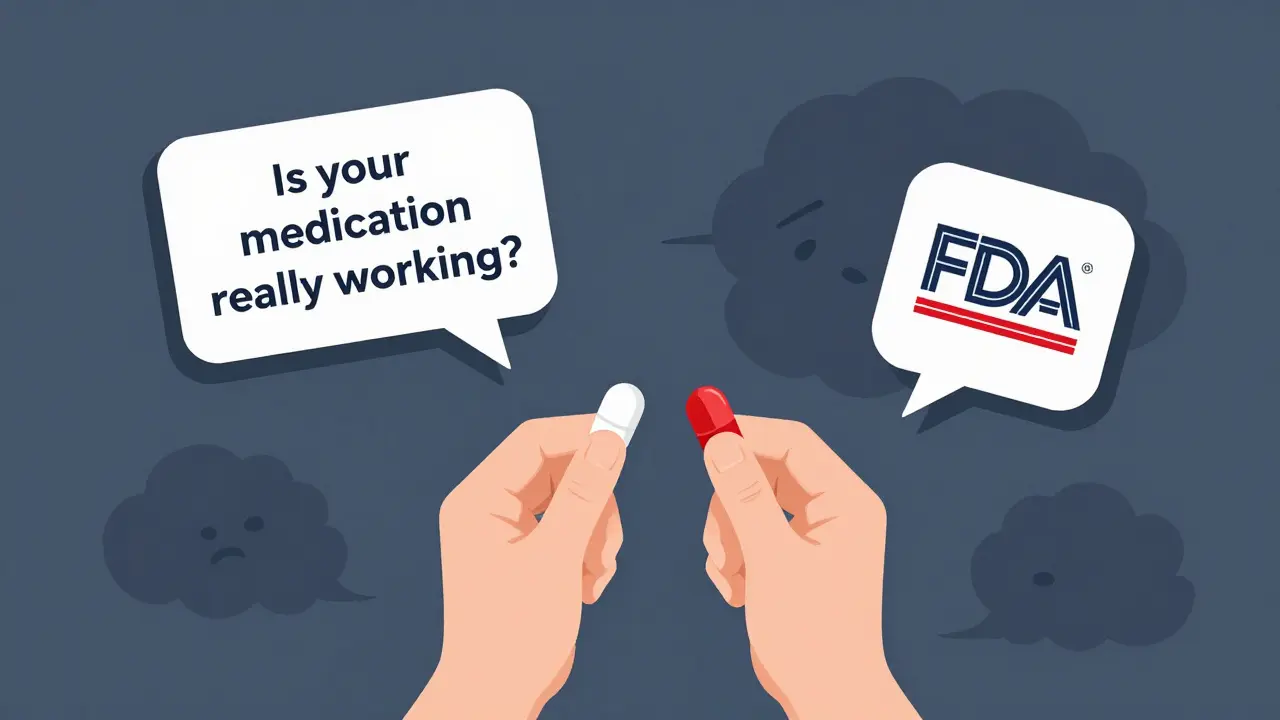
False advertising in generic pharmaceuticals isn’t about lying outright. It’s about what’s left unsaid, what’s exaggerated, or what’s implied. The FDA requires that generic drugs be bioequivalent to their brand-name counterparts-meaning they deliver the same amount of active ingredient into your bloodstream at the same rate. That’s it. But some ads go further. They suggest generics are inferior. They use visuals that mimic brand-name packaging. They imply the FDA has flagged them as unsafe. They even claim "FDA Approved" when the product only has clearance for sale, not full approval. One real case involved an ad showing a generic levothyroxine tablet next to a brand-name one, with bold text: "Is your thyroid medication really working?" The implication? The generic might not cut it. But the FDA has confirmed bioequivalence for levothyroxine generics since 2019. This kind of ad doesn’t just confuse patients-it causes people to stop taking their meds. In 2024, the FDA reviewed over 1,200 patient complaints linked to these ads. Thirty-two percent of those patients experienced worsening symptoms, hospital visits, or dangerous drug interactions because they switched back to pricier brands out of fear.The Laws That Keep Generic Ads Honest
Three major laws control what generic drug companies can say in their ads:- The Federal Food, Drug, and Cosmetic Act (FD&C Act): This is the foundation. It bans false or misleading labeling and advertising. If a generic ad claims therapeutic equivalence without FDA approval, it’s a violation.
- The Lanham Act: This lets competitors sue each other for deceptive marketing. If a brand-name company believes a generic ad is misleading patients into thinking the brand is unsafe, they can take legal action. In 2025, at least six major lawsuits were filed under this law targeting generic manufacturers for false equivalence claims.
- State Consumer Protection Laws: Every state has its own rules. New York can hit violators with up to $1,000 per violation, plus triple damages. California demands stricter proof for cost-saving claims. Florida bans using government logos or terms like "health alert" in ads.
What Generic Ads Are Allowed to Say
You can’t say a generic is better. You can’t say it’s safer. You can’t imply it’s the same as the brand unless the FDA has officially declared therapeutic equivalence. But here’s what you can say:- "This is a generic version of [Brand Name]."
- "Contains the same active ingredient as [Brand Name]."
- "Significantly lower cost."
- "FDA-approved for the same uses as [Brand Name]."
The Hidden Loophole the FDA Just Closed
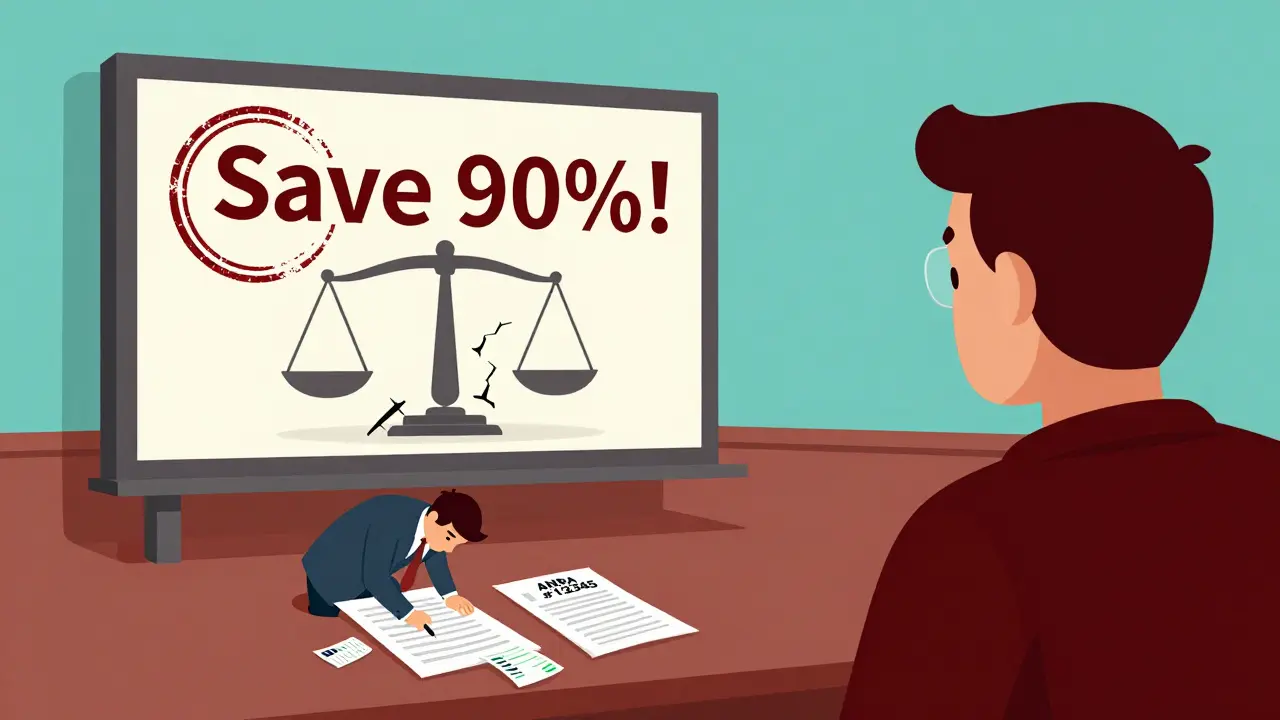
For nearly 30 years, drug companies could run TV or radio ads that said: "For complete risk information, visit [website]." This was called the "adequate provision" rule. It let them skip listing major side effects in the ad itself. In September 2025, the FDA killed that loophole. Now, every broadcast and digital ad must include all serious risks right in the message. No links. No fine print. No "learn more" buttons. If your drug can cause liver damage, you have to say it in the 30-second spot. That’s a huge shift. It’s especially hard for generics, which often rely on short, punchy ads to compete with big-budget brand campaigns. But the goal is clear: patients shouldn’t have to dig to find out if a drug could hurt them.Who’s Getting Hit-and Why
The biggest targets? Companies that compare generics to brands in ways that imply inferiority. A 2024 FDA warning letter to Teva Pharmaceuticals cited an ad that said: "Many patients report better results with the original. Ask your doctor if you’re getting the right one." That’s not just misleading-it’s dangerous. It suggests the generic isn’t "right," even though it’s chemically identical. Smaller generic manufacturers are struggling. A 2025 FDA survey found only 47% of small generic makers have full compliance teams. Meanwhile, the top 25 manufacturers have compliance budgets averaging $2.1 million a year. They hire teams of regulatory experts, lawyers, and medical writers just to review every word, image, and tone in an ad. The cost of getting it wrong? It’s not just money. In 2023, a generic manufacturer paid $12 million in a Lanham Act settlement after a competitor proved their ad caused patient confusion and lost sales. That’s not rare. It’s becoming standard.What Happens When Patients Believe the Lies
The real damage isn’t in lawsuits. It’s in clinics and homes. Reddit threads like r/pharmacy are full of stories: "I stopped my generic metformin because of an ad that said it was linked to kidney failure. My blood sugar spiked. Took me three months to get my doctor to prescribe the brand again." Or: "My mom switched back to the brand-name statin because the commercial said generics were "made in China" and "not safe." She had a heart attack two weeks later. She didn’t realize her insurance wouldn’t cover the brand anymore." The National Community Pharmacists Association found that 41% of patients are confused about whether generics are truly equivalent after seeing DTC ads. Meanwhile, seniors who saw clear, honest ads reported 78% cost savings-and kept taking their meds. That’s the difference between truth and trickery.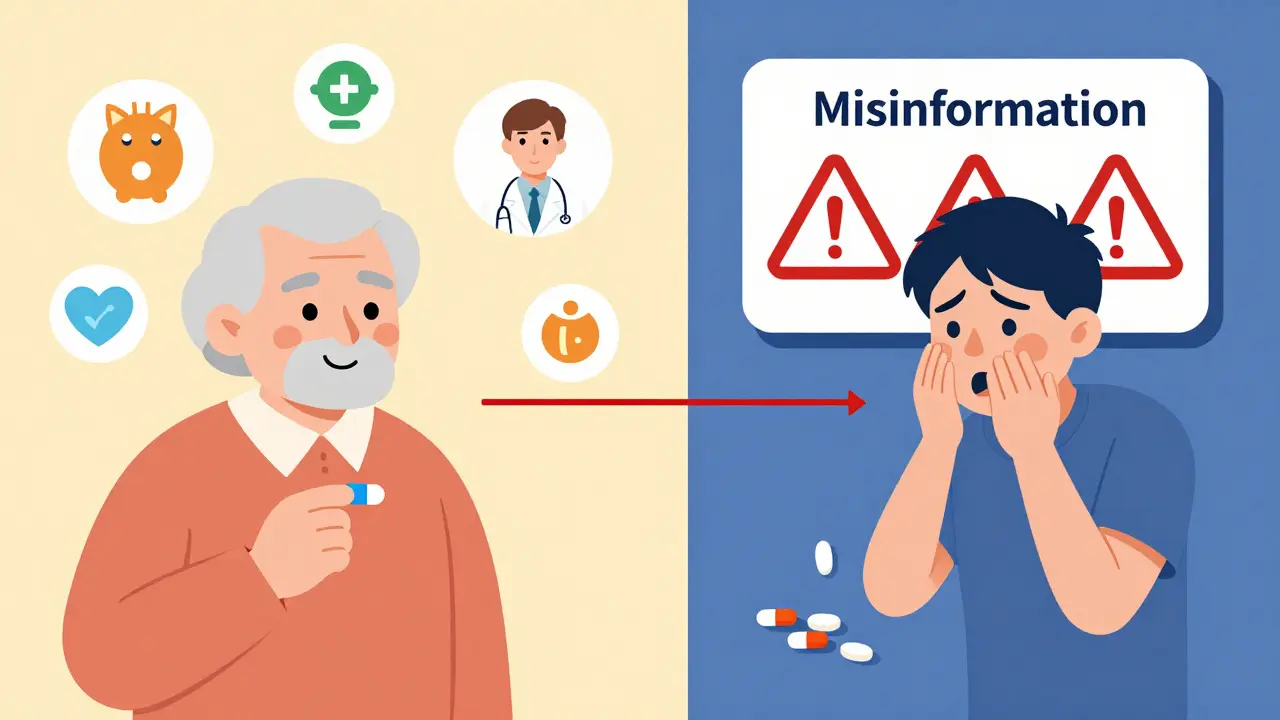
How Companies Stay Compliant Today
To avoid legal trouble, smart companies now do three things:- They run every ad through a regulatory review team before it goes live. These teams include FDA-experienced professionals with at least five years’ experience.
- They avoid any language that implies superiority, safety, or efficacy differences unless backed by head-to-head clinical trials-which are rare and expensive.
- They document everything. If they claim "lower cost," they keep receipts from 50 pharmacies. If they say "FDA-approved," they cite the exact ANDA number.


Post A Comment