
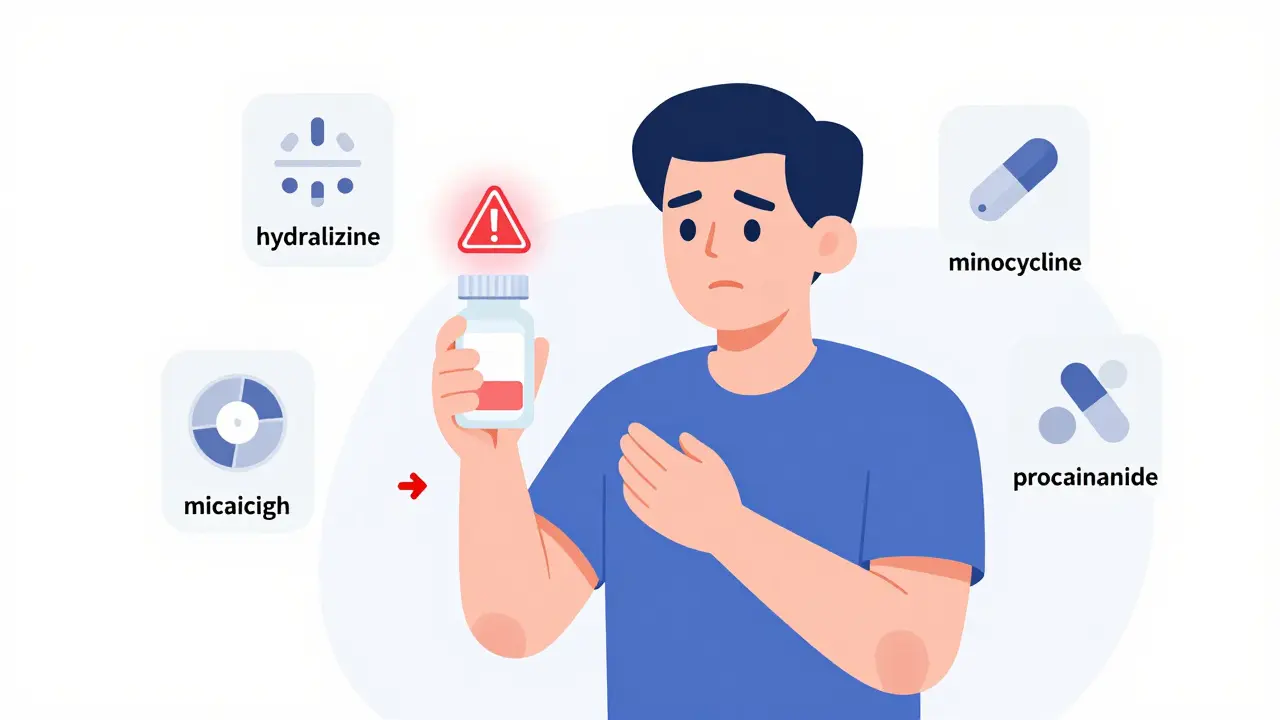
DIL Medication Risk Checker
Medication Risk Assessment Tool
Check if your medications might be causing drug-induced lupus symptoms
Most people assume lupus is a lifelong autoimmune disease you’re born with. But what if your body started attacking itself because of a pill you took for high blood pressure, arthritis, or acne? That’s not rare. It’s called drug-induced lupus, and it’s more common than you think - especially if you’re over 50 and on long-term medication.
What Exactly Is Drug-Induced Lupus?
Drug-induced lupus (DIL) isn’t the same as systemic lupus erythematosus (SLE). It’s an autoimmune reaction triggered by certain medications. Your immune system gets confused, starts seeing your own tissues as threats, and attacks them - just like in lupus. But here’s the key difference: DIL usually goes away when you stop the drug. No lifelong immunosuppressants needed. That’s the big win.
It was first noticed in the 1950s when patients on hydralazine - a blood pressure drug - started showing lupus symptoms. Since then, doctors have linked over 40 medications to this reaction. The most common culprits? Hydralazine, procainamide, minocycline, and TNF-alpha inhibitors like infliximab. Even some acne and arthritis meds can trigger it.
Unlike regular lupus, which hits women between 15 and 45 most often, DIL affects men and women equally - and mostly hits people over 50. About 10-15% of all lupus-like cases diagnosed in the U.S. each year are drug-induced. And the good news? Around 80-90% of people fully recover after stopping the medicine.
What Are the Symptoms?
If you’ve been on a medication for months and suddenly feel like you’ve caught the flu - but it won’t go away - pay attention. DIL symptoms are similar to lupus, but less severe and rarely affect major organs.
- Muscle pain: Happens in 75-85% of cases. Feels like constant soreness, even if you haven’t worked out.
- Joint pain and swelling: Affects 65-75%. Often in hands, knees, or wrists. Can be mistaken for arthritis.
- Fatigue: Over 80% of patients report extreme tiredness that doesn’t improve with rest.
- Fever: Low-grade, persistent - usually 100-101°F. Comes and goes without infection.
- Weight loss: Unexplained, not from dieting. Around 30-40% of cases.
- Serositis: Inflammation around the heart (pericarditis) or lungs (pleuritis). Causes chest pain that gets worse when you breathe deeply.
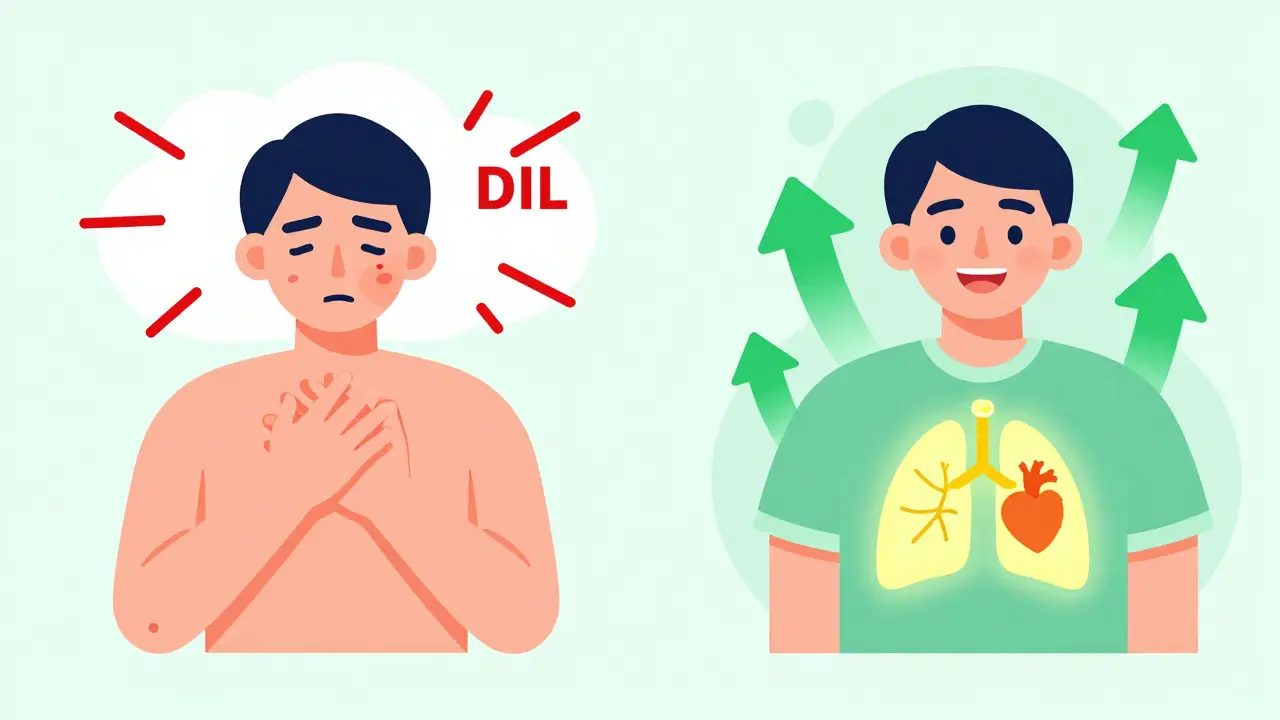
Here’s what’s different from regular lupus: You’re unlikely to get the classic butterfly rash across your cheeks. That shows up in only 10-15% of DIL cases, compared to 40-60% in SLE. Photosensitivity? Less common too. Kidney damage? Rare - under 5% of DIL cases. Brain or nervous system issues? Almost never.
If you’ve had these symptoms for more than a few weeks and you’re on a long-term medication, it’s worth asking: Could this be the drug?
How Is It Diagnosed?
Doctors don’t just guess. They follow a clear path.
First: medication history. This is the #1 clue. If you started the drug 3 to 6 months before symptoms appeared - and you’re over 50 - that’s a red flag. Some cases show up as early as 3 weeks, others take up to 2 years. But the timing matters.
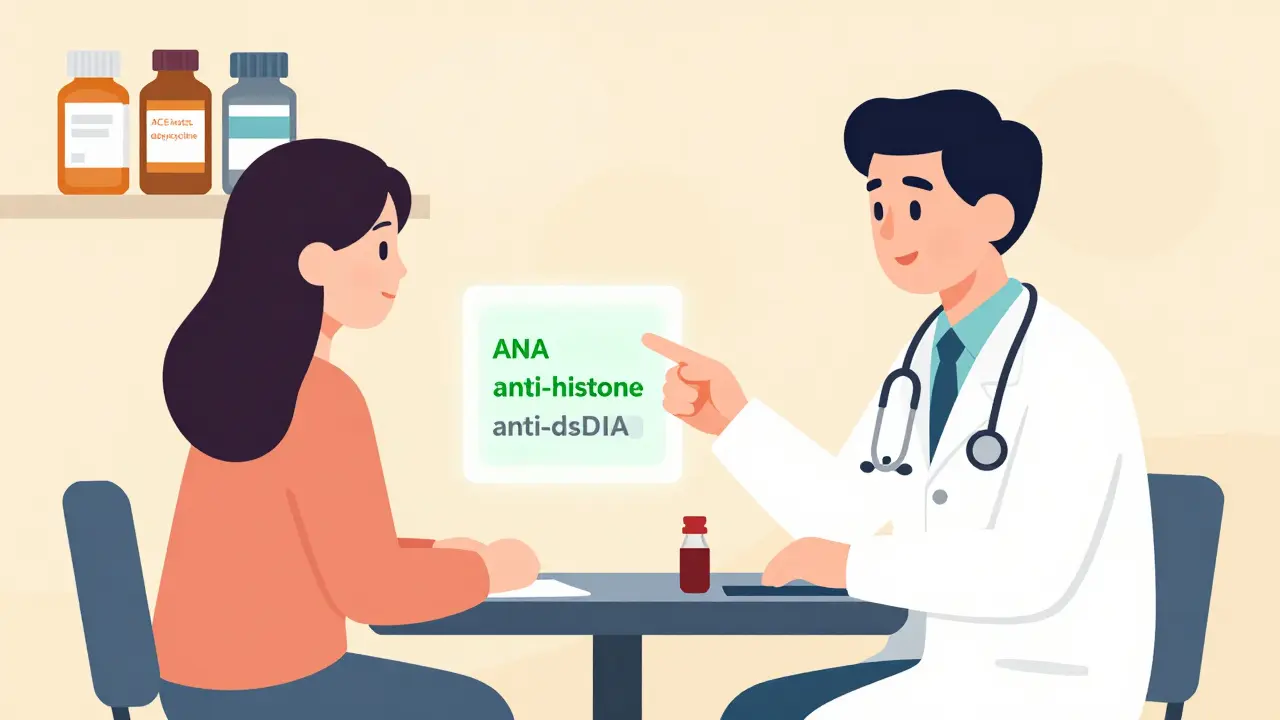
Second: blood tests. Almost everyone with DIL tests positive for antinuclear antibodies (ANA) - that’s 95% of cases. But here’s the real giveaway: anti-histone antibodies. These show up in 75-90% of DIL patients, especially with hydralazine or procainamide. In regular lupus, only 50-70% have them.
Anti-dsDNA antibodies? Those are the hallmark of SLE. In DIL? Less than 10% of patients have them. That’s a major differentiator.
Other tests: ESR and CRP - markers of inflammation - are often elevated. But if your kidneys, lungs, or brain are fine on imaging, and your antibody profile matches DIL, it’s likely not SLE.
Here’s where things go wrong: About 25% of DIL cases are misdiagnosed as regular lupus, fibromyalgia, or chronic fatigue. That leads to unnecessary steroids, immune drugs, and years of fear. A 2022 patient survey found the average time to correct diagnosis was 4.7 months. That’s too long.
Which Medications Cause It?
Not all drugs carry the same risk. Some are high-risk. Others are rare triggers.
| Medication | Common Use | DIL Risk | Time to Onset |
|---|---|---|---|
| Procainamide | Heart rhythm disorder | Up to 30% | 3-12 months |
| Hydralazine | High blood pressure | 5-10% | 3-6 months |
| Minocycline | Acne, infections | 1-3% | 3-24 months |
| TNF-alpha inhibitors | Rheumatoid arthritis, Crohn’s | 1-3% | 3-12 months |
| Isotretinoin | Severe acne | Less than 1% | Variable |
| Immune checkpoint inhibitors | Cancer immunotherapy | 1.5-2% | 1-18 months |
Procainamide and hydralazine are the biggest offenders - but their use has dropped since the 1980s after warnings were added. Now, newer drugs like TNF inhibitors and cancer immunotherapies are becoming more common causes. If you’re on any of these, know the signs.
Genetics also play a role. People with a slow acetylator gene (NAT2) are nearly 5 times more likely to develop hydralazine-induced lupus. Some European guidelines now recommend genetic testing before starting hydralazine.
How Do You Recover?
Recovery is the best part. You don’t need to live with this forever.
Step 1: Stop the drug. This is non-negotiable. Once you stop the medication, your body starts to reset. Most people feel better in 2 to 12 weeks. About 80% see major improvement within 4 weeks.
Step 2: Manage symptoms. If joint pain or fever lingers, NSAIDs like ibuprofen help 60-70% of cases. For moderate symptoms, doctors often prescribe low-dose prednisone (5-10 mg daily) for 4-8 weeks. That’s enough to calm the immune flare without long-term damage.
Step 3: Switch medications. If you needed the drug for a chronic condition, your doctor will find a safer alternative. For example:
- If you were on hydralazine for high blood pressure, switch to ACE inhibitors or calcium channel blockers.
- If you were on procainamide for heart rhythm, amiodarone is a much lower-risk option.
- If minocycline caused it, doxycycline is often a safe swap for acne.
Only 5-10% of patients need stronger drugs like azathioprine or methotrexate - usually because symptoms are stubborn or they can’t stop the original drug for medical reasons.
Real patient stories back this up. One Reddit user stopped hydralazine and saw 80% symptom relief in 4 weeks. Another switched from minocycline to doxycycline - joint swelling vanished in 3 weeks. That’s not luck. That’s DIL resolving.
What Happens If You Don’t Stop the Drug?
Ignoring it won’t make it go away. It might get worse. Persistent inflammation can damage your heart, lungs, or joints over time. Worse, you might be misdiagnosed with SLE and put on long-term steroids or immune drugs like cyclophosphamide - which carry serious side effects: bone loss, infections, diabetes, even cancer risk.
That’s why early recognition matters. If you’re on a high-risk drug and feel off, don’t wait. Talk to your doctor. Get tested. Don’t assume it’s just aging or stress.
What’s New in 2026?
Research is moving fast. In 2023, the American College of Rheumatology released new diagnostic criteria specifically for DIL - focusing on timing, antibodies, and symptom resolution. That’s helping doctors diagnose faster.
Scientists are now studying microRNA patterns that could predict who’s at risk before symptoms even start. A $2.5 million research grant from the Lupus Research Alliance is funding this work.
And there’s hope for the future: Early animal trials are testing “histone decoy” molecules - designed to block the immune system’s attack without stopping the drug. That could let people keep their life-saving meds without triggering lupus.
But for now, the best tool is awareness. If you’re over 50, on long-term meds, and feel unusually tired or achy - ask about DIL. It’s not a death sentence. It’s a reversible reaction. And knowing the signs could save you from years of unnecessary treatment.
When to See a Doctor
You don’t need to wait for a crisis. If you’re on one of the high-risk medications and have any of these symptoms for more than 2 weeks:
- Unexplained joint pain or swelling
- Constant fatigue that doesn’t improve
- Low-grade fever without infection
- Chest pain that worsens with deep breathing
- Unintentional weight loss
Make an appointment with your primary care doctor or a rheumatologist. Bring your full medication list - including supplements and over-the-counter drugs. Don’t leave home without it.
Ask: “Could this be drug-induced lupus?” Most doctors haven’t seen many cases - but they’ve heard of it. If they’re unsure, ask for a referral. You’re not overreacting. You’re being smart.


Post A Comment