
Every year, over 82,000 people in the U.S. lose a foot or leg to diabetes-related amputation. Most of these cases don’t happen suddenly. They start with a small cut, a blister, or a spot of redness that goes unnoticed. For people with diabetes, even a minor injury can turn into a life-altering problem - not because it’s severe, but because it’s missed.
Why Foot Care Matters More Than You Think
Diabetes doesn’t just raise blood sugar. It quietly damages nerves and blood vessels, especially in the feet. This is called diabetic neuropathy. You might not feel a pebble in your shoe. You might not notice a blister forming. Your feet could be getting injured every day - and you wouldn’t know it.The numbers are clear: 15% to 25% of people with diabetes will develop a foot ulcer in their lifetime. And once an ulcer forms, the risk of amputation jumps dramatically. The good news? Up to 85% of these ulcers can be prevented - if you catch them early.
The International Working Group on the Diabetic Foot (IWGDF), made up of 37 global experts, says prevention isn’t about fancy treatments. It’s about two things: checking your feet every single day and wearing the right shoes.
The Daily Foot Inspection Checklist
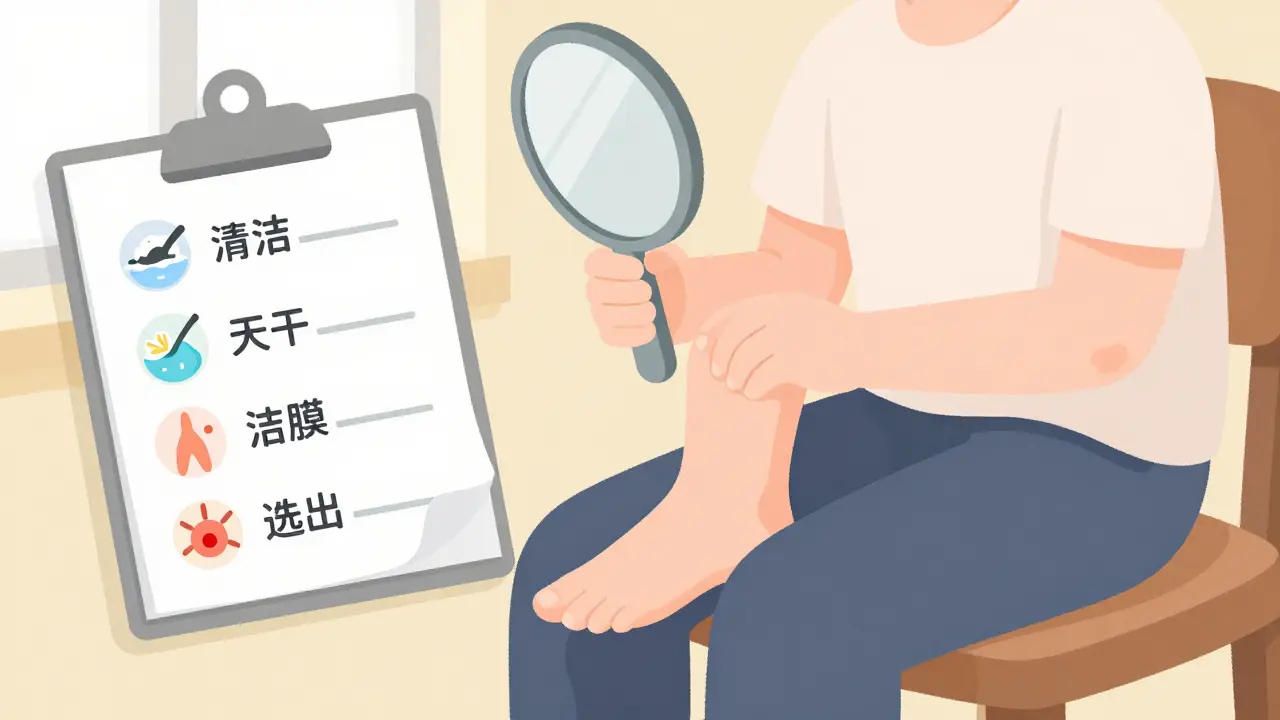
This isn’t optional. It’s as essential as brushing your teeth. Do this every morning or evening - same time, every day. Natural light is best. Between 10 a.m. and 2 p.m., your body temperature is most stable, making it easier to spot swelling or warmth that shouldn’t be there.- Wash your feet in lukewarm water - between 90°F and 95°F. Too hot, and you could burn yourself without feeling it. Use mild soap. Avoid hot tubs, saunas, or heating pads.
- Dry thoroughly, especially between your toes. Moisture there invites fungal infections, which can lead to cracks and open sores.
- Look at every part of your feet. Use a mirror to see the bottom. If you can’t bend over or see clearly, ask someone to help. Don’t skip the heels, the sides, or the spaces between toes.
- Check for these warning signs:
- Blisters larger than 3mm
- Cuts or scrapes deeper than 1mm
- Redness bigger than a coin (1cm diameter)
- Swelling that makes your foot feel tight or harder to slip into your shoe
- Warmth in one spot - if one foot feels noticeably warmer than the other, that’s a red flag
- Ingrown toenails or thick, yellow nails (signs of fungal infection)
- Apply moisturizer to dry skin - but never between your toes. Dry skin cracks. Cracks become entry points for infection.
- Trim nails straight across. Cut them so they’re just a millimeter or two above the skin. Don’t round the corners. Don’t cut into the sides. If your nails are thick or you can’t see well, see a podiatrist.
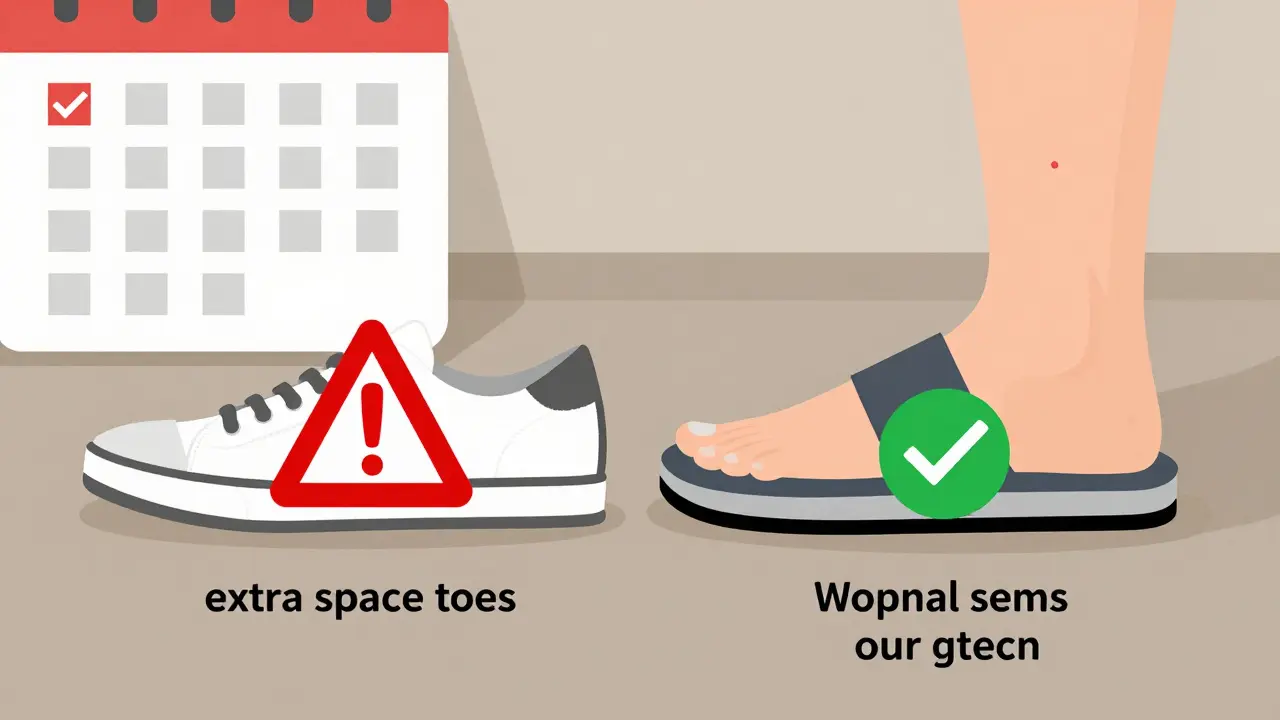
- Don’t go barefoot. Not even indoors. A step on a hot floor, a dropped object, or a rough carpet edge can cause damage you won’t feel until it’s too late. The CDC says walking barefoot increases ulcer risk by more than 11 times.
Studies show that 68% of foot ulcers start from injuries that were never noticed. Consistency is everything. Miss one day, and you might miss the warning sign that could have saved your foot.
Footwear Isn’t Just About Comfort - It’s About Survival
Shoes are your first line of defense. But not all shoes are created equal.For people with moderate to high risk - meaning you have nerve damage, foot deformities, or a past ulcer - therapeutic footwear isn’t a luxury. It’s a medical necessity. These shoes are designed to reduce pressure on high-risk areas of your foot, especially under the ball of the foot where 92% of ulcers form.
Here’s what to look for:
- At least 0.5 inches (12.7mm) of space between your longest toe and the front of the shoe
- Width that lets your toes spread naturally - no pinching
- A firm heel counter that doesn’t collapse when you press it
- No seams or stitching inside that could rub against your skin
Even the best shoes won’t help if you wear them inconsistently. A 2022 study found that only 31% of patients wore proper footwear in summer, even when temperatures hit 89°F. Many switched to sandals - which increase ulcer risk by over four times.
Don’t buy shoes at the end of the day when your feet are swollen. Try them on in the morning. Walk around the store. If your foot feels any pressure, even slight, don’t buy them.
Who’s at Highest Risk?
Not everyone with diabetes needs the same level of care. The IWGDF classifies risk into four levels:- Risk 0: No nerve damage, no foot problems. Check feet once a year.
- Risk 1: Nerve damage but no deformity or past ulcers. Check feet every 6 months.
- Risk 2: Nerve damage with foot deformities (like bunions or hammertoes). Check feet every 3 months.
- Risk 3: History of ulcer or amputation. Check feet monthly - or more often if advised.
If you’re Risk 2 or 3, you should also get an ankle-brachial index (ABI) test. This checks blood flow to your legs. If your ABI is below 0.9, you need vascular care. If it’s below 0.5, you need urgent referral - poor circulation means even small wounds won’t heal.
What Doesn’t Work - And What Could Hurt You
There’s a lot of misinformation out there. Here’s what to avoid:- Don’t use sharp tools to remove calluses. Even a small nick can turn into an ulcer. See a podiatrist for safe trimming.
- Don’t use corn pads or medicated patches. They contain acids that burn skin - skin you can’t feel burning.
- Don’t soak your feet for long. Soaking softens skin, making it more likely to break. Plus, you can’t feel if the water is too hot.
- Don’t rely on antibiotics to prevent infection. Taking them “just in case” doesn’t help ulcers heal - and increases antibiotic resistance.
- Don’t do unsupervised foot exercises. Some ankle movements can increase pressure on vulnerable areas. Only do them if a professional has approved them.
And here’s something surprising: walking 1,000 steps a day is often recommended - but only if you have normal sensation and no existing foot damage. If you’re at higher risk, too much walking without proper footwear can cause more harm than good.
Barriers to Care - And How to Overcome Them
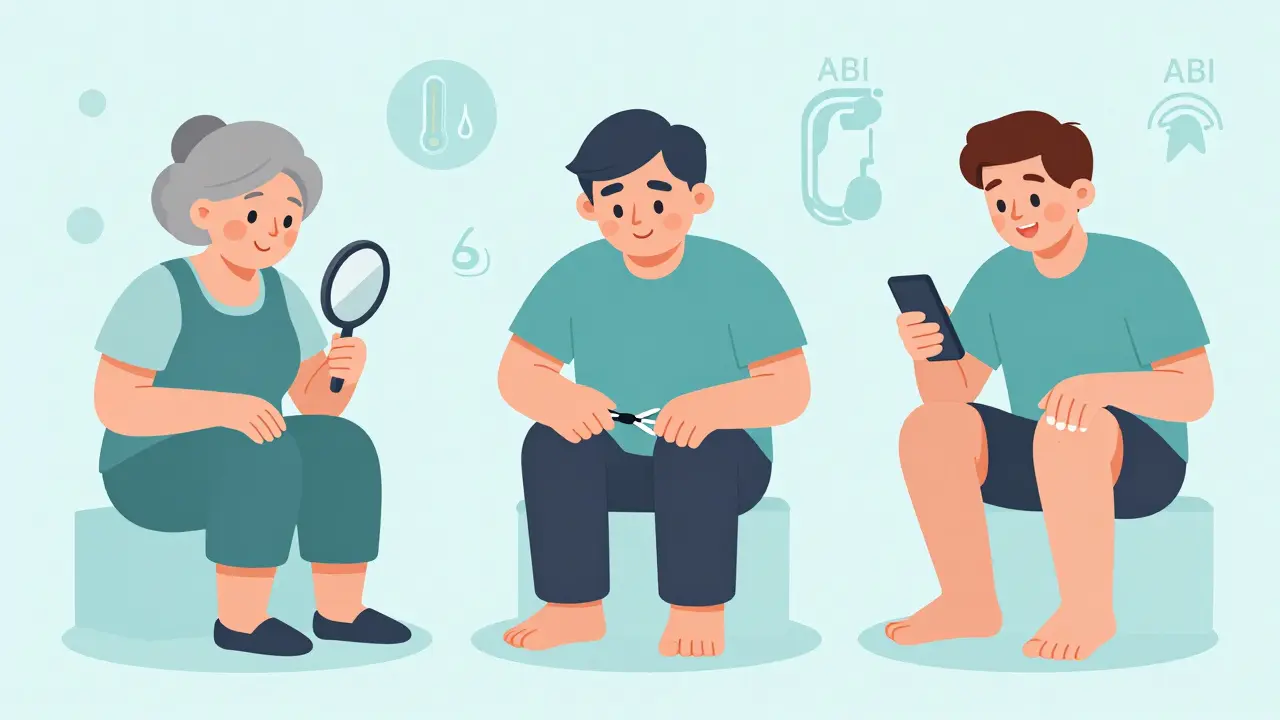
Many people want to do the right thing. But life gets in the way.- Vision problems? Use a mirror with a long handle or ask a family member to help. Smartphone apps like FootCheck AI can take photos of your feet and flag changes - but they need good internet.
- Cost of shoes or sensors? Medicaid now covers annual foot exams in 47 states as of 2024. Ask your doctor about therapeutic footwear programs - some are free or low-cost through clinics.
- Forgetfulness? Set a daily phone alarm. Tie foot checks to another habit - like brushing your teeth or watching the evening news.
- Living alone? Community health workers or telehealth services can guide you through daily checks remotely.
Adherence is low - only 42% of people do full daily inspections. But every extra day you check your feet reduces your risk. Even if you miss a few days, don’t give up. Start again tomorrow.
The Bigger Picture: Integrated Care Saves Feet
The best outcomes happen when care is coordinated. That means your primary doctor, podiatrist, diabetes educator, and orthotist are all on the same page. The 2023 IWGDF guidelines call this “integrated foot care.”Programs that use this model cut ulcer rates by 36% and amputations by 42% in Medicare patients. It’s not magic. It’s structure: regular check-ins, timely referrals, and clear communication.
If you’re Risk 2 or 3, ask your doctor for a referral to a foot care team. Don’t wait for a problem to happen. Prevention is cheaper, safer, and far less traumatic than amputation.
What’s Next? Technology Can Help - But It’s Not a Replacement
New tools are emerging. Wireless socks that monitor skin temperature can warn you of an ulcer 4-7 days before it forms. Smart mats track pressure changes while you stand. AI apps analyze photos for early signs of damage.But these tools are expensive. Many cost over $200 a year. And they don’t work without internet or reliable power.
They’re helpful - but not essential. The most powerful tool you have is still your eyes, your hands, and your daily routine.
Final Thought: Your Feet Are Your Foundation
Diabetes changes how your body works. But it doesn’t have to change your life. Every day you check your feet, you’re not just preventing an ulcer. You’re protecting your independence. Your ability to walk, to travel, to play with your grandkids, to live without pain.It’s not about perfection. It’s about persistence. Miss a day? Do better tomorrow. See a red spot? Don’t wait. Call your doctor. Your foot might be numb - but your decision doesn’t have to be.
How often should I check my feet if I have diabetes?
If you have no nerve damage or foot history, check your feet once a year during a medical visit. If you have nerve damage (neuropathy), check daily. If you’ve had a foot ulcer or amputation before, check daily and see a specialist every 1-2 months. Daily inspection is the single most effective way to prevent ulcers.
Can I use lotion between my toes?
No. Moisture between your toes creates a warm, damp environment where fungi thrive. This can lead to cracks, infections, and open sores. Apply lotion only to the tops and bottoms of your feet - avoid the spaces between toes completely.
Is it safe to walk barefoot at home?
No. Even indoors, you can step on something sharp, hot, or rough without feeling it. The CDC reports that walking barefoot - even for just 5 minutes a day - increases your risk of foot ulcers by more than 11 times. Always wear shoes or slippers with closed toes and good soles, even inside.
Do I need special shoes if I don’t have foot problems yet?
If you have no nerve damage and no foot deformities, standard supportive shoes are fine. But if you have numbness, foot shape changes, or a history of ulcers, therapeutic footwear is medically necessary. These shoes reduce pressure on high-risk areas and prevent ulcers before they start. Ask your doctor for a referral to a certified pedorthist.
Can I treat a callus myself with a pumice stone?
Be very careful. Lightly rubbing a callus with a pumice stone after a bath is okay - if you can feel it and see what you’re doing. But never cut, scrape, or use chemical removers. These can cause deep wounds you won’t feel until they’re infected. If you’re unsure, see a podiatrist. They remove calluses safely using sterile tools.
What should I do if I find a small cut on my foot?
Clean it gently with mild soap and water. Pat it dry. Cover it with a sterile bandage. Don’t use alcohol, hydrogen peroxide, or iodine - they damage healing tissue. Check it daily. If it doesn’t start healing in 2-3 days, or if you see redness, swelling, or drainage, call your doctor immediately. Don’t wait. Early treatment stops small problems from becoming amputations.
Are there any signs I should go to the ER for my foot?
Yes. Go to the ER if you have: severe swelling or redness spreading up your leg, fever over 100.4°F, foul-smelling drainage from a wound, or sudden numbness and coldness in your foot. These could mean a serious infection or blocked blood flow - both require urgent care.
Next Steps: Build a Foot Care Routine That Sticks
Start today. Pick a time - morning or night - and set a daily alarm. Keep your mirror and moisturizer next to your bed. Put your shoes by the door so you can’t leave without them. Tell a family member what you’re doing - ask them to check in once a week.You don’t need to be perfect. You just need to be consistent. One day at a time, your feet will thank you - and so will your future self.


Post A Comment