

Before 2018, if you had chronic migraines, your doctor had few real options. They’d hand you a pill meant for seizures, blood pressure, or depression - drugs never designed for headaches. You’d take them hoping for relief, but often dealt with brain fog, weight gain, or dizziness. Then came CGRP inhibitors. For the first time, migraine prevention had drugs built just for it.
What Exactly Are CGRP Inhibitors?
CGRP stands for Calcitonin Gene-Related Peptide. It’s a tiny protein in your nervous system that becomes overactive during a migraine. When it floods your brain, it triggers inflammation, swelling, and pain signals - the exact chain reaction behind a migraine attack. CGRP inhibitors block this protein, either by binding to it directly or shutting down its receptor so it can’t send pain signals. There are two main types: monoclonal antibodies (mAbs) and gepants. The mAbs - like Aimovig (erenumab), Ajovy (fremanezumab), Emgality (galcanezumab), and Vyepti (eptinezumab) - are injected. They’re made in labs to act like immune system soldiers, targeting CGRP with precision. Gepants - Nurtec ODT (rimegepant), Ubrelvy (ubrogepant), and Zavzpret (zavegepant) - are small pills or nasal sprays. They work faster and can be used both to stop an attack and to prevent them.How Effective Are They?
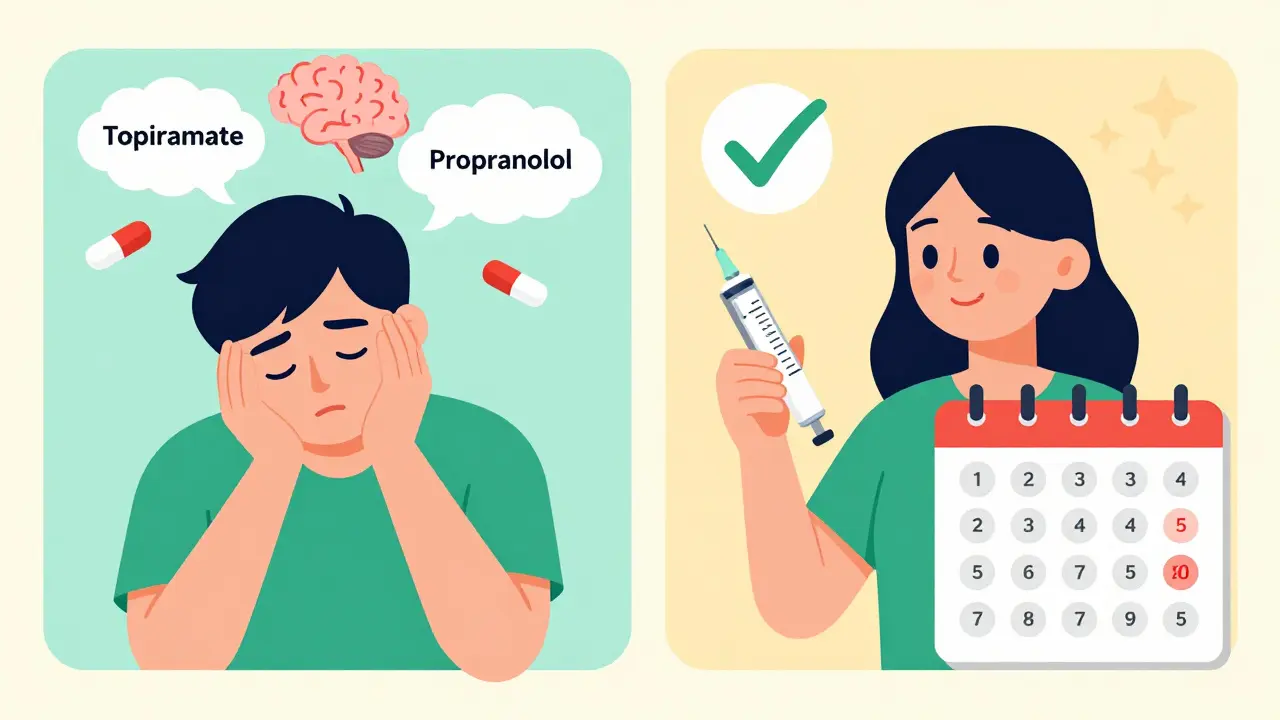
The numbers speak for themselves. In clinical trials, about half of patients saw their migraine days cut in half. For someone stuck with eight migraine days a month, that drops to four or fewer. In chronic migraine patients (15+ headache days a month), nearly 85% saw a drop in frequency. Some went from daily pain to just a few days a month. One study compared Aimovig to topiramate, a common old-school preventive. The CGRP inhibitor worked better: 41% of patients on Aimovig cut their migraines by half, versus just 24% on topiramate. And unlike topiramate, which can cause memory issues and tingling, CGRP inhibitors rarely cause side effects beyond mild injection site redness or occasional constipation. Real-world results are just as strong. A survey of over 1,200 migraine patients found 78% called CGRP inhibitors "very effective" or "effective." One Reddit user wrote: "Went from 20 migraine days a month to five with Aimovig. I started working again. I held my kid without wincing. That’s not a drug - that’s a lifeline."Who Benefits the Most?
These drugs shine brightest for people who’ve tried everything else. If you’ve failed two or more traditional preventives - beta-blockers, antidepressants, anti-seizure meds - CGRP inhibitors still work. About 30% of patients who’d given up on treatment found relief here. They’re especially helpful if you have:- Chronic migraine (15+ headache days a month)
- Medication overuse headache (taking painkillers too often)
- Heart disease or high blood pressure (CGRP inhibitors don’t constrict blood vessels like triptans do)
- Migraine with aura
How Are They Taken?
Monoclonal antibodies come as injections. You can give them to yourself at home:- Aimovig: One shot monthly (70mg or 140mg)
- Ajovy: Monthly or every three months (225mg or 675mg)
- Emgality: Monthly after a starter dose
- Vyepti: IV infusion every three months (done at a clinic)
- Nurtec ODT: Dissolvable tablet, taken every other day for prevention, or as needed for acute attacks
- Ubrelvy: Pill taken at the start of a migraine
- Zavzpret: Nasal spray for acute relief
Cost and Insurance: The Big Hurdle
These drugs aren’t cheap. Monthly costs run $650-$1,000. That’s 3-5 times more than a generic beta-blocker. But here’s the catch: most U.S. insurance plans cover them - if you jump through hoops. Insurance companies often require you to try cheaper drugs first. That’s called step therapy. It’s frustrating. One patient spent six months appealing denials before getting approved for Emgality. Manufacturers help: all four major brands offer patient assistance programs that cover 80% of out-of-pocket costs for eligible people. Some even send nurses to train you on injections. In Australia, these drugs are listed on the PBS (Pharmaceutical Benefits Scheme) for chronic migraine patients who meet strict criteria. Out-of-pocket costs can drop to under $30 per script. Access varies by country, but the trend is clear: more insurers are covering them as evidence piles up.Side Effects and Safety
CGRP inhibitors are among the safest migraine drugs ever made. They don’t affect the liver like older preventives. No need for monthly blood tests. No risk of addiction. No sedation. The most common side effect? Mild redness or soreness at the injection site. About 1 in 4 users report this. Constipation happens in 5-10% of people on mAbs. Rarely, there’s a risk of elevated liver enzymes with ubrogepant and rimegepant - so doctors may check liver function after a few months. Long-term data is still building. So far, five years of follow-up show no major safety red flags. The body doesn’t seem to build resistance. And unlike drugs that lower blood pressure or alter mood, CGRP inhibitors don’t change your baseline health. They just quiet the migraine signal.Why Doctors Are Switching
Ten years ago, most neurologists started with topiramate or propranolol. Today, 87% of neurologists say CGRP inhibitors should be first-line treatment. The American Headache Society updated its guidelines in 2023 to say: "Don’t wait. Try CGRP inhibitors before older drugs." Why the shift? Three reasons:- They work better - especially for tough cases
- They’re safer - no heart risks, no brain fog
- Patients stick with them - 90% stay on treatment after six months, compared to under 50% for older pills

What’s Next?
The field is moving fast. Researchers are testing:- Combination therapy: CGRP inhibitors + Botox - works better than either alone
- Nasal sprays and patches: Easier delivery than shots
- Pediatric use: Trials in teens completed in early 2023
- New targets: Drugs that block both CGRP and PACAP (another migraine-triggering peptide)
Getting Started
If you’re considering CGRP inhibitors:- Track your migraine days for 3 months. Use an app or calendar. Doctors need this data.
- See a neurologist or headache specialist. Not all GPs know how to prescribe these.
- Ask about insurance pre-authorization. The manufacturer’s support team can help you fill out forms.
- Start with one type. Most people try a monthly injection first - it’s the most studied.
- Give it 3-4 months. These aren’t instant fixes. Relief builds over time.
Are CGRP inhibitors a cure for migraines?
No, they’re not a cure. But they’re the most effective preventive treatment available. Many patients go from daily pain to just a few days a month - enough to return to work, parenting, or hobbies they’d given up. They control the condition, not erase it.
Can I take CGRP inhibitors with other migraine meds?
Yes. Most patients continue using acute treatments like triptans or gepants alongside CGRP preventives. In fact, many find they need fewer painkillers because the preventives reduce attack frequency. No dangerous interactions have been found with common migraine drugs.
Do CGRP inhibitors cause weight gain or loss?
Unlike older preventives like topiramate or valproate, CGRP inhibitors don’t typically cause weight changes. Some patients report slight weight loss - possibly because they’re eating better when they’re not in constant pain. Weight gain is rare and not a known side effect.
Are these drugs safe during pregnancy?
There’s not enough data yet to say they’re safe during pregnancy. Most doctors advise stopping them if you’re planning to conceive. If you’re pregnant and have severe migraines, talk to your neurologist about alternative options like acetaminophen, riboflavin, or CBT.
Why are CGRP inhibitors so expensive?
They’re biologics - complex proteins made in living cells. Manufacturing is costly, and patents protect them until 2028. Unlike simple pills, you can’t make cheap copies yet. Insurance covers most of it, but out-of-pocket costs can still be high without assistance programs.
How long do I need to stay on them?
Most people stay on them long-term. Stopping often leads to a return of symptoms within weeks. Some patients who’ve been stable for 2-3 years try tapering off, but only under a doctor’s supervision. For chronic migraine, it’s often a lifelong tool - like insulin for diabetes.


Post A Comment