
Anaphylaxis Symptom Checker
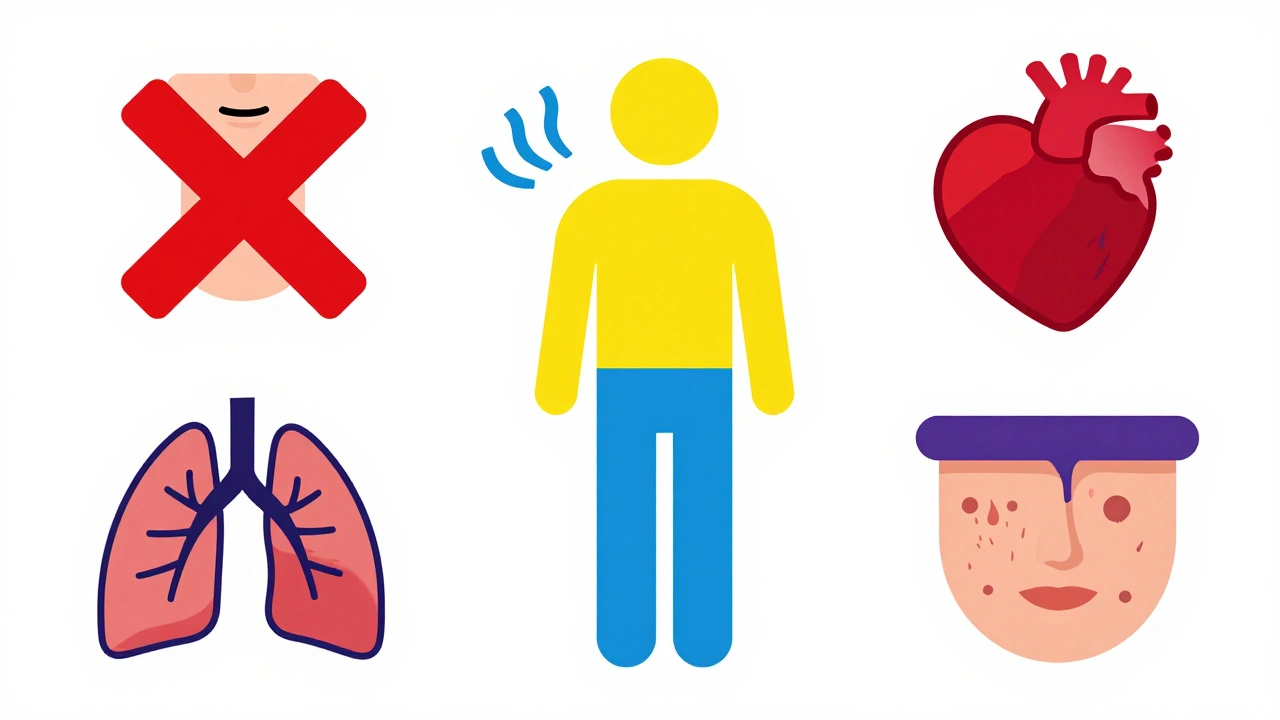
Use the ABCD rule from the CDC to identify potential medication-induced anaphylaxis. Do not wait for all symptoms to appear - any symptom plus medication exposure requires immediate action.
What Anaphylaxis Really Looks Like When It’s Caused by Medication
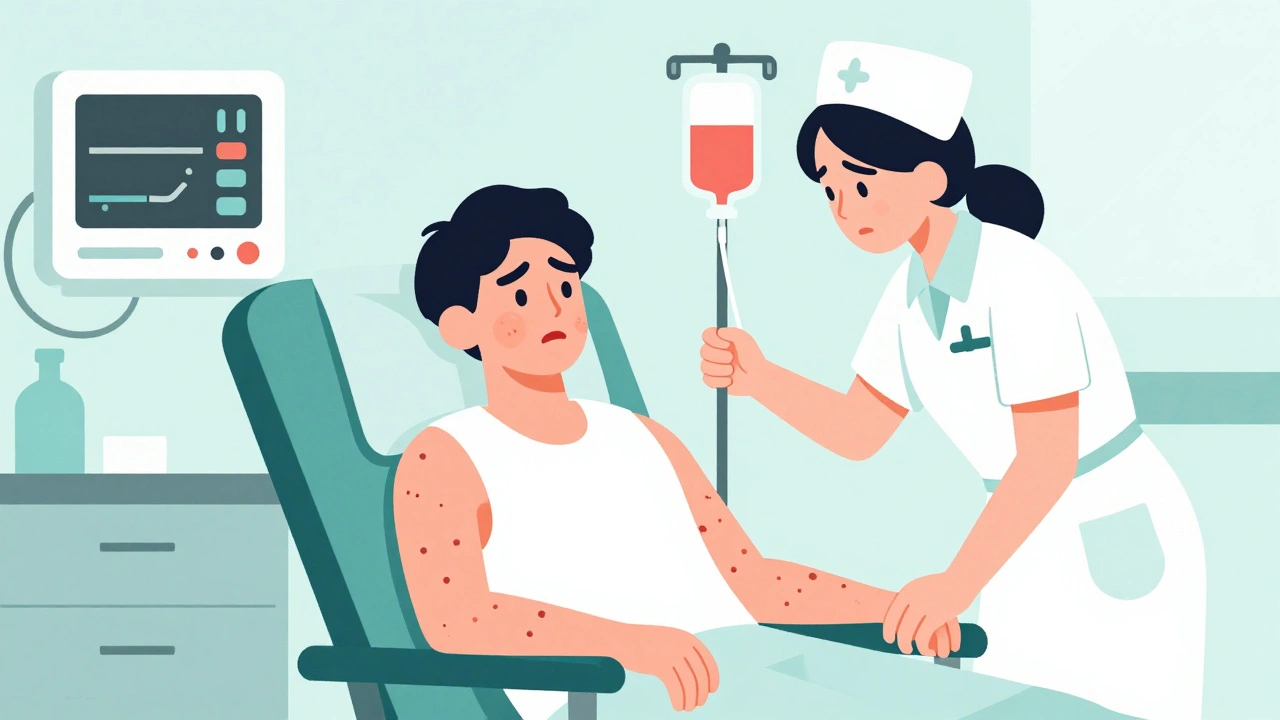
You’re sitting in a hospital chair, waiting for your IV antibiotic to finish. Your skin starts to itch. Then your throat feels tight. Your nurse says it’s probably just anxiety. But within minutes, your blood pressure drops, your lips swell, and you can’t breathe. This isn’t anxiety. This is anaphylaxis - and it’s happening faster than most people realize.
Anaphylaxis from medication isn’t rare. About 1 in 20 people in the U.S. will experience anaphylaxis in their lifetime, and medications are behind nearly 1 in 6 of those cases. Antibiotics like penicillin, painkillers like ibuprofen, and newer cancer drugs like rituximab are among the top triggers. The reaction doesn’t wait. It hits hard and fast - often within 5 to 30 minutes after the drug enters your body.
The Body’s Alarm System: How a Drug Turns Deadly
Your immune system doesn’t always get it right. Sometimes, it mistakes a harmless medication for a dangerous invader. When that happens, mast cells and basophils - your body’s alarm cells - explode with chemicals like histamine and tryptase. These chemicals flood your bloodstream, causing blood vessels to leak, airways to tighten, and your heart to struggle to pump.
This isn’t a mild rash or a stomach upset. This is a full-body emergency. The same reaction that gives you hives can also collapse your blood pressure, block your breathing, or stop your heart. And unlike food allergies, where symptoms often start with nausea or swelling of the lips, medication-triggered anaphylaxis more often begins with dizziness, chest tightness, or a sudden drop in blood pressure. That’s why it’s so easily missed.
How to Spot It: The ABCD Rule That Saves Lives
There’s no lab test you can wait for. No X-ray to confirm it. The only thing that matters is recognizing the signs - fast. The CDC’s ABCD checklist is the simplest tool you can use:
- Airway: Is your throat closing? Are you hoarse or struggling to speak?
- Breathing: Are you wheezing? Can you take a full breath? Is your oxygen level dropping?
- Circulation: Are you pale, clammy, or lightheaded? Is your pulse weak or racing?
- Dermatologic: Are you breaking out in hives? Is your face, tongue, or lips swelling?
You don’t need all four. If you have any one of these symptoms plus recent exposure to a medication, treat it like anaphylaxis - even if you’re not sure. Delaying action is the biggest mistake.
Why Medication Reactions Are More Dangerous Than Food Reactions
Food allergies often start with itching, vomiting, or a rash. Medication reactions? They start with collapse.
Studies show that 58% of medication-induced anaphylaxis cases involve low blood pressure - compared to just 39% in food-triggered cases. That’s because many of these drugs are given intravenously, straight into the bloodstream. They hit your system like a bullet. And in hospitals, symptoms are often blamed on the procedure, the anesthesia, or stress.
One ER doctor in Boston described a patient who got IV contrast and went into shock. The team thought it was a vasovagal reaction - until the patient started gasping for air. By then, it was too late. Epinephrine wasn’t given for 18 minutes. That’s 18 minutes too long.
Medication anaphylaxis kills more often than food anaphylaxis. The death rate? Around 1.8% for drug-triggered cases, versus 0.7% for food. Why? Because it’s misdiagnosed. It’s ignored. It’s assumed to be something else.
Epinephrine: The Only Treatment That Works
Antihistamines? They help with itching. Steroids? They reduce swelling later. But only one thing stops anaphylaxis from killing you: epinephrine.
It’s not optional. It’s not a last resort. It’s the first and only step that matters. The drug works by reversing airway swelling, tightening blood vessels to raise blood pressure, and calming the immune system’s overreaction. Every minute you wait, your chances of survival drop.
Studies show that if epinephrine is given within 5 minutes of symptom onset, survival rates are near 100%. At 30 minutes? Mortality jumps by 300%. And here’s the scary part: in nearly one-third of fatal cases, epinephrine was never given at all.
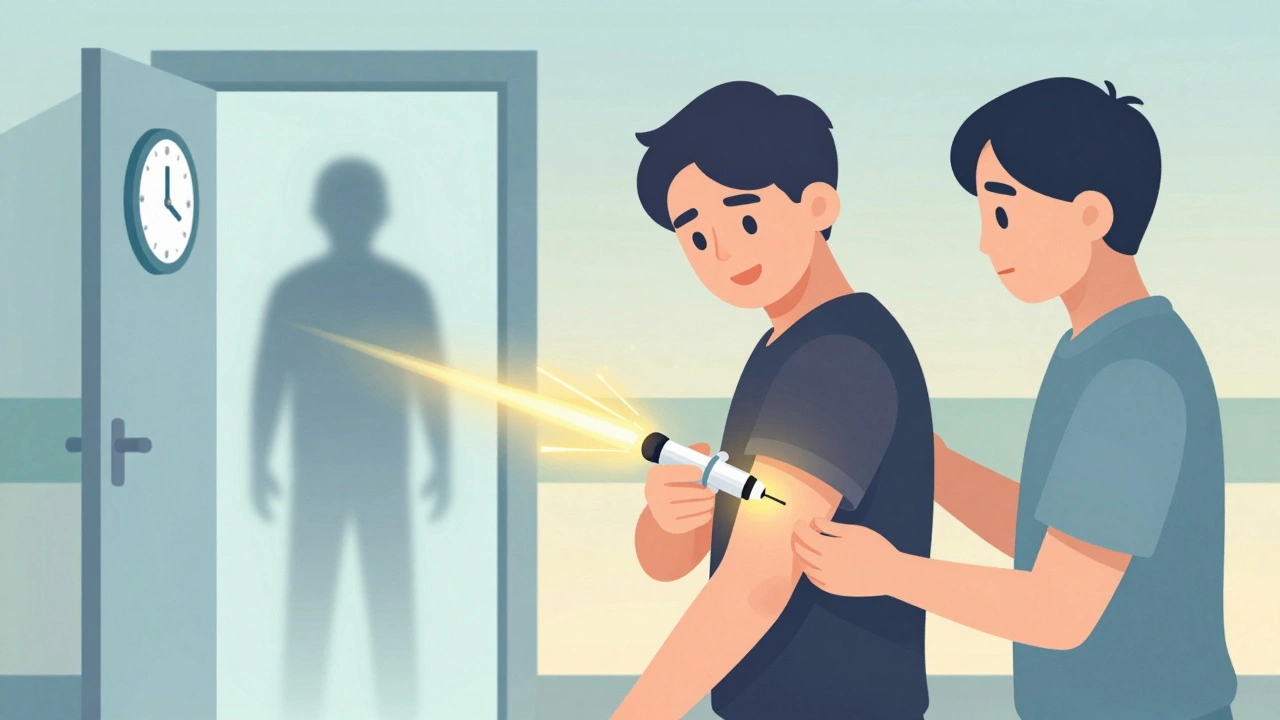
Use the auto-injector in the outer thigh - not the arm, not the buttock. Inject and hold for 3 seconds. Even if you’re unsure, use it. It’s safe. It’s not a gamble. It’s the difference between life and death.
What Happens After the Emergency
Once you’re stable, you’re not out of the woods. Anaphylaxis can come back - even hours later. That’s called biphasic anaphylaxis. You need to be monitored for at least 4 to 6 hours in a hospital, sometimes longer.
And here’s the part no one talks about: after the emergency, most patients are sent home with no plan. A 2022 survey found that over half of people who had a medication-induced anaphylaxis reaction never got an epinephrine auto-injector prescribed to them. That’s a huge gap. If you’ve had one reaction, you’re at higher risk for another. You need to carry epinephrine. You need to know how to use it. And you need to make sure your family, coworkers, and doctors know about it too.
How Hospitals Are (Slowly) Getting Better
Some places are fixing this. Johns Hopkins Hospital cut anaphylaxis incidents by 47% just by improving how allergies are recorded in electronic systems. Before, doctors didn’t know a patient was allergic to penicillin because it was written in pencil on a paper chart. Now, it’s flagged in red in every digital record.
Emergency rooms in Cleveland and Chicago trained staff with simulation drills. Within six months, epinephrine use jumped from less than half of cases to nearly 90%. The FDA now requires stronger warning labels on biologic drugs. And in January 2024, every accredited U.S. hospital must have a written anaphylaxis response plan - or lose its accreditation.
But progress is uneven. In rural clinics, epinephrine auto-injectors are still rare. In some countries, they’re unaffordable. The cost of a two-pack? Around $540 in the U.S. That’s why global health groups are pushing for low-cost versions and universal access.
What You Can Do Now
- If you’ve ever had a reaction to a drug - even a mild one - get it properly documented. Don’t just say “I’m allergic to penicillin.” Say exactly what happened: “I broke out in hives and felt my throat close after taking amoxicillin in 2021.”
- Ask for an allergy referral. Skin or blood tests can confirm if you’re truly allergic - or if it was a side effect.
- Carry epinephrine if you’ve had a prior reaction. Don’t wait for a second episode.
- Teach someone close to you how to use the auto-injector. You might not be able to do it yourself during a reaction.
- Wear a medical alert bracelet. It can save your life if you’re unconscious.
Frequently Asked Questions
Can you have anaphylaxis without hives?
Yes. In fact, up to 20% of medication-induced anaphylaxis cases show no skin symptoms at all. The only signs might be trouble breathing, dizziness, or a sudden drop in blood pressure. Never wait for a rash to appear before acting.
Is anaphylaxis the same as a side effect?
No. Side effects like nausea, dizziness, or flushing are common and expected with many drugs. Anaphylaxis is an immune system overreaction - it’s sudden, severe, and involves multiple body systems. Red man syndrome from vancomycin, for example, causes flushing and itching but doesn’t lower blood pressure or block airways - so it’s not anaphylaxis.
Can you outgrow a medication allergy?
Sometimes. Penicillin allergies, for example, can fade over time. About 80% of people who think they’re allergic to penicillin turn out not to be after proper testing. But never assume you’ve outgrown it. Always get tested by an allergist before taking the drug again.
What if I’m not sure it’s anaphylaxis?
Use epinephrine anyway. It’s safe. The risks of not using it far outweigh the risks of using it unnecessarily. Epinephrine won’t harm someone who doesn’t need it - but delaying it could kill someone who does.
Are there new tests to predict medication allergies?
Yes. In 2023, the FDA approved the AllergoCheck IgE Rapid Test, which can confirm penicillin allergy in under 20 minutes. Other tools are being developed to predict reactions before a drug is even given, using AI and patient history. But these aren’t widely available yet. Until then, knowing your history and carrying epinephrine is your best defense.
What Comes Next
If you’ve had a reaction, your next step isn’t just to recover - it’s to prevent the next one. Talk to an allergist. Get tested. Carry epinephrine. Educate your loved ones. And if you’re a healthcare worker, speak up. Ask: Did we miss the signs? Could we have acted faster?
Anaphylaxis from medication is preventable. But only if we stop treating it as a mystery - and start treating it like the emergency it is.


Post A Comment