
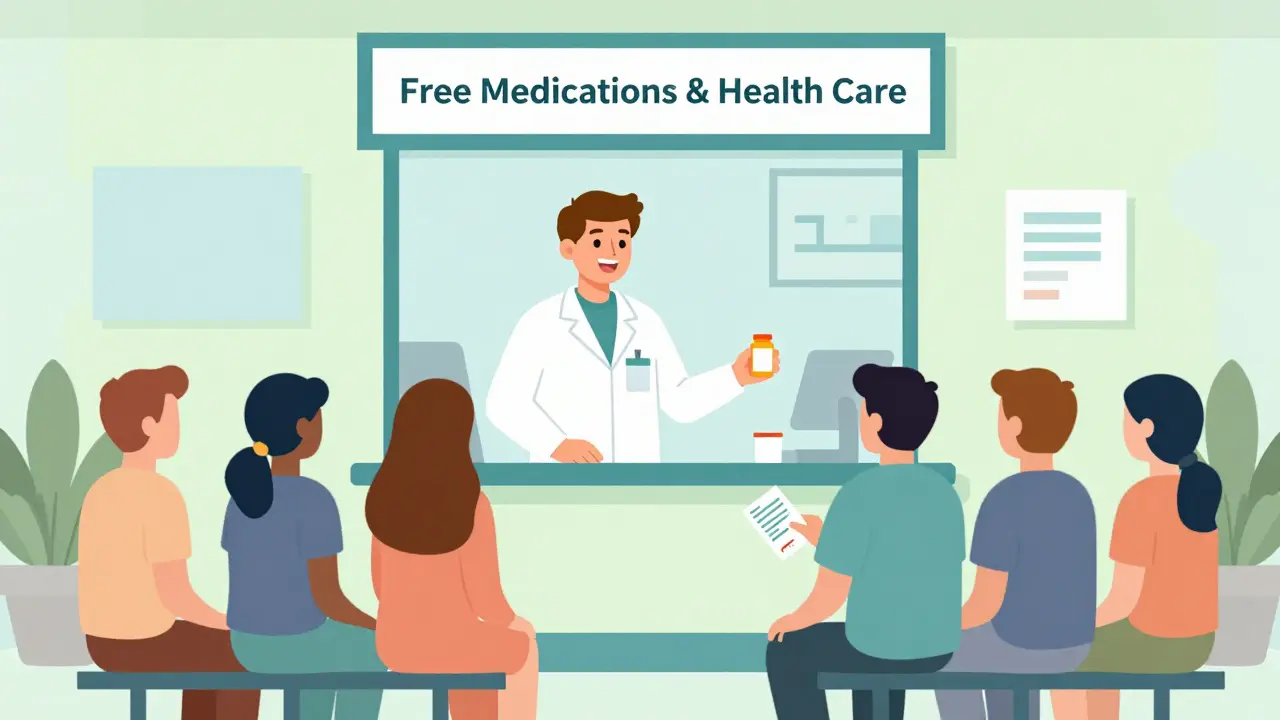
Getting the medications you need shouldn’t mean choosing between rent and refills. For millions of Americans without insurance or with incomes too high for Medicaid but too low to afford prescriptions, community clinics are a lifeline. These clinics don’t just offer checkups-they give out pills for diabetes, blood pressure, asthma, and even depression, often at no cost. But finding them isn’t always easy. Here’s where to look and what to expect.
What Kind of Clinics Give Out Free Medications?
Not all free clinics are the same. There are three main types that provide medications, each with different rules and resources.Federally Qualified Health Centers (FQHCs) are government-funded clinics that serve everyone, regardless of insurance. They charge based on your income using a sliding scale. If you make less than $29,160 a year as a single person in 2025, you might pay just $20 for a visit-and your meds could cost as little as $5 per prescription. These clinics often have on-site pharmacies and work directly with drug manufacturers to get discounts.
Free and Charitable Clinics are usually run by volunteers and nonprofits. They serve people who have no insurance at all. Medications here are often completely free. These clinics rely on donations from companies like Americares and Direct Relief, who supply brand-name drugs that would otherwise go to waste. You won’t find luxury brands here, but you’ll get the exact generics your doctor prescribes-like metformin for diabetes or lisinopril for high blood pressure.
Academic-affiliated clinics, like the one started by University of Virginia med students in 1992, combine student volunteers with university resources. They tend to have better access to specialty meds and longer hours than purely volunteer-run clinics. But they’re rare and mostly found near big cities or medical schools.
How Do These Clinics Get Free Medications?
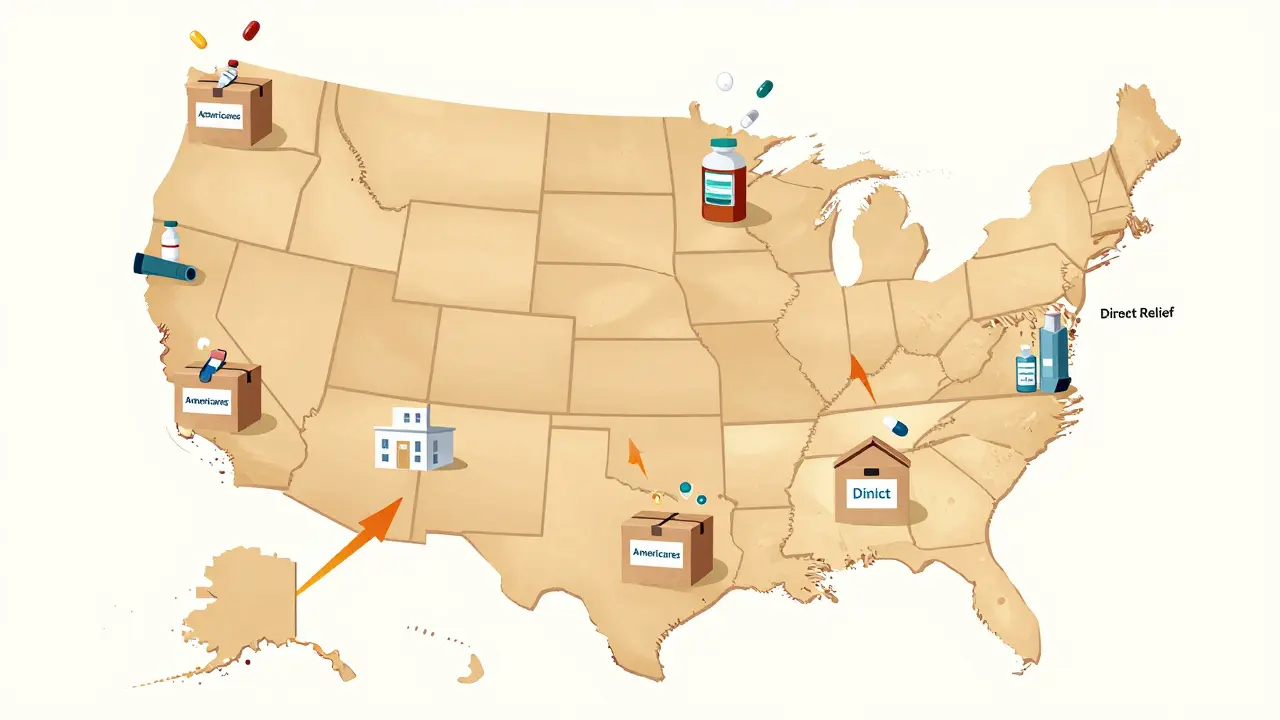
It’s not magic-it’s partnerships. Pharmaceutical companies donate surplus or expired-date-safe medications to nonprofits like Americares, Direct Relief, and the National Association of Free & Charitable Clinics (NAFC). These groups then ship the drugs to clinics across the country.In 2023 alone, Americares distributed $190 million worth of medicine to nearly 1,000 clinics serving over 7 million people. That’s not just aspirin-it’s insulin, heart meds, antidepressants, inhalers. These donations are strictly for patients who can’t afford them. No one gets free meds unless they prove they’re uninsured and earn under 200% of the federal poverty level.
Some programs target specific needs. In early 2023, Teva Pharmaceuticals teamed up with Direct Relief and NAFC to launch Community Routes: Access to Mental Health Care. They gave $75,000 grants to clinics in California, Florida, and New Jersey to stock up on anxiety and depression meds. It’s one of the first major efforts to fix the mental health medication gap in underserved areas.
Who Qualifies for Free or Low-Cost Meds?
Eligibility is strict but fair. You must meet three basic criteria:- You have no health insurance, or your plan doesn’t cover prescriptions
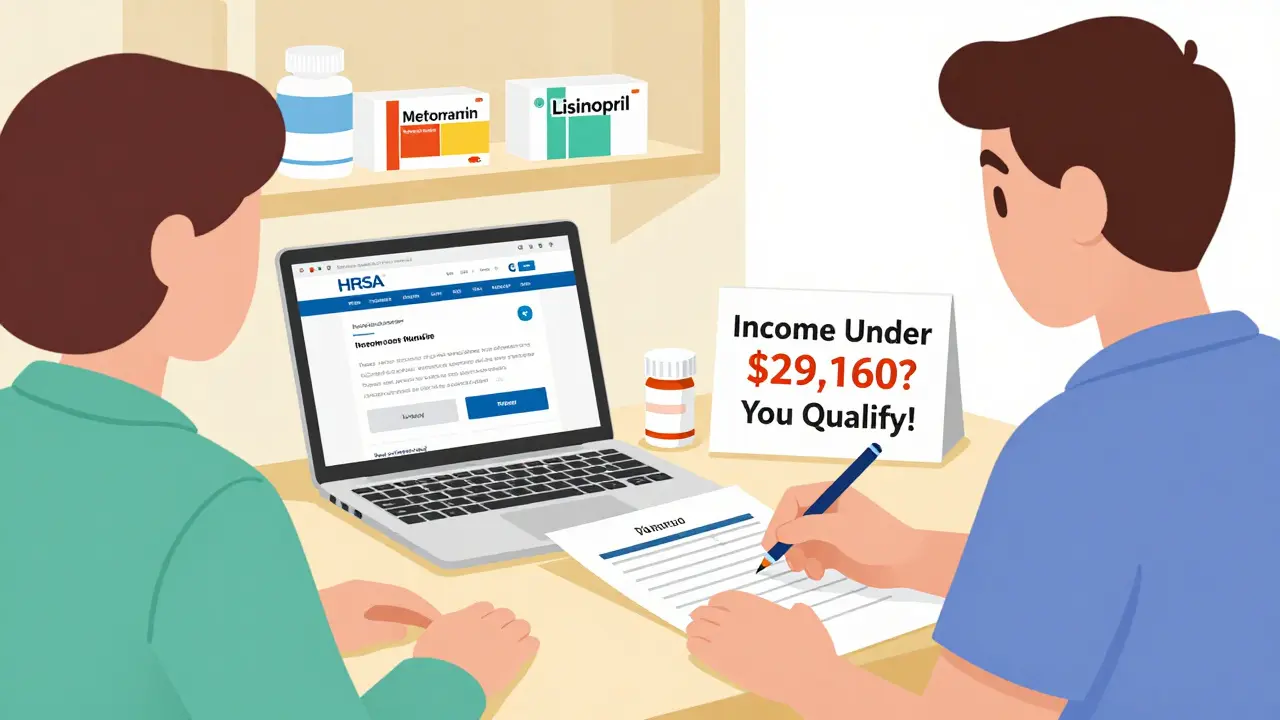
- Your annual income is below 200% of the federal poverty level ($29,160 for one person, $59,800 for a family of four in 2025)
- You live in the clinic’s service area
You’ll need to bring proof. That means:
- Recent pay stubs or tax returns
- A utility bill or lease showing your address
- A list of your current medications and prescriptions
- Photo ID
Even if you work full-time, you can still qualify. The AAFP Foundation found that most patients at free clinics are employed-just not paid enough to cover both rent and insulin. Many are gig workers, part-timers, or small business owners without employer health benefits.
Where to Find These Clinics
Start with these two trusted tools:- HRSA’s Find a Health Center - This official government tool (findahealthcenter.hrsa.gov) lets you search by zip code for FQHCs. It shows hours, services offered, and whether they have on-site pharmacies. Most accept sliding scale payments.
- National Association of Free & Charitable Clinics (nafcclinics.org) - This site lists over 1,400 free clinics nationwide. Click your state to see a map and contact info. Some clinics only open two nights a week, so check hours before you go.
State-specific directories are also helpful. For example, if you’re in Virginia, visit vafreeclinics.org. It lists only member clinics and tells you exactly what each one offers-like whether they stock asthma inhalers or diabetes test strips.
Don’t forget local resources. Churches, food banks, and public health departments often know which clinics are nearby. Call your county’s health office-they’re used to these questions.
What Medications Are Available?
Most clinics focus on chronic conditions because those require ongoing treatment. You’re likely to find:- Diabetes meds: metformin, insulin (sometimes)
- Blood pressure drugs: lisinopril, amlodipine, hydrochlorothiazide
- Cholesterol meds: atorvastatin, simvastatin
- Asthma inhalers: albuterol, fluticasone
- Mental health meds: sertraline, fluoxetine, gabapentin
- Antibiotics for infections
They won’t have brand-name drugs like Ozempic or expensive specialty biologics. But they’ll give you the generic version that works just as well. If your doctor prescribes something outside their stock, they’ll help you apply for a pharmaceutical company’s patient assistance program. Many clinics have staff trained to fill out those forms for you.
What to Expect When You Go
First-time visits can feel overwhelming. Here’s what usually happens:- You check in and fill out paperwork about income, insurance status, and medical history.
- You meet with a nurse or provider who does a quick assessment.
- If you need meds, they’ll either give them to you on the spot or refer you to a pharmacy partner.
- You’ll get instructions on how to take them and when to return.
Wait times are long. Because demand is so high, many clinics have 4- to 6-week appointment delays. If you’re in crisis-like running out of insulin-tell them. Some clinics have emergency slots for urgent cases.
Don’t be discouraged if they say no the first time. Policies change. Call back in a few weeks. Volunteer staffing shifts. New donations arrive.
Why This System Isn’t Perfect
These clinics save lives-but they’re stretched thin. In NAFC’s 2022 survey, 42% of clinics reported medication shortages. One clinic in rural Ohio ran out of asthma inhalers for three months. Another in Alabama couldn’t restock diabetes test strips after a donor pulled out.Most clinics depend on unpredictable donations and volunteers. A doctor might show up one week and not return for months. Pharmacies might close if funding dries up. That’s why clinics with mixed funding-some grants, some small patient fees, some donations-survive longer than those relying only on charity.
And while mental health meds are finally getting attention, access is still uneven. Only a handful of clinics have enough antidepressants or anti-anxiety meds to meet demand.
What You Can Do
If you need help, don’t wait. Start with HRSA’s tool or nafcclinics.org. Bring your documents. Be honest about your income. Ask if they can help you apply for drug assistance programs.If you’re able to help, consider donating unused meds (check with the clinic first-some can’t accept them), volunteering your time, or supporting local advocacy groups. The system works because people show up-for each other.
Can I get free medications if I have Medicaid?
Most free clinics serve only people without insurance. If you have Medicaid, you should use your benefits at a regular provider or pharmacy. Some clinics may still help if your Medicaid plan doesn’t cover certain meds or if you’re facing high copays-but they’ll check your status first.
Do free clinics give brand-name drugs?
Rarely. They mostly stock generic versions, which are just as safe and effective. Brand-name drugs are expensive and rarely donated. But if a patient needs a brand-name drug and qualifies for a manufacturer’s assistance program, the clinic will help them apply.
Can I walk in without an appointment?
Some clinics allow walk-ins, but most require appointments due to high demand. Always call ahead. Even if they say walk-ins are okay, expect long waits. Appointments give you the best chance of being seen and getting your meds the same day.
What if I need a medication not listed on their formulary?
Tell them. Many clinics have partnerships with pharmaceutical companies that provide specific drugs for patients who qualify. They’ll help you fill out the application forms. It can take 2-4 weeks, but it’s often the only way to get newer or specialty meds for free.
Are these clinics safe and reliable?
Yes. Federally Qualified Health Centers are regulated by the federal government and must meet strict quality standards. Free clinics are often staffed by licensed doctors, nurses, and pharmacists-even if they volunteer. Medications come from verified donors and are stored properly. These clinics are trusted by millions of patients.
Can I get birth control or vaccines for free?
Many free clinics offer birth control, flu shots, and other preventive care at no cost. Some even provide HIV testing and hepatitis vaccines. Ask when you call. These services are often covered by the same donation programs that fund prescription meds.
How often can I return for refills?
Most clinics allow refills every 30 to 90 days, depending on the medication and your condition. You’ll usually need to come back for a quick check-in before getting more. This ensures your treatment is working and prevents misuse.
If you’re struggling to afford your meds, you’re not alone. Millions rely on these clinics every year. The system isn’t perfect, but it’s working-for now. Knowing where to go makes all the difference.


Post A Comment