
When your brain doesn’t make enough levodopa, a chemical that the body converts into dopamine to help control movement. Also known as L-DOPA, it’s the cornerstone treatment for Parkinson’s disease, a neurological disorder that causes shaking, stiffness, and slow movement. Without enough dopamine, nerve cells can’t send clear signals to your muscles—levodopa steps in to fill that gap.
Levodopa doesn’t work alone. It’s almost always paired with carbidopa, a drug that stops levodopa from breaking down before it reaches the brain. This combo means you need less levodopa, get more of it to where it’s needed, and avoid nasty side effects like nausea. You’ll find this mix in pills like Sinemet and Rytary. It’s not a cure, but for most people, it’s the best tool they have to stay mobile and independent.
Levodopa works great at first, but over time, its effects can become unpredictable. Some days, you might feel fine for hours. Other days, you might suddenly freeze up or twitch uncontrollably. These are called "on-off" fluctuations. That’s because the brain’s ability to store and use dopamine slowly fades as Parkinson’s progresses. Doctors adjust doses, timing, or add other meds to smooth things out. Long-term use can also lead to involuntary movements called dyskinesia. It’s not fun, but it’s manageable with the right plan.
Not everyone reacts the same way. Some people get dizzy, confused, or sleepy. Others notice their urine turns dark—a harmless side effect. And yes, certain foods, especially high-protein meals, can block levodopa from being absorbed. That’s why many people take it 30 minutes before eating. If you’re on other meds—like antidepressants or antacids—check with your doctor. Interactions can mess with how well levodopa works.
What you’ll find below isn’t just a list of articles. It’s a collection of real-world insights from people managing complex medication routines, dealing with side effects, and learning how to stay in control. You’ll read about how generics can behave differently, why timing matters more than you think, and how other drugs like statins or blood thinners might interact with your regimen. This isn’t theory. These are the things that actually affect your day-to-day life.
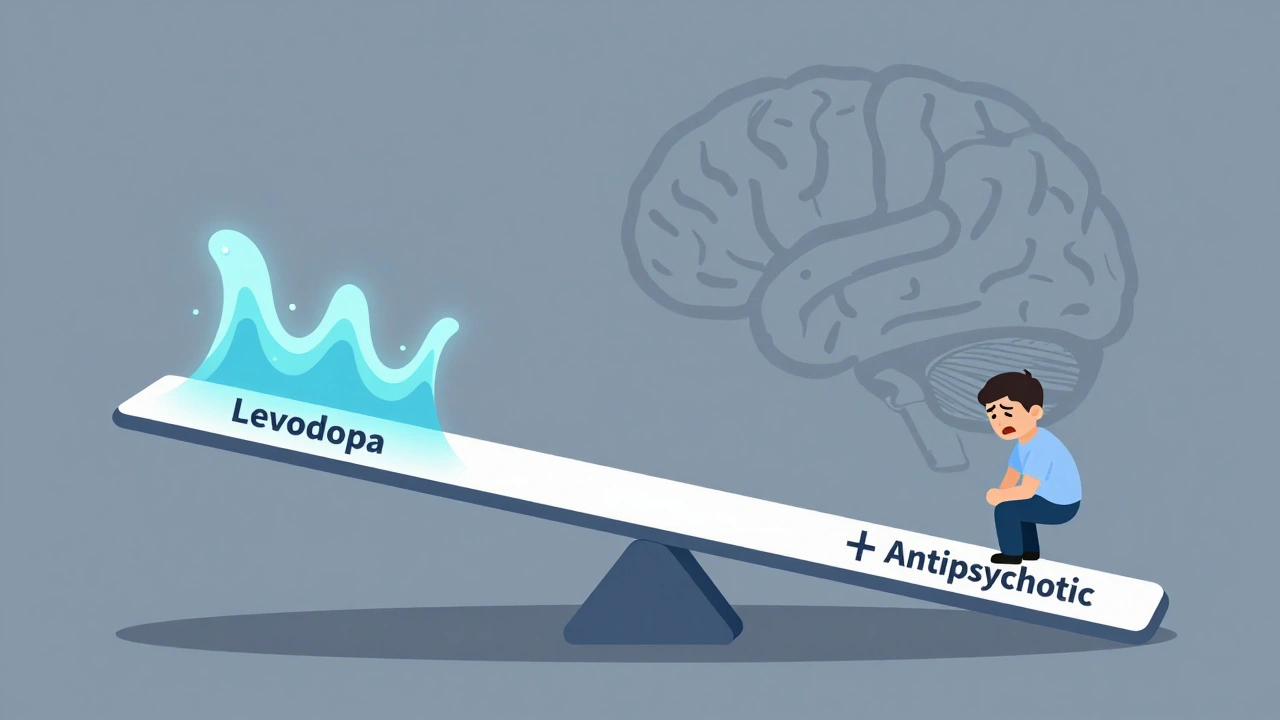
Levodopa and antipsychotics have opposing effects on dopamine, making it dangerous to use them together. This article explains how this interaction worsens symptoms in Parkinson’s and schizophrenia, and what newer treatments are doing to solve it.
Read More