
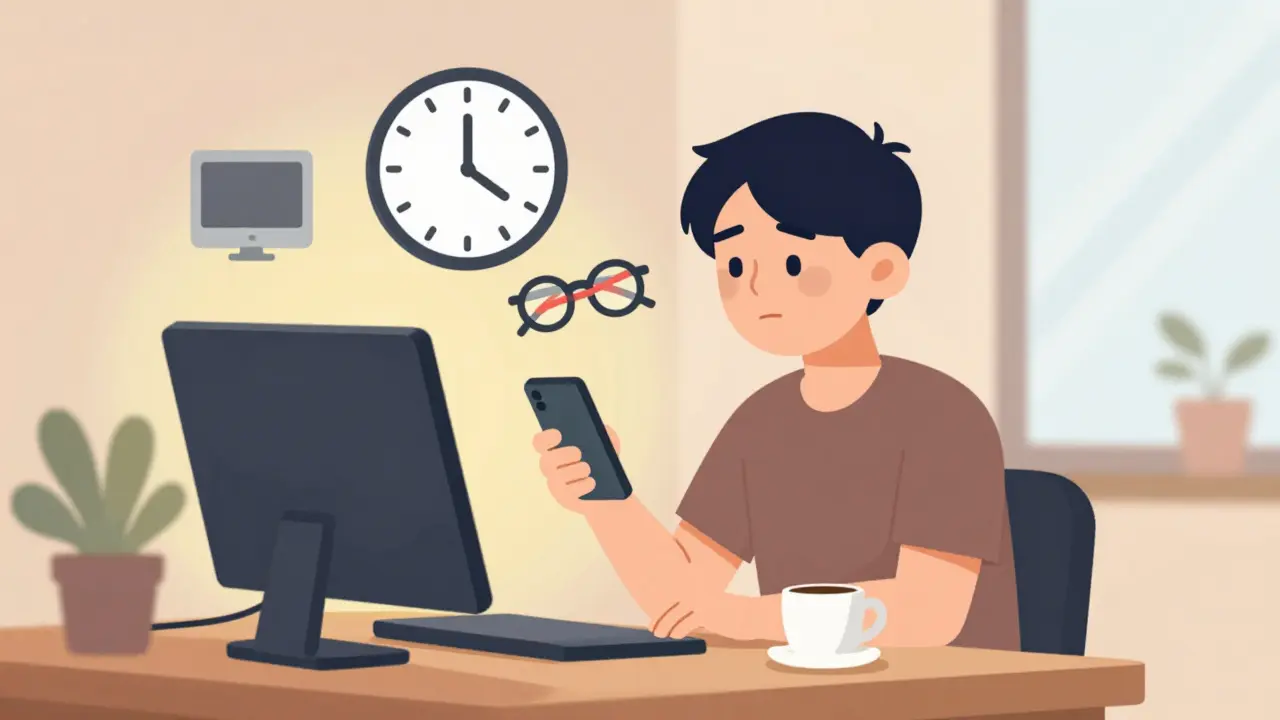
Ever feel like your eyes are tired, dry, or burning after just a few hours on your phone or computer? You’re not imagining it. Millions of people experience this daily, and blue light from screens is often blamed. But here’s the real question: is blue light actually damaging your eyes, or is it just making them tired? And if it is, what actually helps?
What Is Blue Light, and Why Does It Matter?
Blue light is part of the visible light spectrum, with wavelengths between 415 and 455 nanometers. It’s high-energy, short-wavelength light - the same kind that makes the sky look blue. Your phone, laptop, tablet, and LED lights all emit it. Unlike UV light, which your cornea and lens block, blue light passes right through to your retina. In 2018, a National Institutes of Health study found that exposure to 450 nm blue light at moderate intensity reduced human corneal cell viability by over 37%. Another study showed it spikes reactive oxygen species in eye cells by 218% within 30 minutes. That’s not just discomfort - it’s cellular stress. But here’s the twist: the American Academy of Ophthalmology says there’s no proof blue light from screens causes permanent eye damage. So what’s going on? The answer isn’t black and white. Blue light doesn’t burn your retina like a laser, but it does contribute to digital eye strain - and that’s real.Digital Eye Strain Is Real (Even If Blue Light Isn’t the Only Culprit)
You’ve probably heard of digital eye strain: dry eyes, headaches, blurred vision, neck pain. A 2022 survey by The Vision Council found 61% of American adults have these symptoms. And if you’ve been working from home since 2020? That number jumps even higher. Here’s what’s actually happening: when you stare at a screen, you blink 66% less than normal. Less blinking means your eyes dry out. Your eyes also constantly adjust focus - especially if you’re looking at something too close. Holding your phone 12 inches away forces your eyes to work 3.7 diopters harder than if you’re 20 inches away. That’s like lifting weights nonstop for hours. And then there’s the light itself. Blue light scatters more than other colors, making it harder for your eyes to focus. This creates visual noise - like static on an old TV. Your brain works overtime trying to sharpen the image. That’s why your eyes feel tired even if you haven’t been reading text.Screen Filters: Do They Help or Just Feel Like a Fix?
There are two main types of blue light filters: software and hardware. Software filters like Night Shift (iOS), Night Light (Android), and f.lux reduce blue light by shifting your screen to warmer tones. They typically cut blue light by 10-20%. That’s helpful for sleep, but not enough to stop eye strain. A 2021 study from DisplayMate found they miss the most damaging wavelengths (415-455 nm) entirely. Hardware filters - like screen protectors or glasses - are more powerful. Amber-tinted blue light glasses can block 65-100% of blue light. Sounds great, right? But they also make everything look yellow. For graphic designers, photographers, or anyone who needs accurate color, that’s a dealbreaker. One photographer on DPReview said it ruined his ability to judge skin tones. And a 2022 University of Manchester study showed these glasses reduced visual acuity by over 8% in color-critical tasks. Even prescription blue light lenses, like Essilor’s Eyezen, claim to block 20% of blue light. But Consumer Reports tested them in 2023 and found they only blocked 12%. That’s a big gap between marketing and reality. The bottom line? Filters help with sleep, maybe a little with comfort, but they’re not magic shields. If you’re using them just because you think they’ll save your eyes from permanent damage, you’re misled.The 20-20-20 Rule: The One Habit That Actually Works
Here’s the simplest, cheapest, and most effective solution: the 20-20-20 rule. Every 20 minutes, look at something 20 feet away for 20 seconds. That’s it. A 2021 study in Optometry and Vision Science found this simple habit reduced reported eye strain by over 53%. Why? Because it gives your focusing muscles a break. It lets your eyes blink naturally again. It resets your visual system. People on Reddit’s r/Bluelight community report the same thing: 78% said their eye strain improved after using this rule consistently. And you don’t need any gadgets. Just set a timer on your phone. Or use a free app like Time Out or EyeLeo. It’s not glamorous. But it’s science-backed, free, and works for everyone - whether you wear glasses, use a laptop, or scroll on your phone.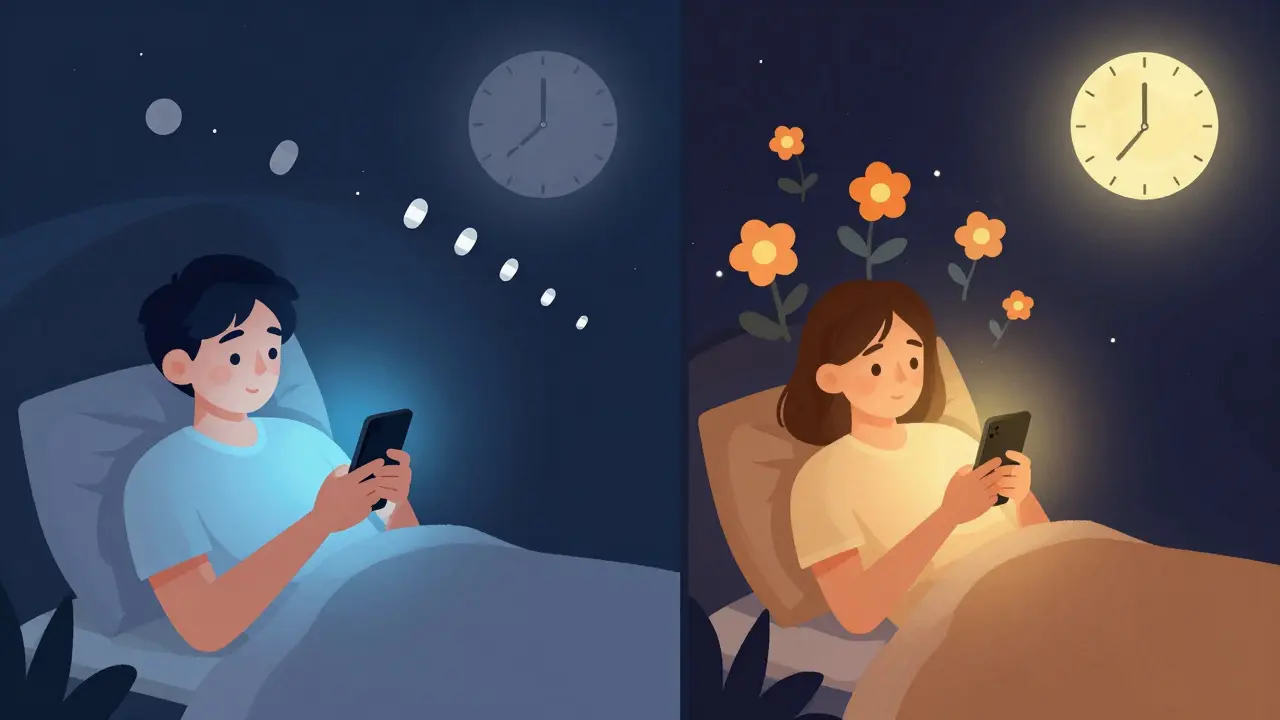
Lighting and Distance: The Hidden Factors Most People Ignore
Your screen brightness should match the room. If your screen is blazing at 400 nits in a dim room, your pupils constrict, your eyes strain, and your brain gets fatigued. The Lighting Research Center found that matching screen brightness to ambient light (300-500 lux) cuts discomfort by 41%. Try this: turn off overhead lights, use a soft lamp behind your monitor, and dim your screen until it doesn’t feel like a spotlight. You’ll notice the difference immediately. Also, sit farther back. The American Optometric Association recommends 20-30 inches from your eyes to the screen. That’s about an arm’s length. If you’re closer, you’re forcing your eyes to work harder. Move your chair back. Use a larger monitor if you need to. Your eyes will thank you.Blue Light and Sleep: The Real Win
This is where blue light actually matters most. Harvard Medical School studies show blue light suppresses melatonin - the sleep hormone - more than any other color. Six and a half hours of 6500K blue light delayed melatonin release by 105 minutes. Green light? Just 52 minutes. That’s a huge difference. If you’re scrolling in bed, you’re telling your brain it’s still daytime. That’s why you feel wired at night, even if you’re exhausted. The fix? Turn on night mode two hours before bed. Studies show this boosts melatonin production by 58%. Apple’s iOS 17.4, released in March 2024, even added adaptive color temperature - adjusting blue light based on room lighting. Independent tests showed it reduced melatonin suppression by 37% over older versions. No glasses needed. Just use your phone’s built-in settings. And if you’re serious about sleep, put your phone in another room. Seriously. It’s the only way to guarantee you’re not reaching for it.What About Supplements? Lutein and Zeaxanthin
Your eyes have natural blue light filters - lutein and zeaxanthin. These are carotenoids found in leafy greens, eggs, and corn. They build up in the macula, the part of your retina most sensitive to light. A 2024 study in Nature Communications found that taking 10mg of lutein and 2mg of zeaxanthin daily increased macular pigment density by 0.12. That’s equivalent to wearing 25% blue light-blocking lenses - but without the yellow tint. You can’t get enough from diet alone. Supplements are a safe, low-cost way to support your eyes from the inside. Talk to your doctor, but this is one of the few blue light solutions backed by solid, peer-reviewed science.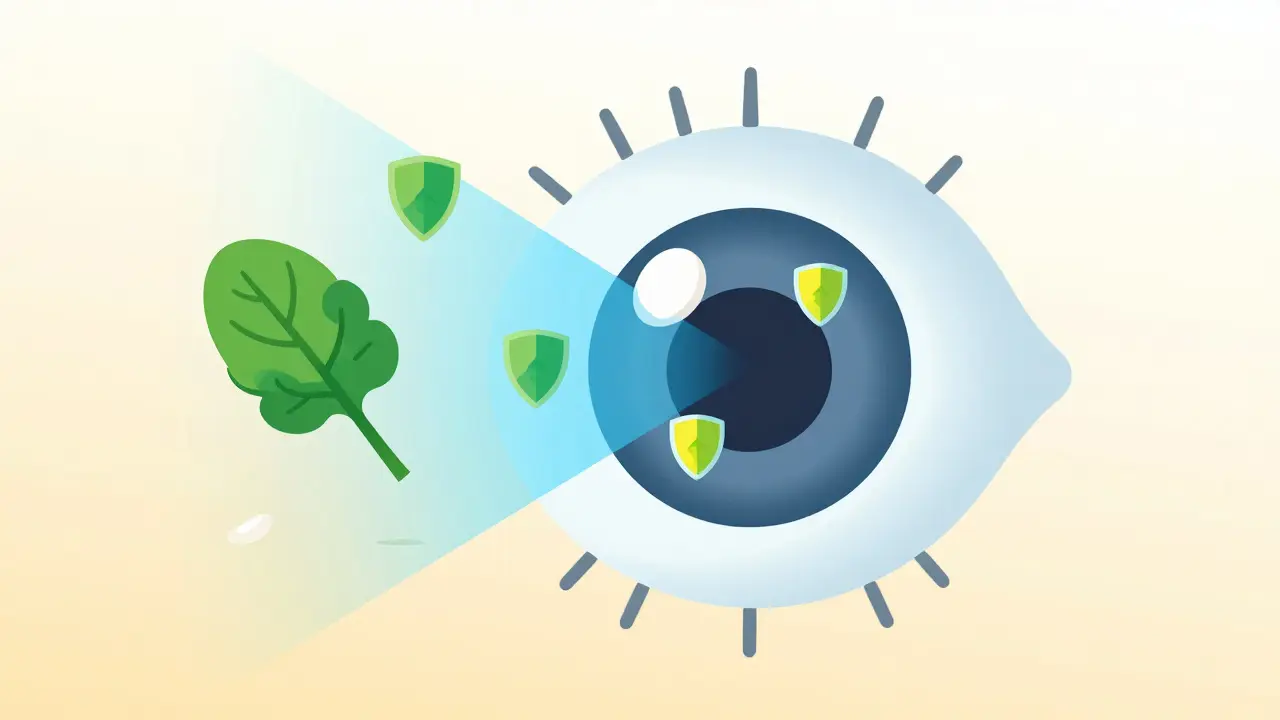
What’s Next? The Future of Blue Light Protection
Display manufacturers are catching on. OLED screens now reduce blue light at the hardware level - no filter needed. Samsung’s 2025 roadmap aims to cut 415-455 nm emission by 50% with less than 2% color shift. That’s huge. New tech like quantum dot lenses (still in prototype) promise selective filtering: blocking bad blue light while keeping good light. The FDA even cleared a device called Lumineyes in 2023 - not to block blue light, but to replace it with safe, low-blue light therapy. Meanwhile, the market for blue light glasses is expected to drop 18% annually from 2025-2028. Why? Because the solution is moving into the screens themselves.So What Should You Actually Do?
Here’s your simple, no-fluff plan:- Use the 20-20-20 rule - every 20 minutes, look 20 feet away for 20 seconds.
- Set screen brightness to match your room - not brighter than necessary.
- Keep your screen at least 20 inches from your eyes.
- Turn on night mode two hours before bed - no exceptions.
- Consider lutein and zeaxanthin supplements if you spend 6+ hours daily on screens.
- Don’t waste money on blue light glasses unless you’re using them for sleep and don’t need color accuracy.
Frequently Asked Questions
Do blue light glasses really protect my eyes from damage?
There’s no strong evidence that blue light from screens causes permanent eye damage like macular degeneration. The American Academy of Ophthalmology doesn’t recommend them for eye protection. They may help with eye strain for some people, but their main benefit is improving sleep by reducing blue light before bed. If you wear them for color work, they can make things look yellow and hurt your accuracy.
Is blue light worse at night?
Yes. Blue light suppresses melatonin - your body’s natural sleep hormone - more than any other color. Studies show it delays sleep onset by over an hour compared to warmer light. That’s why using your phone in bed makes it harder to fall asleep, even if you’re tired. Turning on night mode two hours before bed can boost melatonin by nearly 60%.
How long does it take to notice a difference after changing habits?
Most people feel less eye strain within a few days of using the 20-20-20 rule and adjusting screen brightness. Better sleep from night mode usually shows up in 3-5 nights. Building lasting habits takes 14-21 days. The key is consistency - not perfection. Skip a day? Just get back on track the next day.
Are children more at risk from blue light?
Children’s eyes transmit more blue light to the retina than adults’, and their screens use is increasing. France’s health agency warns about potential long-term risks for kids under 3 exposed to over 100 lux of blue light daily. For older kids, the bigger concern is sleep disruption and reduced outdoor time - both linked to myopia. Limit screen time before bed, encourage outdoor play, and use night mode on all devices.
Should I buy blue light blocking screen protectors?
They reduce blue light by 10-30%, but they also reduce overall brightness and can cause glare. Most people don’t notice a difference in eye strain. Software filters (like Night Shift) are free, just as effective for sleep, and don’t degrade screen quality. Save your money unless you’re using a device without built-in night mode.
Can blue light cause headaches?
Not directly. But blue light contributes to visual fatigue, which can trigger tension headaches. When your eyes struggle to focus on a screen for hours, your forehead and neck muscles tighten. Combine that with dry eyes and poor posture, and headaches follow. The 20-20-20 rule, proper lighting, and screen distance are far more effective than filters for preventing these headaches.


Post A Comment