
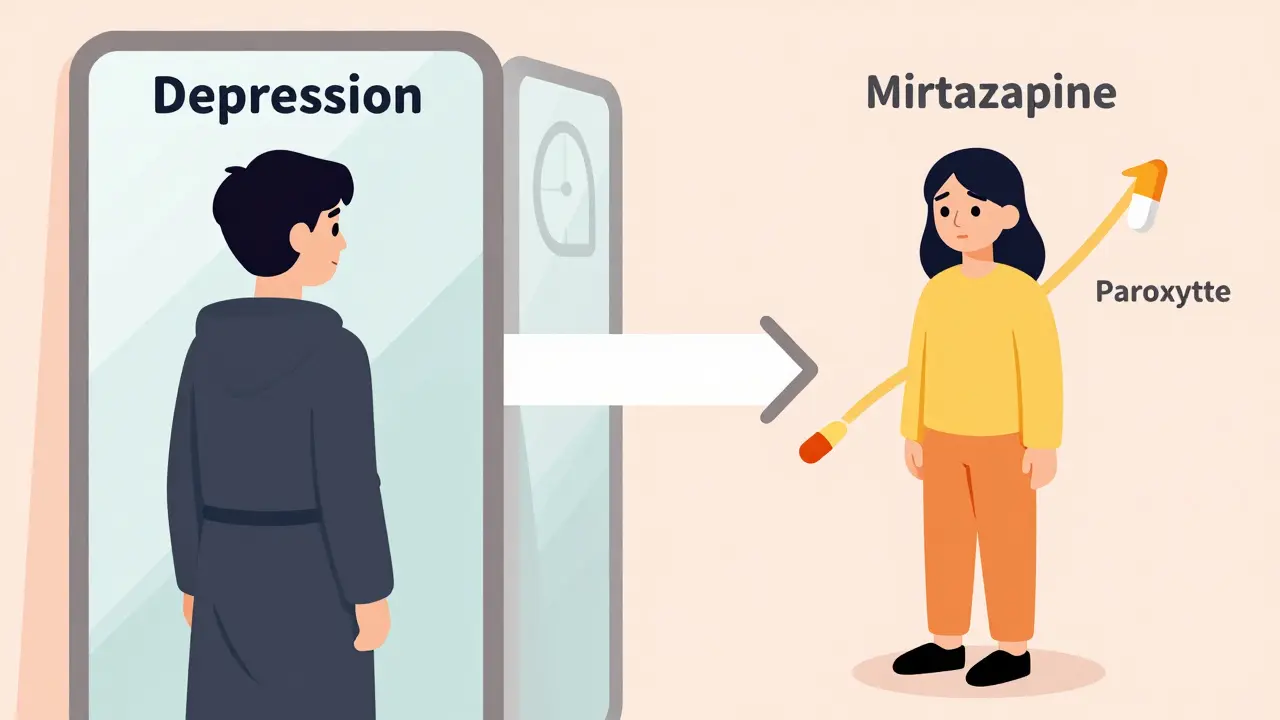
Antidepressant Weight Gain Calculator
Estimate potential weight gain from your antidepressant medication based on clinical study data. Note: Individual results may vary due to metabolism, diet, activity level, and genetics.
Select Your Antidepressant
It’s not just in your head - gaining weight while on antidepressants is real, common, and backed by solid science. About 55-65% of people taking these medications long-term see a noticeable increase in body weight. For many, it’s not just about clothes fitting tighter. It’s about fear, frustration, and even quitting treatment because of it. And that’s dangerous. Stopping antidepressants without medical help increases your chance of depression coming back by 30-50%.
Which Antidepressants Cause the Most Weight Gain?
Not all antidepressants are the same when it comes to weight. Some barely move the needle. Others? They’re practically designed to pack on pounds.
The biggest culprits are older drugs like amitriptyline, nortriptyline, and imipramine - all tricyclic antidepressants (TCAs). These were among the first antidepressants ever made, and they still get prescribed today, especially for chronic pain or sleep issues. But they strongly affect histamine and serotonin receptors in the brain, which turns up your appetite and slows your metabolism.
Mirtazapine (brand name Remeron) is another major offender. It’s often used for people with severe depression and poor appetite - ironically, it’s prescribed to help them eat. But for many, it doesn’t stop at helping appetite. It leads to steady, sometimes rapid, weight gain. Studies show people on mirtazapine can gain 5-10 pounds in just a few months.
Then there’s paroxetine (Paxil). Among the SSRIs, it’s the worst for weight gain. People on paroxetine gain an average of 2.9 pounds after two years - more than most other SSRIs. Citalopram and escitalopram aren’t far behind, adding around 3.6 pounds over two years.
Even duloxetine (Cymbalta), often thought of as neutral, adds about 1.7 pounds after two years. That might not sound like much - until you realize it’s cumulative. Add in reduced activity from low energy, and those extra pounds stick.
What About SSRIs Like Prozac and Zoloft?
Here’s the twist: SSRIs like fluoxetine (Prozac) and sertraline (Zoloft) often cause weight loss in the first few months. That’s because they boost serotonin, which temporarily suppresses appetite and reduces cravings. But after about a year? That effect flips. Serotonin receptors in your brain get used to the higher levels. They downregulate. And suddenly, you’re craving carbs, sugar, and snacks like never before.
So while you might lose a few pounds early on, the long-term trend for most SSRIs is upward. A 2024 Harvard study found that sertraline users gained 3.2 pounds after two years. That’s not a fluke. It’s the pattern.
The One Antidepressant That Doesn’t Make You Gain Weight - and Might Help You Lose It
There’s one standout: bupropion (Wellbutrin). It’s the only commonly prescribed antidepressant that consistently avoids weight gain - and often leads to modest weight loss.
At six months, people on bupropion lose about 0.25 pounds. By two years, they gain just 1.2 pounds - compared to 3.6 pounds on escitalopram. That’s a 200% difference.
Why? Bupropion works differently. Instead of targeting serotonin, it boosts dopamine and norepinephrine. These chemicals are linked to energy, focus, and appetite control. It doesn’t trigger the same carb cravings. In fact, many people report feeling less hungry and more motivated to move.
That’s why doctors often switch patients from paroxetine or mirtazapine to bupropion when weight gain becomes a problem. It’s not a magic fix - it doesn’t work for everyone - but it’s the best option we have for people who need antidepressants but are struggling with weight.
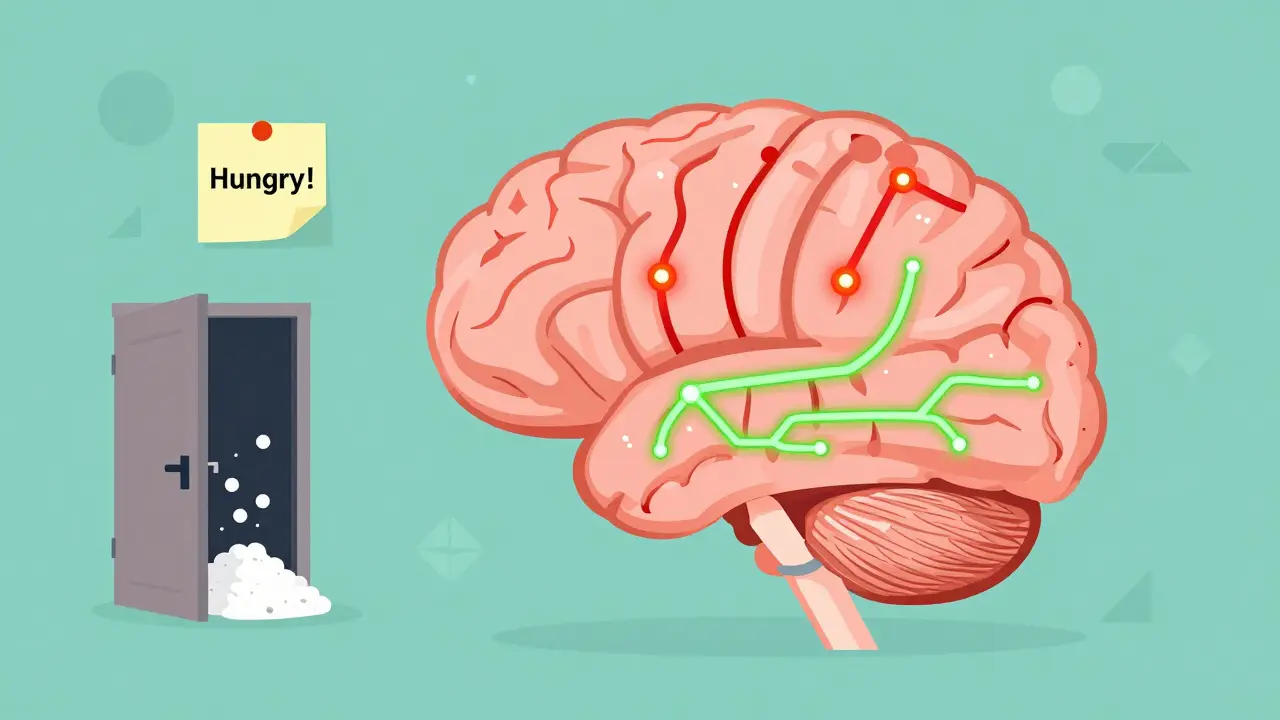
Why Do Antidepressants Make You Gain Weight?
It’s not just one thing. It’s a chain reaction in your brain and body.
First, serotonin. All antidepressants increase serotonin in your brain. In the short term, that helps you feel calmer and less impulsive - you eat less. But over time, your brain adapts. The receptors slow down. Now your brain thinks it’s starving, even if you’re eating normally. That triggers cravings - especially for sugary, starchy foods.
Then there’s histamine. Drugs like mirtazapine and TCAs block histamine receptors. That’s why they make you sleepy - and hungry. Histamine normally helps you feel full. Block it, and you keep eating.
Insulin and hormones get thrown off too. Antidepressants can make your body less sensitive to insulin. That means more sugar stays in your blood instead of being used for energy. Your body stores it as fat. Leptin (the fullness hormone) drops. Ghrelin (the hunger hormone) rises. Your body literally starts screaming for food.
And if you’re already stressed? That makes it worse. Stress and antidepressants together can rewire your metabolism - even after you stop the drug. Studies show people who took antidepressants during high-stress periods and then ate a high-fat diet ended up heavier than those who only ate the high-fat diet. The damage lingers.
How to Manage Weight Gain Without Stopping Your Medication
Don’t quit. Seriously. Stopping cold turkey can trigger a major relapse. Instead, work with your doctor on a plan.
1. Talk about switching meds. If you’re on paroxetine, mirtazapine, or a TCA, ask if bupropion could be an option. It’s not perfect - it can cause insomnia or anxiety in some - but for weight, it’s the best choice.
2. Add metformin. This diabetes drug is now being used off-label to fight antidepressant weight gain. It improves insulin sensitivity and reduces cravings. Studies show it can cut weight gain in half. A 500mg dose twice daily is common. Ask your doctor if it’s right for you.
3. Consider GLP-1 agonists. Drugs like semaglutide (Wegovy) and liraglutide (Saxenda) are now being tested in people on antidepressants. Early results show 5-7% weight loss over six months - even while continuing their antidepressant. These are injectables, so they’re not for everyone, but they’re a promising new tool.
4. Move more - but don’t overdo it. You don’t need to run marathons. Just walk 30 minutes a day. Strength training twice a week helps too. Muscle burns more calories than fat, even at rest. And movement helps your mood - which helps you stick with it.
5. Watch your carbs. You’re not broken. You’re not lazy. Your brain is wired to crave sugar right now. Fight it by choosing complex carbs: oats, quinoa, sweet potatoes, beans. Avoid white bread, pastries, and sugary drinks. Protein and fiber keep you full longer.
6. Sleep better. Poor sleep raises ghrelin and lowers leptin. That means more hunger. Aim for 7-8 hours. Cut caffeine after 2 PM. Keep your room cool and dark.
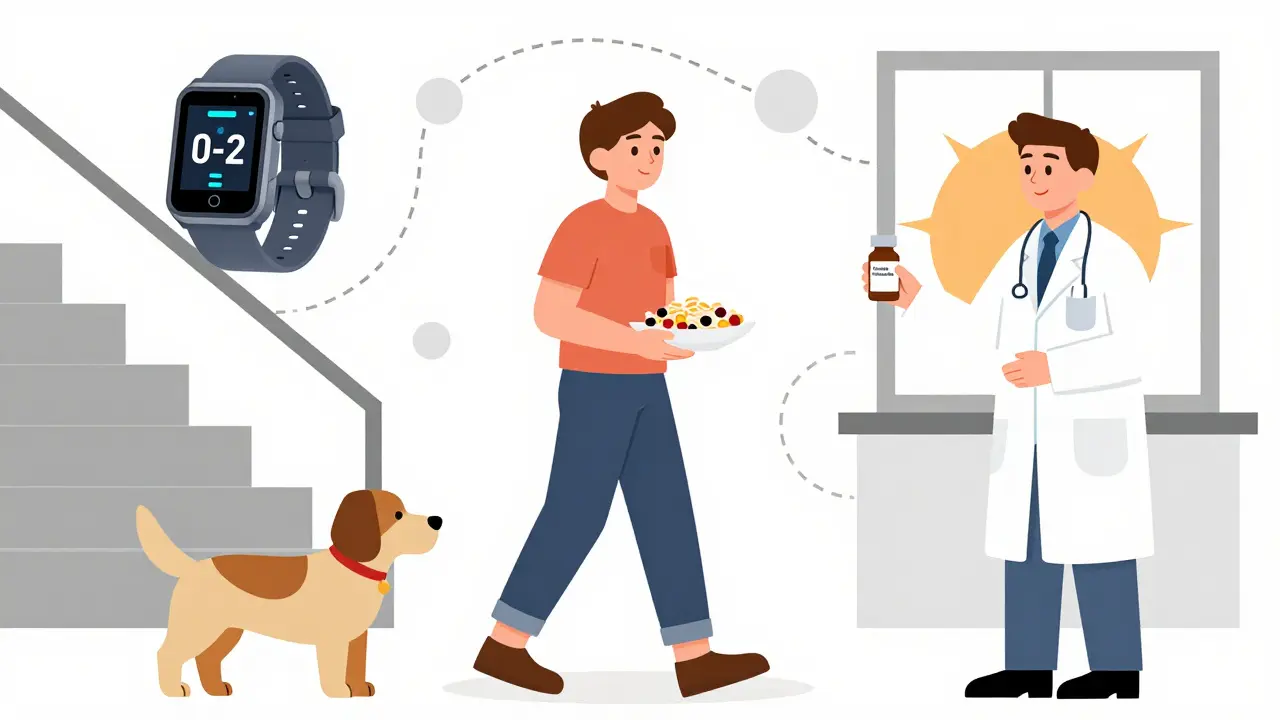
Is the Weight Gain Really from the Medication?
Not always. Sometimes, you’re gaining weight because you’re getting better.
Depression often kills your appetite. You skip meals. You lose weight. When the antidepressant starts working, your appetite comes back. You start eating again. You gain weight - not because the drug is making you fat, but because you’re finally nourishing your body.
That’s why doctors look at your weight before you started. If you lost 10 pounds during your depression and now you’re back to your normal weight? That’s recovery - not side effects.
But if you were at a stable weight before, and now you’re gaining 1-2 pounds a month? That’s likely the medication.
What About Genetics?
Your genes play a role too. Some people metabolize antidepressants faster or slower because of their CYP2C19 gene. If you’re a slow metabolizer, the drug builds up in your system. That means stronger effects - including more weight gain. If you’ve had bad reactions to antidepressants before, ask about genetic testing. It’s not routine, but it can help explain why one drug worked for your friend and not you.
Final Thoughts: You’re Not Alone, and You’re Not Failing
Weight gain from antidepressants isn’t your fault. It’s a biological side effect - not a moral failing. Millions of people experience this. The key is knowing which drugs are riskier, understanding why it happens, and having options.
You don’t have to choose between mental health and your body. With the right strategy - switching meds, adding metformin, adjusting your diet, and moving more - you can manage both.
Talk to your doctor. Bring this info. Ask about bupropion. Ask about metformin. Ask about GLP-1 agonists. You deserve to feel better - mentally and physically.
Do all antidepressants cause weight gain?
No. While many antidepressants can cause weight gain over time, bupropion (Wellbutrin) is the only commonly prescribed one that consistently avoids it - and often leads to slight weight loss. SSRIs like fluoxetine and sertraline may cause initial weight loss but tend to lead to modest gain after a year. Tricyclics and mirtazapine are the biggest culprits.
How much weight do people typically gain on antidepressants?
It varies. On average, people gain 1-5 pounds over two years. Paroxetine causes about 2.9 pounds, escitalopram 3.6 pounds, and mirtazapine can cause 5-10 pounds. Bupropion causes only about 1.2 pounds over the same period. Some people gain more, some gain less - genetics, diet, and activity level all play a role.
Can I lose weight while still taking antidepressants?
Yes. Many people lose weight while on antidepressants by combining medication with lifestyle changes. Switching to bupropion, adding metformin, eating more protein and fiber, walking daily, and improving sleep can all help. Weight loss is possible - even while continuing treatment.
Should I stop my antidepressant if I’m gaining weight?
No. Stopping antidepressants without medical guidance increases your risk of depression returning by 30-50%. Instead, talk to your doctor about switching to a different medication or adding a weight-management strategy like metformin or behavioral changes. Your mental health matters - and so does your physical health. You don’t have to choose one over the other.
Is weight gain from antidepressants permanent?
Not necessarily. If you switch medications or add interventions like metformin or GLP-1 agonists, you can lose the weight. However, some metabolic changes may persist, especially if you gained weight during high-stress periods. Long-term lifestyle changes - healthy eating, regular movement, good sleep - are key to reversing it.


Post A Comment