
When you start taking an SSRI, a class of antidepressants that increase serotonin levels in the brain. Also known as selective serotonin reuptake inhibitors, these drugs are among the most prescribed for depression and anxiety—but they don’t come without trade-offs. Many people feel better within weeks, but up to 70% experience at least one side effect in the first month. The good news? Most are temporary. The bad news? Some stick around, or worse, signal something serious.
Common SSRI side effects include nausea, headaches, drowsiness, and dry mouth. These usually fade after a few weeks as your body adjusts. But other effects are harder to ignore: sexual side effects, reduced libido, delayed orgasm, or inability to achieve arousal affect nearly half of users long-term. Weight gain is another frequent complaint, especially with medications like paroxetine. Then there’s serotonin syndrome, a rare but life-threatening reaction from too much serotonin, often caused by mixing SSRIs with other drugs like tramadol, certain painkillers, or even St. John’s wort. Symptoms? Agitation, rapid heartbeat, high fever, tremors—this isn’t something to wait out. If you feel this way, get help immediately.
Stopping an SSRI suddenly can also trigger SSRI withdrawal, a set of physical and emotional symptoms that mimic the original condition. Dizziness, electric shock sensations, insomnia, and intense mood swings can hit within days—even if you’ve only been on the drug for a few weeks. That’s why tapering slowly under medical supervision isn’t optional—it’s essential.
What’s missing from most patient conversations is that side effects aren’t one-size-fits-all. Your genetics, age, other medications, and even gut health can change how you respond. One person gets jittery on sertraline; another handles it fine but can’t tolerate fluoxetine. That’s why switching SSRIs isn’t failure—it’s strategy. And if side effects are keeping you from living well, there are alternatives: lower doses, intermittent dosing, or non-SSRI options like bupropion or SNRIs.
Below, you’ll find real-world stories and evidence-backed advice on managing these reactions. From how to talk to your doctor about sexual dysfunction to what to do when nausea won’t quit, these posts cut through the noise. No fluff. No jargon. Just what works—and what doesn’t—when your medication starts to feel like a bigger problem than the condition it’s meant to fix.
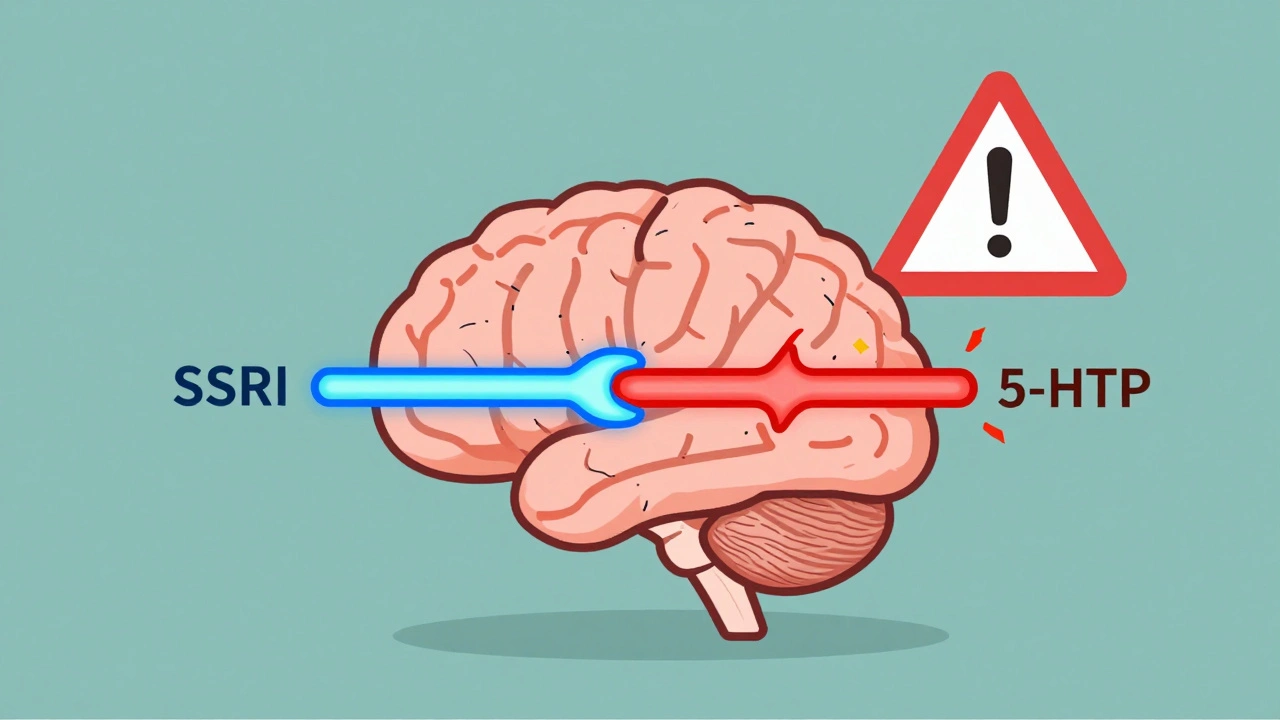
Combining 5-HTP with SSRIs can trigger serotonin syndrome-a dangerous, potentially fatal condition. Learn why this supplement-drug interaction is more risky than you think, what symptoms to watch for, and what to do instead.
Read More