
When you have sleep apnea treatment, a set of medical and lifestyle approaches designed to restore normal breathing during sleep. It's not just about stopping snoring—it's about preventing heart problems, memory loss, and daytime exhaustion that come from repeated oxygen drops at night. Many people think it’s just loud breathing, but untreated obstructive sleep apnea, a condition where throat muscles relax and block the airway during sleep can raise your risk of stroke, high blood pressure, and even early death. The good news? Most cases respond well to simple, proven methods—if you know which ones actually work.
There are three main paths for sleep apnea treatment, a set of medical and lifestyle approaches designed to restore normal breathing during sleep. The first is the CPAP machine, a device that delivers steady air pressure through a mask to keep your airway open. It’s the gold standard, but many quit using it because it feels uncomfortable or noisy. The second is an oral appliance, a custom mouthpiece that shifts the jaw forward to prevent airway collapse. It’s less intrusive, works well for mild to moderate cases, and is easier to travel with. The third? Lifestyle changes—losing weight, sleeping on your side, quitting alcohol before bed. These aren’t just "helpful tips"—they’re medical interventions backed by studies showing they can eliminate apnea in some people.
What most guides leave out is how these options interact. For example, if you’re on a blood thinner like warfarin, some sleep apnea treatments can affect your INR levels. Or if you’re taking statins for cholesterol, untreated sleep apnea can make muscle pain worse. Even something as simple as switching from a tablet to a liquid medication for another condition can change how your body handles sleep therapy. That’s why your treatment needs to fit your whole health picture, not just your snoring.
You don’t need to suffer through nights of gasping or daytime fog. Whether you’re trying CPAP for the first time, looking for a quieter alternative, or wondering if your weight loss is making a difference—there’s real, practical help here. Below, you’ll find real-world advice from people who’ve been there, and the science behind what actually moves the needle.
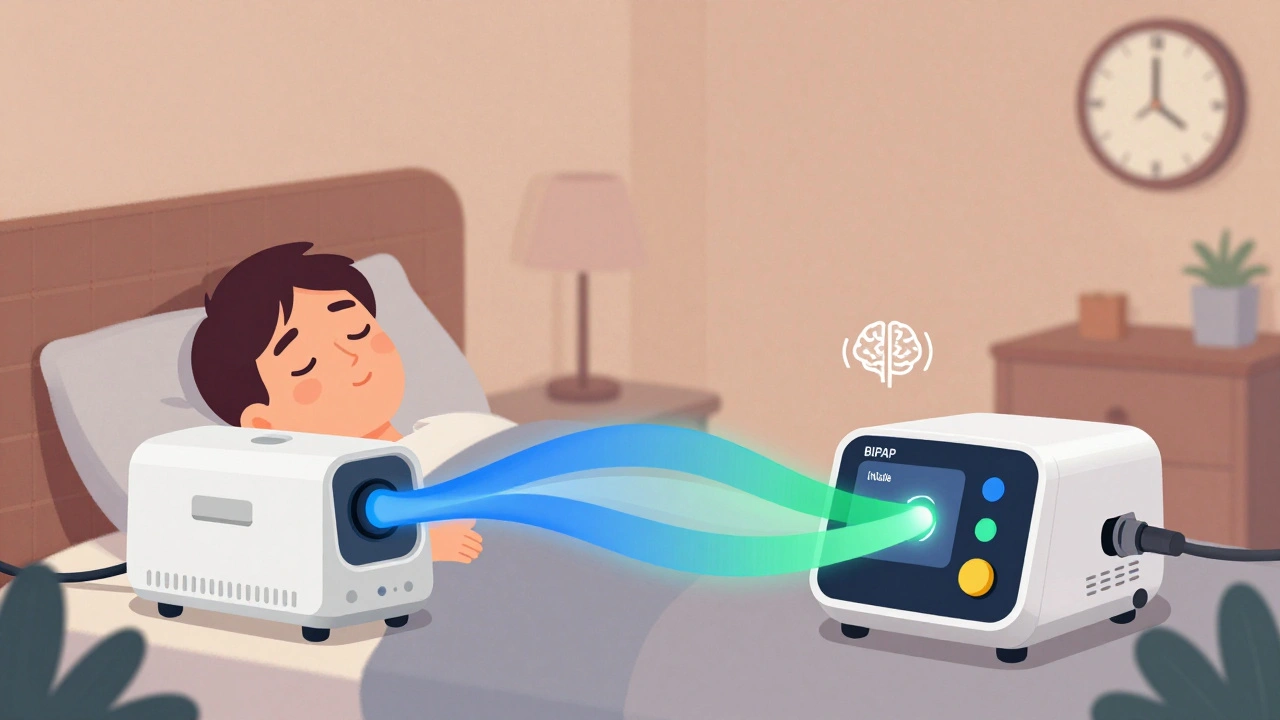
CPAP and BiPAP both treat sleep apnea, but they work differently. Learn when each is recommended, how they compare in cost and effectiveness, and which one is right for your specific condition.
Read More