
When it comes to getting your prescriptions filled, insurance coverage, the system that determines how much of your medication costs are paid by your plan. Also known as pharmacy benefits, it’s not just about having a card—it’s about understanding what’s actually covered, what’s not, and why some drugs cost more even if they’re generic. Many people assume their insurance means they’ll pay little or nothing, but that’s rarely true. You might pay a copay, meet a deductible, or get stuck with a prior authorization form your doctor has to fight through. And if your drug isn’t on the plan’s list—called a formulary—you could be looking at hundreds of dollars out of pocket.
Prescription costs, the amount you pay for medication after insurance applies don’t always match the drug’s list price. A $500 pill might cost you $10 if it’s on Tier 1, or $300 if it’s non-preferred. This is where pharmacy reimbursement, how much the pharmacy gets paid by your insurer to fill a prescription plays a hidden role. Most people don’t realize that pharmacies often lose money on generics because the reimbursement rate from PBMs (pharmacy benefit managers) is lower than what they paid to buy the drug. That’s why some independent pharmacies close, and why you might get a surprise when you ask for a cheaper alternative.
Drug access, how easily patients can obtain prescribed medications isn’t just about price—it’s about rules. Prior authorization, step therapy (trying cheaper drugs first), and quantity limits are all tools insurers use to control spending. You might need to try two other blood pressure meds before your doctor can prescribe the one that actually works for you. And if you’re traveling or going through a life change, your coverage might not follow you. That’s why knowing your plan’s rules ahead of time can save you from running out of meds mid-trip or during a stress-filled period.
It’s not just about big-name drugs. Even over-the-counter supplements can be affected. Some plans cover certain vitamins if prescribed, but most don’t. And if you’re on multiple medications, drug interactions can trigger coverage denials—even if the combo is medically sound. That’s why communication with your healthcare team matters. If your doctor knows your insurance won’t cover a certain statin, they might switch you to one that’s on formulary, or help you file an appeal.
And then there’s the gap between what’s approved and what’s affordable. Patent extensions, pediatric exclusivity, and generic pricing all influence whether a drug even makes it into your plan’s list. One post breaks down how insurance coverage indirectly keeps drug prices high by rewarding manufacturers who delay generics. Another shows how some people react differently to generics—not because the active ingredient changes, but because the fillers and coatings do, and insurers rarely care about that nuance.
What you’ll find below aren’t just articles about insurance. They’re real stories about people who got stuck between coverage rules and their health needs. You’ll learn how to fight a denial, how to get your meds while traveling, how to spot when a pharmacy is being underpaid, and why your doctor might not know your plan’s true limits. This isn’t theory. It’s what happens when the system meets real life—and how to navigate it without getting left behind.
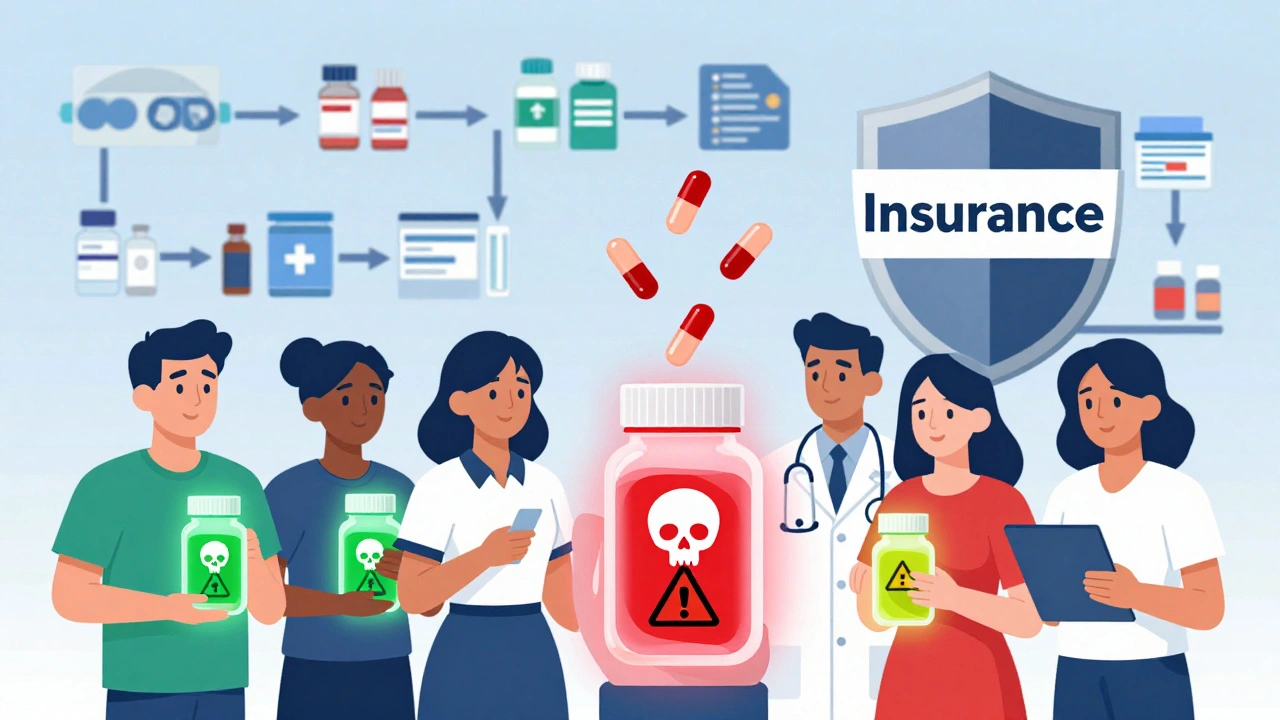
Counterfeit drugs threaten patient safety and cost the global economy $200 billion annually. Insurance can protect businesses that unknowingly distribute fake medicines - but only if they follow strict supply chain practices.
Read More