
When you buy a pill, you expect it to do what it says on the label. But fake medicines, counterfeit pharmaceuticals designed to look like real drugs but containing harmful or inactive ingredients. Also known as counterfeit drugs, they can be missing active ingredients, contain the wrong dose, or even include toxic substances like rat poison or floor cleaner. These aren’t rare outliers—they’re a global problem. The WHO estimates that 1 in 10 medical products in low- and middle-income countries are substandard or falsified. And even in places with strong regulations, online pharmacies and shady vendors make it easy for fake drugs to slip through.
It’s not just about pills you buy online. Fake versions of common drugs like generic drugs, lower-cost versions of brand-name medications that must meet FDA equivalence standards are flooding markets. Some look identical to the real thing, but they lack proper quality control. That’s why tools like the FDA Orange Book, the official database that lists therapeutic equivalence ratings for generic drugs matter. If you’re switching to a generic, checking its AB rating tells you if it’s truly interchangeable. But if you bought it from a website with no license, no physical address, and no pharmacist on staff? That’s a red flag.
Counterfeit drugs don’t just fail to work—they can kill. People taking fake antibiotics might get worse infections. Fake blood pressure pills can lead to strokes. Fake cancer meds? They don’t just delay recovery—they cost lives. And it’s not just about the active ingredient. Fake pills often use cheap, unregulated fillers that cause allergic reactions or organ damage. That’s why medication safety, the practice of ensuring drugs are genuine, properly stored, and correctly used isn’t just about following directions. It’s about knowing where your drugs come from.
How do you protect yourself? Never buy meds from websites that don’t require a prescription. Check if the pharmacy is licensed by your state board. Look for the VIPPS seal (Verified Internet Pharmacy Practice Sites). If the price seems too good to be true, it probably is. And if you notice pills that look different—wrong color, odd smell, strange texture—don’t take them. Report it to the FDA or your local health department.
The posts below cover real cases, hidden risks, and practical steps to avoid being tricked. You’ll learn how to verify your prescriptions, why some people react badly to generics, and how to spot the signs of a counterfeit before it’s too late. This isn’t about fear—it’s about control. You have the right to safe, effective medicine. Know how to get it.
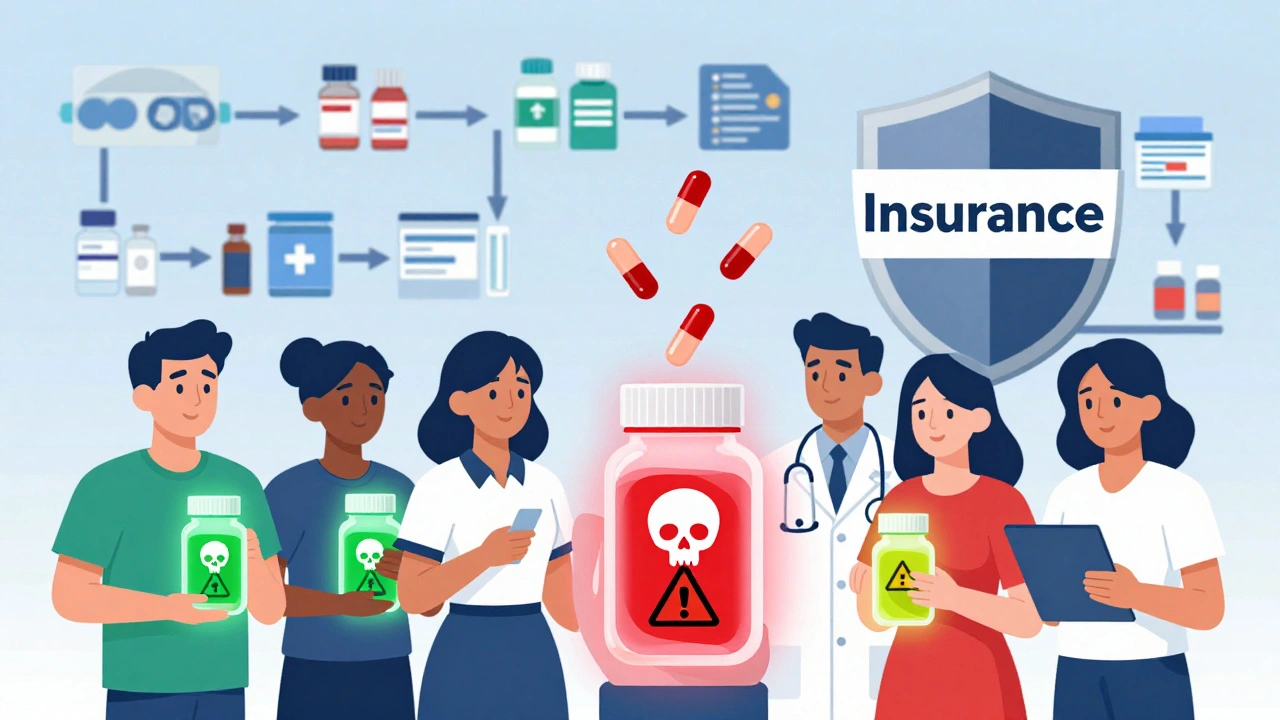
Counterfeit drugs threaten patient safety and cost the global economy $200 billion annually. Insurance can protect businesses that unknowingly distribute fake medicines - but only if they follow strict supply chain practices.
Read More