
When you’re dealing with sleep apnea, your doctor might recommend a CPAP, a device that delivers continuous air pressure to keep your airway open while you sleep. Also known as Continuous Positive Airway Pressure, it’s the most common treatment for obstructive sleep apnea. But if CPAP feels too stiff or doesn’t help enough, your provider might suggest a BiPAP, a machine that gives two different pressure levels—one for breathing in, another for breathing out. Also known as Bilevel Positive Airway Pressure, it’s often used when CPAP isn’t enough or when other breathing issues are involved. These aren’t just different brands—they’re designed for different needs.
CPAP keeps the airway open with one steady pressure, which works great for most people with simple obstructive sleep apnea. But if you have trouble exhaling against that constant force, or if you also have conditions like COPD or heart failure, BiPAP’s two-pressure system can make breathing feel more natural. It’s not just about comfort—lower pressure on exhale can mean better sleep, fewer awakenings, and less strain on your heart. People with neuromuscular diseases like ALS or those who need extra help with breathing during the day often rely on BiPAP because it gives their lungs more support when they need it most.
Neither device cures sleep apnea, but both stop it from disrupting your sleep. The key is matching the machine to your body’s needs. Some people start with CPAP and switch to BiPAP later. Others never need to try CPAP at all. What matters isn’t which one is "better," but which one lets you sleep without gasping, wakes you up feeling rested, and fits your life. You’ll need a sleep study to figure out which one your body responds to best.
Both machines require a prescription, come with masks that vary in fit and comfort, and need regular cleaning. But beyond the hardware, the real difference is in how they support your breathing—like one hand holding your airway open versus two hands helping you breathe in and out. If you’ve struggled with CPAP, don’t assume it’s you—it might just be the wrong tool. And if you’ve been told you need BiPAP, understand why it’s being recommended, not just that it’s "stronger." The right device makes all the difference between barely sleeping and actually resting.
Below, you’ll find real stories and facts from people who’ve used these devices, what went wrong, what worked, and how to avoid common mistakes. Whether you’re new to treatment or looking for a better fit, the articles here will help you cut through the noise and find what actually works for your body.
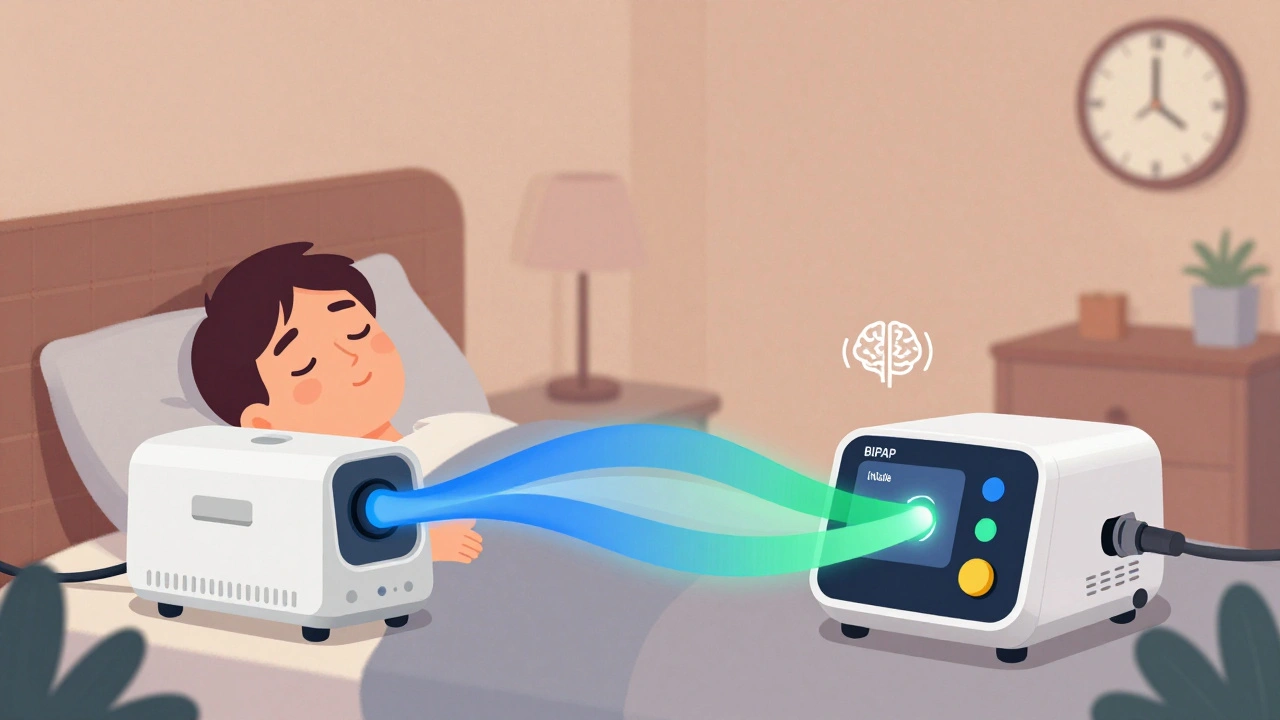
CPAP and BiPAP both treat sleep apnea, but they work differently. Learn when each is recommended, how they compare in cost and effectiveness, and which one is right for your specific condition.
Read More