
When you pick up a prescription, you expect it to be safe. But counterfeit drugs, fake versions of real medications that may contain no active ingredient, too much, or something harmful. Also known as fake medications, these products are designed to look like the real thing—but they’re not regulated, tested, or safe. They show up in pharmacies, online stores, and even in countries with strong health systems. The problem isn’t just about fraud—it’s about people getting sick or dying because they took something that wasn’t what it claimed to be.
Generic drugs, legally approved copies of brand-name medicines that meet FDA standards for safety and effectiveness, are often targeted by counterfeiters because they’re cheaper and more widely used. But here’s the catch: not every cheap pill is a generic. Some are dangerous fakes. The FDA’s Orange Book, the official database that lists approved drug products with therapeutic equivalence evaluations helps you verify real generics—but counterfeiters don’t care about that. They print fake labels, copy packaging, and even fake barcodes. A pill that looks like metformin could have no diabetes medicine at all—or worse, toxic chemicals like rat poison or floor cleaner.
People don’t always realize they’ve taken a fake drug until it’s too late. Some think a lower price means a good deal. Others buy online because it’s convenient. But the FDA warns that 50% of websites selling drugs online are illegal. Even if the site looks professional, the pills inside might be useless or deadly. This isn’t just a problem in developing countries—it’s happening right here. In 2023, the DEA seized over 10 million fake opioid pills in the U.S. alone. Many contained fentanyl, a drug 50 times stronger than heroin. One pill can kill.
What makes this worse is that counterfeit drugs often mimic real ones used for serious conditions: heart meds, cancer treatments, insulin, antibiotics. Taking a fake version of warfarin? You could bleed out. A fake statin? Your heart attack risk skyrockets. And if you’re on multiple medications, a fake drug can throw off the whole balance—leading to dangerous interactions you never saw coming. That’s why medication risks, the hidden dangers from improper dosing, unknown ingredients, or unverified sources go far beyond side effects. It’s about survival.
You can’t always tell a fake by looking. But you can protect yourself. Always get prescriptions filled at licensed pharmacies. Avoid websites that don’t require a prescription. Check the packaging for spelling errors, mismatched colors, or odd smells. If a pill looks different than usual, ask your pharmacist. And if you’re buying online, use only sites with the VIPPS seal—verified by the National Association of Boards of Pharmacy.
Below, you’ll find real stories and facts about how counterfeit drugs slip through the system, what they’re made of, and how to catch them before they hurt you. These aren’t theoretical warnings—they’re lessons from people who lived through it. You’ll learn what to ask your doctor, how to spot red flags in your meds, and why trusting your gut matters more than you think.
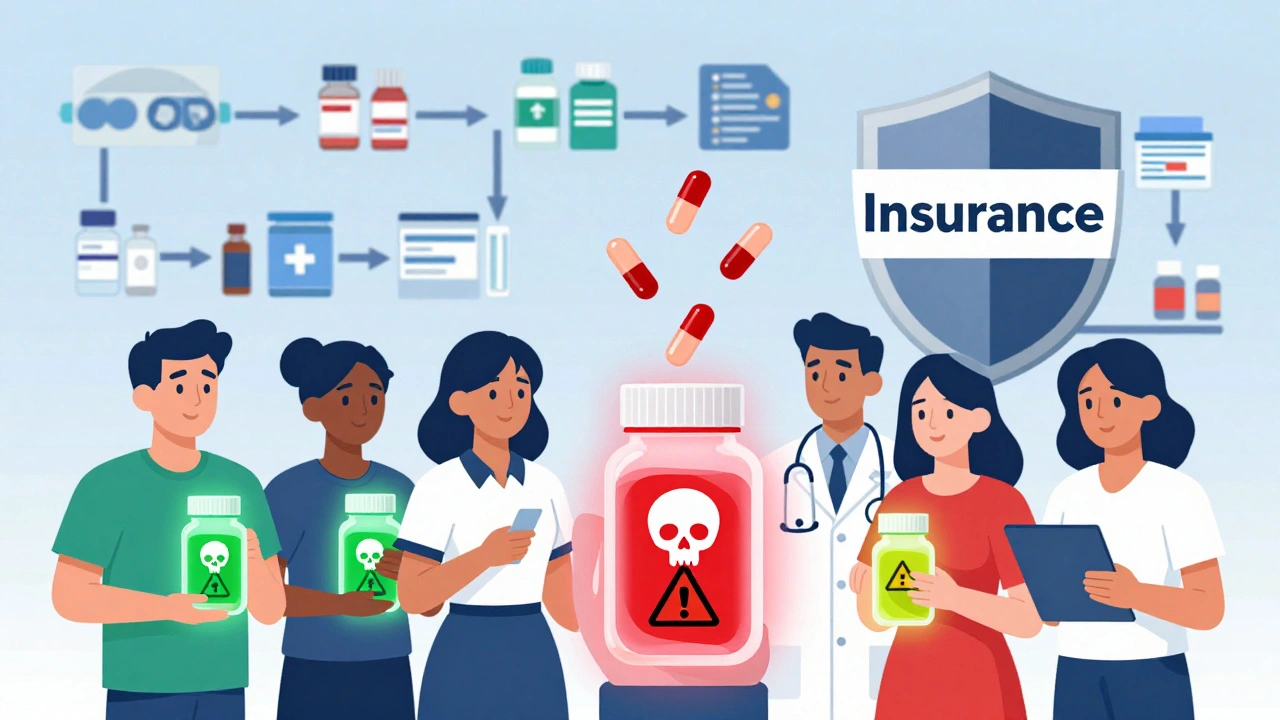
Counterfeit drugs threaten patient safety and cost the global economy $200 billion annually. Insurance can protect businesses that unknowingly distribute fake medicines - but only if they follow strict supply chain practices.
Read More