
When you take birth control, hormonal contraception used to prevent pregnancy, often in the form of pills, patches, or IUDs. Also known as hormonal contraception, it works by controlling your body’s natural hormone levels, it doesn’t just affect your cycle—it changes how your body handles other things you take, including supplements, products taken to support health, often sold as vitamins, herbs, or minerals. Many people assume that because supplements are "natural," they’re harmless alongside prescription meds. But that’s not true. Some supplements can make birth control less effective. Others can make side effects worse. And some birth control pills quietly drain your body of key nutrients you might not even realize you’re losing.
For example, if you’re taking a daily multivitamin or a B-complex, you might think you’re covered. But studies show that hormonal birth control lowers levels of vitamin B6, B12, folate, and even magnesium. That’s not just a footnote—it can lead to fatigue, mood swings, or even nerve issues over time. Then there’s St. John’s Wort, a popular herb for low mood. It’s known to speed up how your liver breaks down hormones, which can drop estrogen levels enough to cause breakthrough bleeding or, worse, an unintended pregnancy. Even common antioxidants like vitamin C and E, when taken in high doses, might interfere with how your body absorbs synthetic hormones. And don’t forget about calcium and iron supplements. Taking them at the same time as your pill can reduce absorption of both—so timing matters. You can’t just pop them together and hope for the best.
It’s not just about avoiding bad combos—it’s about filling the gaps. If your birth control is lowering your B vitamins, you might need to adjust your supplement routine. But not all supplements are created equal. Some forms of magnesium, like magnesium glycinate, are better absorbed than others. And not every B12 supplement works the same—methylcobalamin is often more effective than cyanocobalamin, especially if you’re already low. The goal isn’t to stack every supplement on the shelf. It’s to understand what your body’s actually missing and fix it smartly. That’s why so many people end up confused: they’re told to take supplements for health, but no one tells them how birth control changes the rules.
Below, you’ll find real, practical insights from people who’ve been there—what worked, what didn’t, and what no one warned them about. Whether you’re on the pill, the patch, or an IUD, and whether you take fish oil, probiotics, or herbal teas, there’s something here that’ll help you stay safe, balanced, and in control.
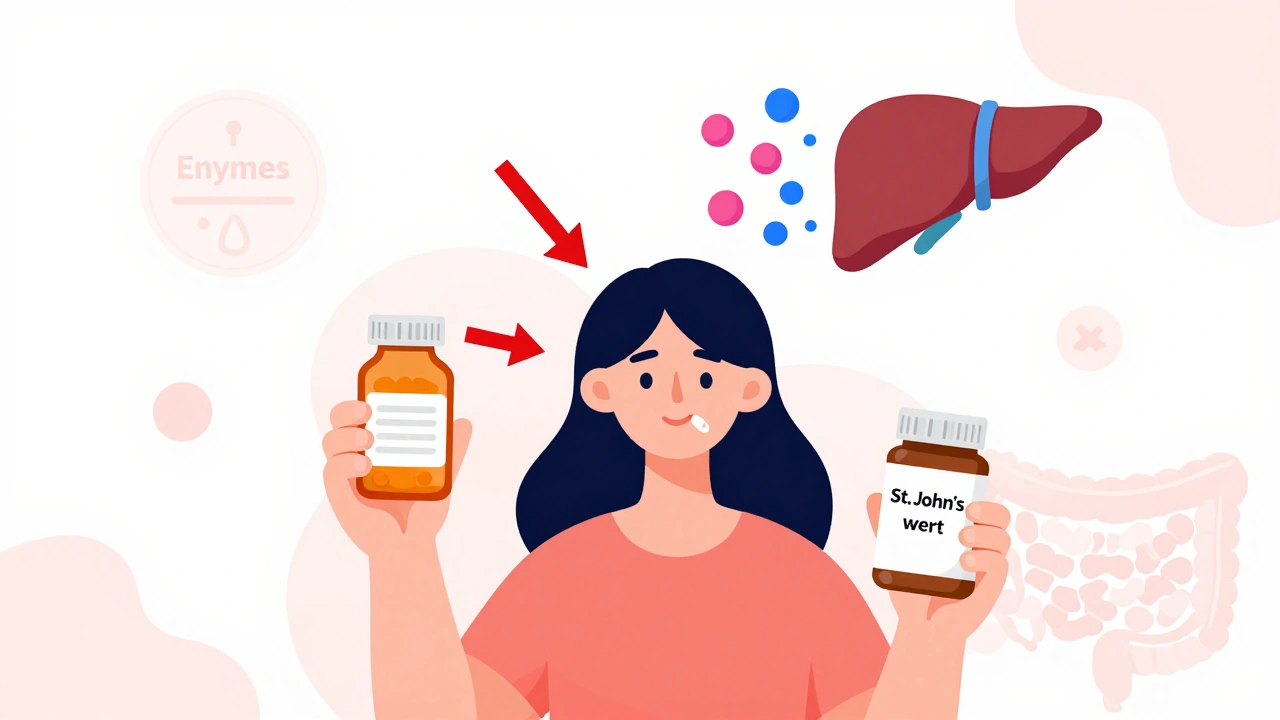
Some herbal supplements can make birth control less effective, especially St. John’s wort. Learn which ones are risky, which are safe, and what steps to take to protect yourself from unintended pregnancy.
Read More