
Birth Control Supplement Safety Checker
Enter the name of a supplement you're taking to check if it's safe with your birth control.
Safety Result
Enter a supplement name and click "Check Safety" to see the results.
Many women take herbal supplements to feel better, manage stress, or support hormonal balance. But if you're on birth control, some of those supplements could be making your contraception less effective - and you might not even know it. This isn't theory. It’s documented in medical studies, and the consequences can be real: unplanned pregnancy.
St. John’s Wort Is the Biggest Risk
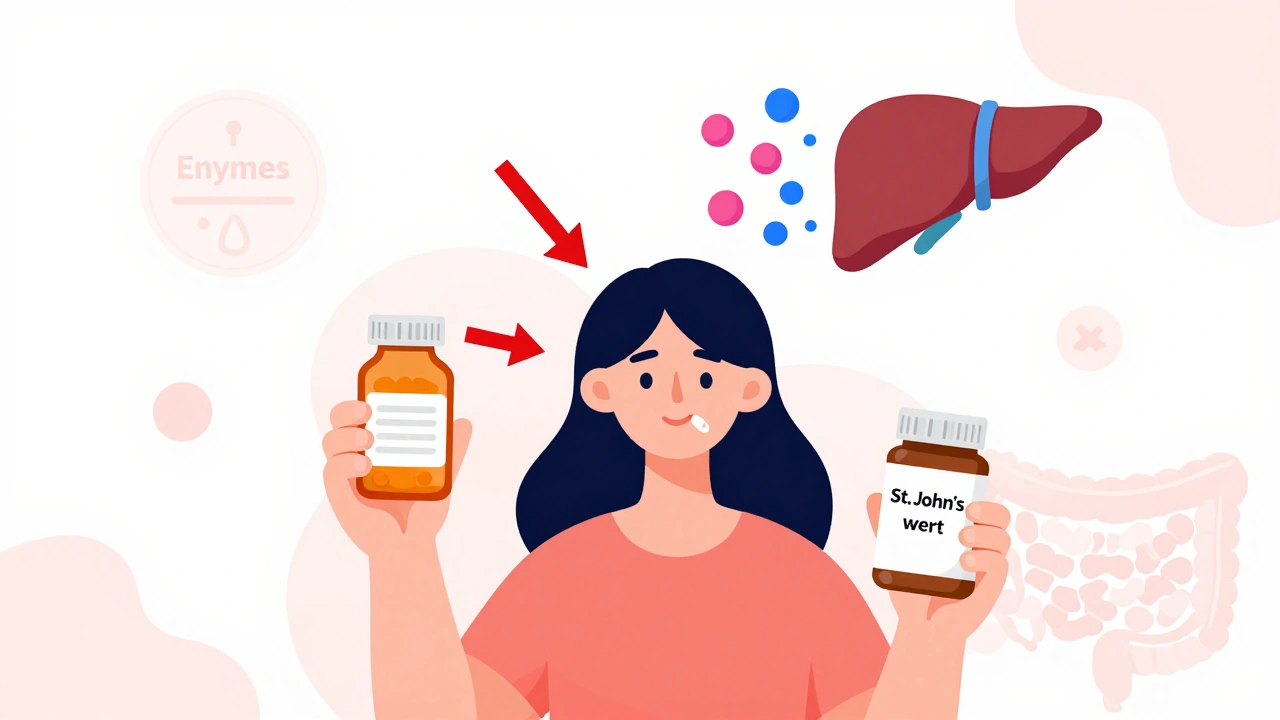
Of all herbal supplements, St. John’s wort is the most dangerous when taken with birth control pills. It’s commonly used for mild depression and anxiety, but it triggers a chain reaction in your body that directly attacks the hormones in your pill.
St. John’s wort contains a compound called hyperforin. This compound activates a system in your liver called the pregnane X receptor, which then ramps up production of enzymes (CYP3A4) and transporters (P-glycoprotein) that break down and flush out estrogen and progestin - the very hormones your birth control relies on to prevent pregnancy.
One study found that women taking 900 mg of St. John’s wort daily with a standard birth control pill (30 mcg ethinyl estradiol + 150 mcg levonorgestrel) saw hormone levels drop by up to 50%. That’s not a small change. It’s enough to leave you unprotected. In the same study, 23% of women on both St. John’s wort and birth control experienced breakthrough bleeding - a clear red flag that the pill wasn’t working as it should. Only 5% of women on birth control alone had this issue.
Doctors don’t just warn about this - they require action. The American College of Obstetricians and Gynecologists (ACOG) says if you’re taking St. John’s wort, you need a backup method of contraception while you’re on it, and for at least one month after you stop. No exceptions.
Other Supplements That Could Interfere
St. John’s wort isn’t the only one. Several other herbal products carry risks, though the evidence isn’t as strong.
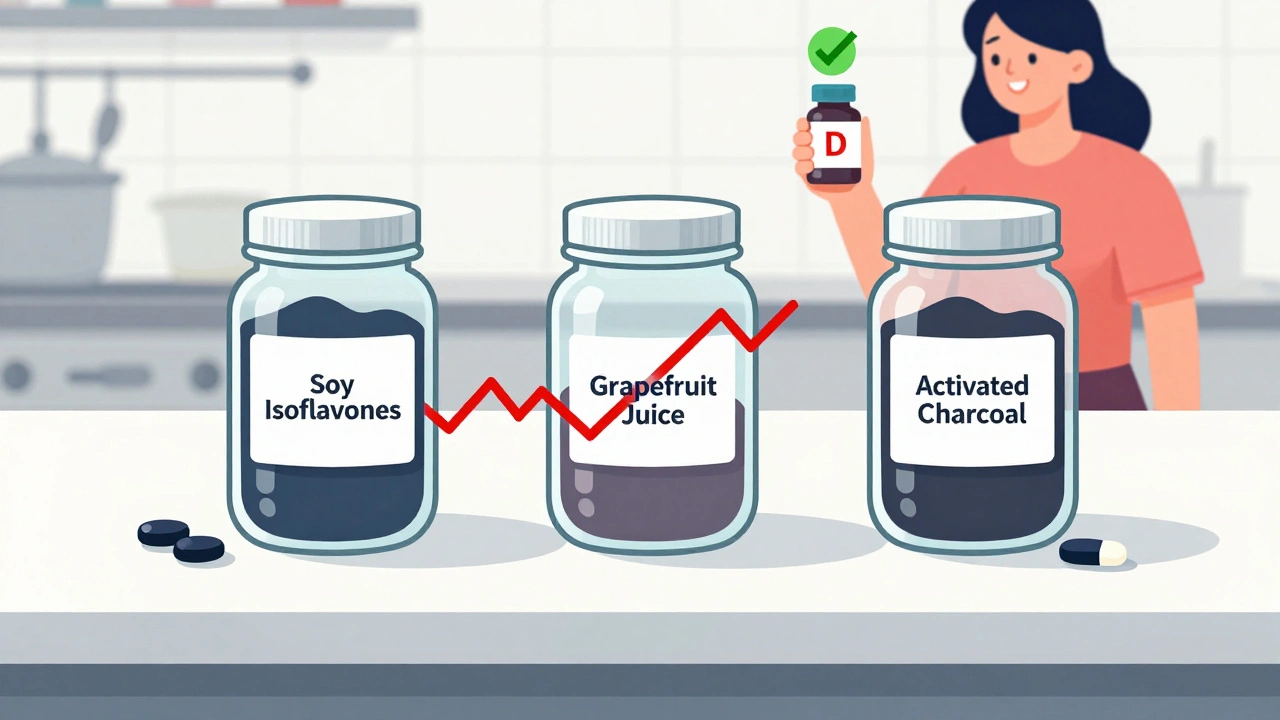
- Soy isoflavones - found in soy protein, tofu, and some supplements - act like weak estrogens. They don’t reduce hormone levels like St. John’s wort, but they can compete with your birth control’s estrogen for receptor sites in your body. This could blunt its effect, especially if you’re eating large amounts of soy daily.
- Grapefruit juice - yes, the same juice you think is healthy - can interfere with how your body absorbs and breaks down hormones. The exact mechanism isn’t fully understood, but it’s been linked to unpredictable hormone levels in women on birth control.
- Activated charcoal - often used for bloating or detox - works by binding to substances in your gut. If you take it within four hours of your birth control pill, it can trap the hormones and stop them from being absorbed at all.
- Saw palmetto, alfalfa, garlic pills, and flaxseed - these have weaker or mixed evidence, but some lab and case studies suggest they might affect hormone metabolism. Until more data is available, caution is wise.
Supplements That Are Likely Safe
Not everything you take is a threat. Many common supplements don’t interfere with birth control at all.
- Ashwagandha - a popular adaptogen for stress and sleep - was studied in 2015 and showed no effect on the liver enzymes that break down birth control hormones. It’s considered safe for most people, though long-term safety data is still limited.
- Probiotics - whether from yogurt or capsules - don’t interact with hormonal birth control. Your gut bacteria might help with digestion, but they don’t touch the hormones in your pill.
- Melatonin - often used for sleep - doesn’t reduce contraceptive effectiveness. However, birth control can increase melatonin levels in your body, which might make you feel sleepier than usual.
- Vitamin D, B-complex, magnesium, zinc - these basic vitamins and minerals have no known interaction with birth control pills.
DIM and Vitex: The Gray Areas
Some supplements sit in a middle ground. They’re not clearly dangerous, but they might affect hormone balance in ways that could matter.
Diindolylmethane (DIM) - often marketed for estrogen balance - is derived from cruciferous vegetables. At normal doses (50-100 mg), there’s no evidence it reduces birth control effectiveness. But at high doses (600 mg or more), it may push estrogen levels down too far, which could weaken the pill’s effect. If you’re taking DIM, stick to the lower end of the dose range and talk to your doctor.
Vitex (chasteberry) - used for PMS and cycle regulation - has conflicting reports. Some say it might interfere with hormones, but others, including Dr. Jolene Brighten, say it’s safe to take with birth control and may even help stabilize hormones during reproductive years. The key? Monitor your body. If you notice irregular bleeding or spotting, it might be a sign to stop and check in with your provider.
Why This Is So Hard to Figure Out
Here’s the problem: herbal supplements aren’t regulated like prescription drugs. There’s no requirement for manufacturers to test how their products interact with birth control. Two bottles of the same supplement from different brands might have wildly different amounts of active ingredients. One might be potent; another might be mostly filler.
Studies on herbal interactions are often small, short-term, or done in labs - not real people over long periods. That means we don’t always know the full picture. What’s safe today might be proven risky tomorrow. And because these products are sold as “natural,” many people assume they’re harmless. That’s a dangerous assumption.
What You Should Do Right Now
If you’re on birth control and taking any herbal supplement, here’s what to do:
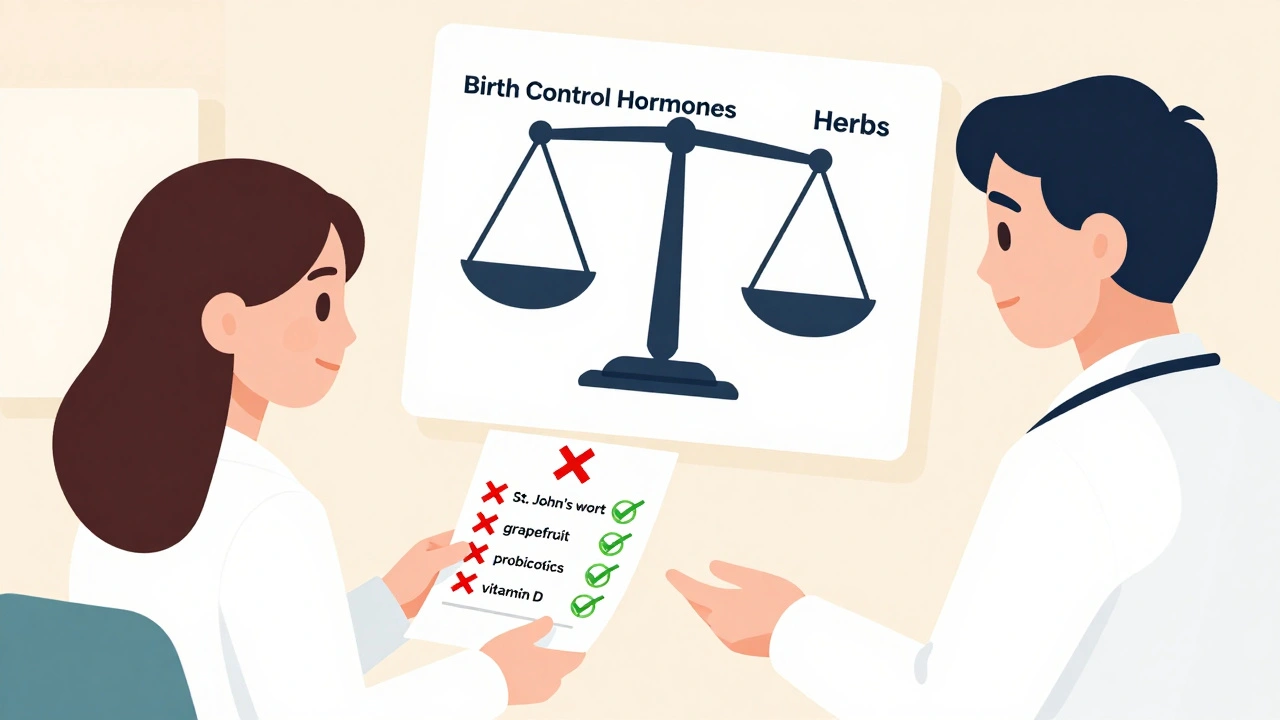
- List everything you’re taking - including vitamins, herbs, teas, and essential oils. Don’t leave anything out.
- Check for St. John’s wort - if you’re taking it, stop immediately and use condoms or another form of birth control for at least a month.
- Talk to your doctor or pharmacist - show them your list. Ask specifically: “Could any of these interfere with my birth control?” Don’t assume they know. Most aren’t trained in herbal interactions.
- Watch for signs of failure - breakthrough bleeding, spotting between periods, or a missed period could mean your pill isn’t working. Don’t ignore these.
- Don’t assume “natural” means safe - just because something comes from a plant doesn’t mean it won’t interfere with your hormones.
Bottom Line
Birth control is one of the most effective forms of contraception - when used correctly. But taking the wrong herbal supplement can turn that reliability into a gamble. St. John’s wort is a confirmed risk. Others are possible. Most are harmless. But without knowing what’s in your bottle, you’re guessing.
The safest move? Always ask your doctor before starting any new supplement. It’s not about being paranoid. It’s about being informed. Your birth control works because of precise hormone levels. Don’t let a supplement unknowingly throw that off.
Can St. John’s wort really make birth control fail?
Yes. St. John’s wort increases liver enzymes that break down estrogen and progestin, the key hormones in birth control pills. Studies show this can reduce hormone levels by up to 50%, leading to breakthrough bleeding and a higher risk of pregnancy. Medical guidelines recommend using a backup method while taking it and for one month after stopping.
Is ashwagandha safe with birth control?
Current evidence suggests ashwagandha does not interfere with the enzymes that metabolize birth control hormones. A 2015 study found no significant interaction. However, it can cause digestive side effects like nausea or diarrhea, which might reduce pill absorption if they’re severe. Long-term safety data is still limited, so moderation and monitoring are wise.
What about grapefruit juice and birth control?
Grapefruit juice can interfere with how your body processes birth control hormones, though the exact mechanism isn’t fully understood. It may slow down the breakdown of hormones, leading to unpredictable levels - which can either increase side effects or reduce effectiveness. To be safe, avoid consuming large amounts of grapefruit or its juice while on birth control.
Can I take DIM with my birth control pill?
At standard doses (50-100 mg), there’s no strong evidence that DIM affects birth control. But at high doses (600 mg or more), it may lower estrogen levels enough to reduce the pill’s effectiveness. If you’re taking DIM, stick to the lower dose and talk to your doctor, especially if you notice changes in your cycle or bleeding patterns.
Do probiotics affect birth control?
No. Probiotics - whether from food or supplements - don’t interfere with the absorption or metabolism of birth control hormones. They support gut health but don’t interact with the hormonal system in a way that affects contraception.
What should I do if I’ve been taking St. John’s wort and birth control together?
Stop taking St. John’s wort immediately. Use condoms or another form of contraception for at least one month after you stop. If you’ve had unprotected sex during this time, consider emergency contraception and take a pregnancy test if your period is late. Talk to your doctor about safer alternatives for managing your mood or anxiety.
Are all herbal supplements risky with birth control?
No. Many common supplements - like vitamin D, magnesium, B-complex, and probiotics - have no known interaction with birth control. The main risks come from a small group of herbs: St. John’s wort, soy isoflavones, grapefruit, activated charcoal, and possibly high-dose DIM or saw palmetto. Most others are safe, but always check with your provider before starting anything new.


Post A Comment