
When exploring antifungal alternatives, drugs or therapies used when standard antifungals aren’t suitable. Also known as non‑azole options, it helps patients avoid resistance, side‑effects, or drug interactions. You’ll often hear clinicians say, “If fluconazole isn’t working or causes problems, we move to an alternative.” That’s where the next set of agents comes in. itraconazole, a broad‑spectrum azole often used as a backup when fluconazole fails is a common second‑line choice. It covers skin, nail, and systemic infections that require deeper tissue penetration. Another staple is fluconazole, the go‑to oral azole for many yeast infections, prized for its safety profile but limited by resistance in some Candida strains. When both azoles become problematic, terbinafine, an allylamine that attacks fungal cell membranes differently offers a non‑azole route, especially for dermatophyte nail infections. The trio illustrates a semantic chain: antifungal alternatives encompass agents that bypass classic azole pathways, require distinct monitoring (liver tests for itraconazole, skin checks for terbinafine), and expand treatment options for resistant cases.
Beyond the big three, clinicians sometimes reach for drugs that were designed for other parasites but show antifungal activity. For instance, the antiparasitic praziquantel, used mainly for schistosomiasis, has been studied as a scaffold for new antifungal compounds. While not a first‑line option, its structural profile informs research on novel agents that could sidestep existing resistance mechanisms. Similarly, topical preparations like crotamiton, a scabies lotion, are occasionally repurposed for superficial fungal skin infections when standard creams cause irritation. These examples show how the field pulls from a wider pharmacologic toolbox: “antifungal alternatives” require clinicians to understand drug class, mechanism, and safety to match the right patient. The key is knowing when to pivot—whether because of liver enzyme elevation, drug‑drug interaction, or an infection that simply won’t respond to the usual pills.
Below you’ll find a curated list of articles that break down each of these options, compare dosing, costs, and safety, and give you step‑by‑step guidance on choosing the right alternative for specific infections. Dive in to see how these alternatives stack up and which one might fit your situation best.
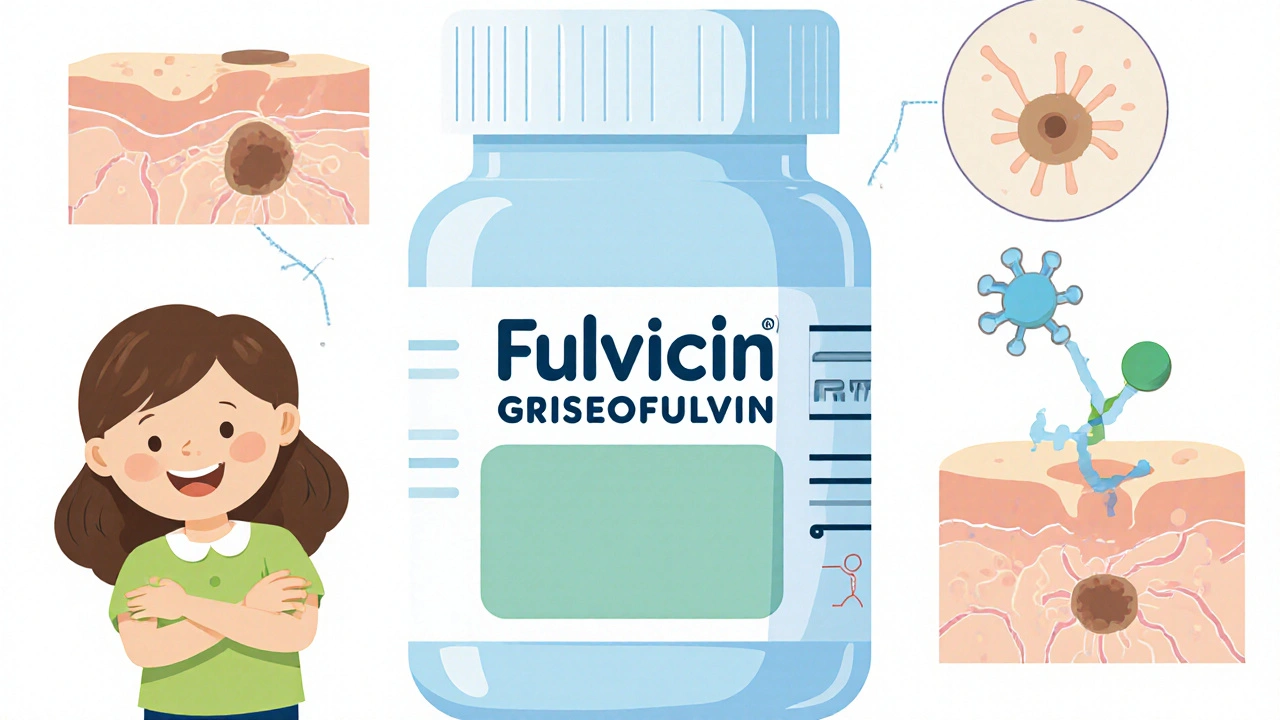
A practical guide comparing Fulvicin (griseofulvin) with newer antifungal drugs, covering efficacy, side‑effects, cost, and when to choose each option.
Read More