
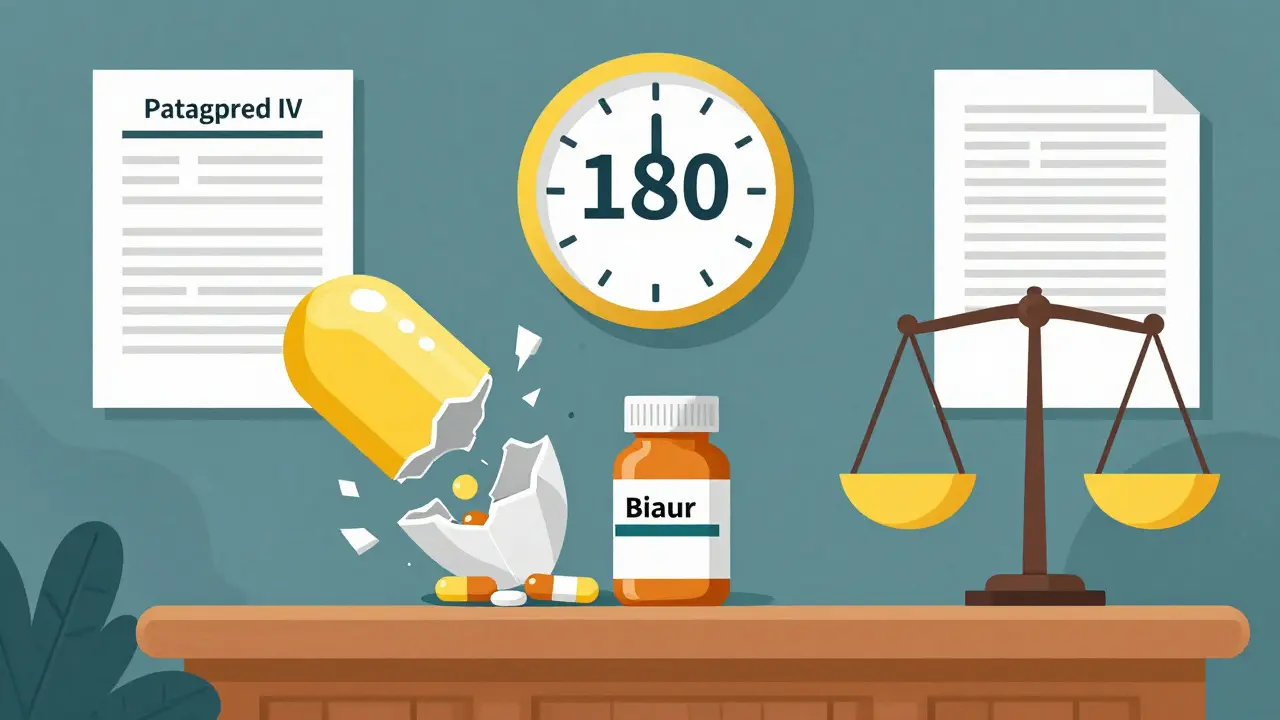
When a brand-name drug loses its patent, the first company to get FDA approval for a generic version doesn’t just get to sell cheaper pills - it gets a 180-day monopoly on the market. That’s not a loophole. It’s the law. And it’s why your prescription costs $5 instead of $500.
What Exactly Is a First Generic Approval?
A first generic approval is when the FDA gives the green light to the very first company that submits a complete and legally valid application to make a generic version of a brand-name drug. This isn’t just any generic. It’s the first one allowed to hit the market after the original drug’s patent expires. And because it’s first, it gets something no other generic gets: 180 days of exclusive sales. This system wasn’t created by accident. It came from the Hatch-Waxman Act a 1984 law that balanced drug innovation with affordability by letting generic companies skip expensive clinical trials if they proved their version worked the same as the brand. Before 1984, generic makers had to prove safety and effectiveness from scratch - just like the original drug maker. That made generics too expensive to produce. The Act changed everything. It let generics use the brand’s existing data, as long as they showed their version was absorbed the same way in the body.How the 180-Day Exclusivity Works
The 180-day clock doesn’t start when the FDA approves the drug. It starts when the company actually sells it - or when a court rules in their favor in a patent fight. That’s where things get messy. To qualify for exclusivity, the generic company must file what’s called a Paragraph IV certification a legal challenge claiming the brand’s patent is invalid or won’t be infringed. The brand-name company then has 45 days to sue. If they do, the FDA can’t approve the generic for up to 30 months - while the lawsuit plays out. This delay tactic is common. In fact, between 2010 and 2020, patent lawsuits blocked first generics for 42% of cases. If the generic wins, they get their exclusivity. If they lose, they lose the exclusivity - and the $50 million they spent developing the drug. That’s why only companies with deep pockets and sharp lawyers go after first generics.Why This Matters for Your Wallet
The moment that first generic hits shelves, prices drop - fast. Within six months, the price of the drug typically falls by 70% to 90%. Compare that to later generics, which only bring prices down 30% to 40%. That’s because the first generic has no competition. It can price itself 15% to 20% below the brand and still make a killing. For blockbuster drugs like Humira or Eliquis, that means hundreds of millions in profit for the first generic maker. But it also means millions in savings for patients and insurers. Since the Hatch-Waxman Act passed, generic drugs have saved the U.S. healthcare system over $1.7 trillion. First generics are responsible for the biggest chunk of those savings. A 2024 survey of pharmacists found that 87% saw better patient access after a first generic launched. Patients who couldn’t afford their medication before suddenly could. Adherence improved. Hospital visits dropped. That’s the real impact.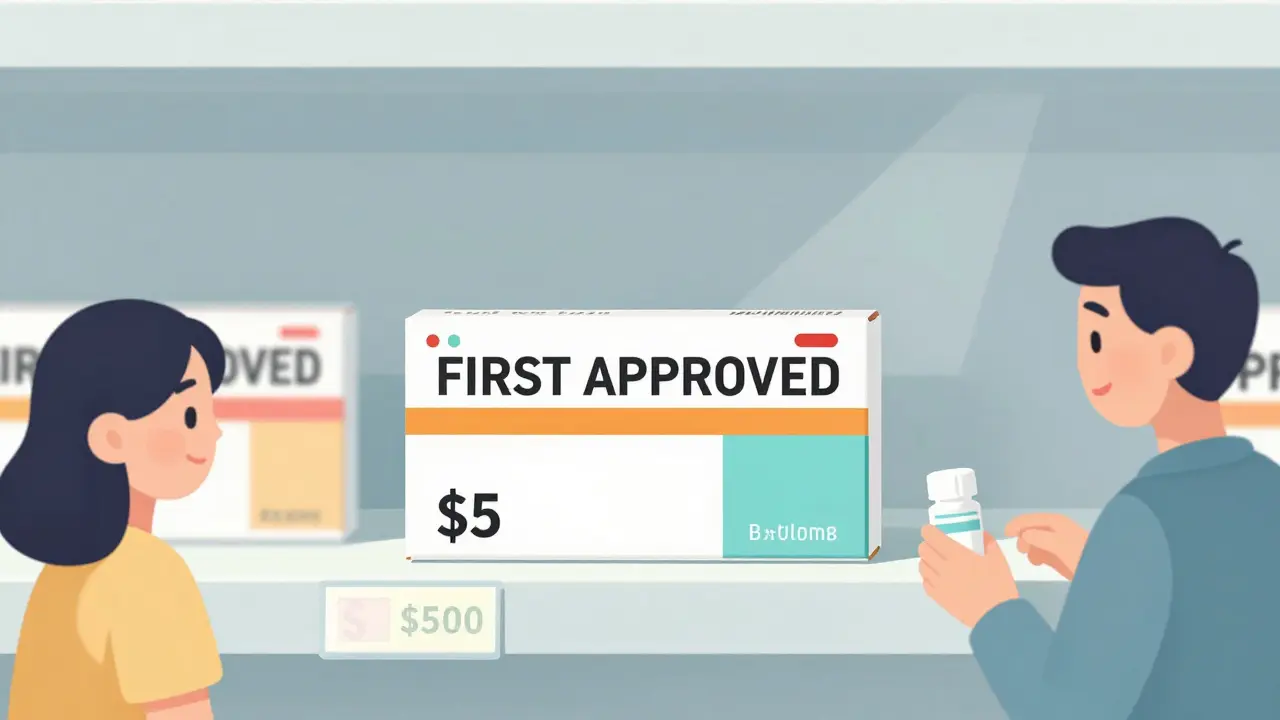
It’s Not Always Smooth Sailing
Even with exclusivity, first generics face big hurdles. One is the rise of authorized generics the original drug company selling its own product under a different label, often at a discount. These aren’t true generics - they’re the same pill, same factory, same packaging, just without the brand name. And they can launch during the 180-day window, eating into the first generic’s profits. Between 2015 and 2022, authorized generics showed up in 38% of first generic exclusivity periods. Another problem? Multiple companies filing at the same time. If two or more companies submit their ANDA applications on the same day and both challenge the patent, the FDA gives them all a share of the 180 days. That’s called a “multiple first filer” situation. It happened in 10.6% of first generic cases between 2001 and 2022. Instead of one company dominating, the market splits - and prices don’t drop as hard. Then there’s the supply chain. A 2024 survey of 1,200 pharmacists showed that 41% saw stockouts when a first generic launched - especially for complex drugs like inhalers, injectables, or topical creams. One Reddit user described waiting 90 days for the first generic of Eliquis, during which prices spiked. That’s not just inconvenient - it’s dangerous for patients who rely on daily meds.Who Gets These Approvals?
It’s not small startups. It’s big players with the resources to handle the legal, scientific, and financial risks. In 2023, Teva got 14 first generic approvals. Hikma got 11. These companies have teams of 15 to 25 regulatory experts, legal counsel specializing in patent law, and labs ready to run bioequivalence studies. The cost? $50 million to $100 million per high-value drug. Bioequivalence testing alone runs $2 million to $5 million per product. The FDA reviews these applications faster than regular generics - 10 to 12 months on average, compared to 14 to 18. But even then, 58% of incomplete applications get rejected on the first try. That’s why companies spend up to 12 months in pre-submission meetings with the FDA to avoid costly mistakes.
What’s Changing Now?
The landscape is shifting. In 2023, the FDA approved 17 complex generics - inhalers, creams, injectables - as first generics. That’s up from 9 in 2022. These are harder to copy. They require more testing, better manufacturing, and deeper science. The FDA is pushing to make this easier. The 2022 Inflation Reduction Act also changed the rules. Now, if a drug has a Risk Evaluation and Mitigation Strategy (REMS), the 180-day exclusivity clock doesn’t stop during legal delays. That’s a win for generics - it prevents brand companies from dragging out lawsuits to keep prices high. But the biggest threat isn’t regulation. It’s complexity. The next wave of blockbuster drugs are biologics - large-molecule drugs like Humira and Enbrel. They’re not pills. They’re proteins made in living cells. Copying them isn’t like copying aspirin. That’s why the first biosimilars - the generic version of biologics - have only had 43 approvals since 2010. The science is harder. The regulations are newer. And the costs? Even higher.What This Means for You
If you take a prescription drug, you’ve probably already benefited from a first generic approval. Maybe you didn’t notice. Maybe your co-pay dropped from $120 to $15. Maybe you stopped skipping doses because you could finally afford it. The system isn’t perfect. Patent thickets, authorized generics, and supply issues still create roadblocks. But the goal is clear: get safe, effective, affordable medicine to as many people as possible, as fast as possible. The FDA says it best: accelerating first generic competition remains the most effective tool we have for reducing prescription drug costs. And for millions of people, that’s not policy - it’s survival.What is the difference between a first generic and any other generic?
A first generic is the first company approved to sell a generic version of a brand-name drug after its patent expires. It gets 180 days of exclusive market rights, during which no other generic can enter. Other generics can only launch after that exclusivity period ends. First generics often drive the biggest price drops because they’re the only option for months.
Why do first generics cost so much to develop?
Even though generics don’t need new clinical trials, they must prove they work the same as the brand through expensive bioequivalence studies - $2 million to $5 million per drug. Add legal fees for patent challenges ($5 million to $15 million), regulatory preparation, manufacturing scale-up, and facility inspections, and total costs can hit $100 million for high-value drugs.
Can a brand-name company block a first generic?
Yes. If a generic company files a Paragraph IV certification challenging a patent, the brand-name maker can sue. That triggers a 30-month legal stay, delaying FDA approval. Some brands also release their own “authorized generic” during this time to undercut the first generic’s profits. These tactics have delayed generic entry in over 40% of cases between 2010 and 2020.
Are first generics as safe and effective as brand-name drugs?
Yes. The FDA requires all generics, including first generics, to meet the same strict standards. Bioequivalence studies show the average difference in drug absorption between brand and generic is just 3.5% - less than the variation between two batches of the same brand. Patient reviews on Drugs.com show first generics rate 4.2/5.0, nearly identical to brand-name drugs.
What happens if two companies file for first generic approval on the same day?
If multiple companies submit ANDAs on the same day and all challenge the same patent, the FDA considers them all “first filers.” They share the 180-day exclusivity period. This means the market opens to multiple generics sooner, which can slow down price drops compared to a single first generic dominating the market.
Why do some first generics have supply shortages?
Manufacturing complex drugs - like inhalers, injectables, or topical creams - is harder than making pills. Many first-time generic makers struggle with scaling up production or passing FDA facility inspections. About 35% of first-time applicants face delays from manufacturing issues. When demand spikes after launch, shortages can occur, especially if the company isn’t prepared.


Post A Comment