
CoQ10 Dosage Calculator for Statin Users
Your Situation
Results
Select your situation and click 'Calculate Recommended Dosage' to see your personalized recommendation.
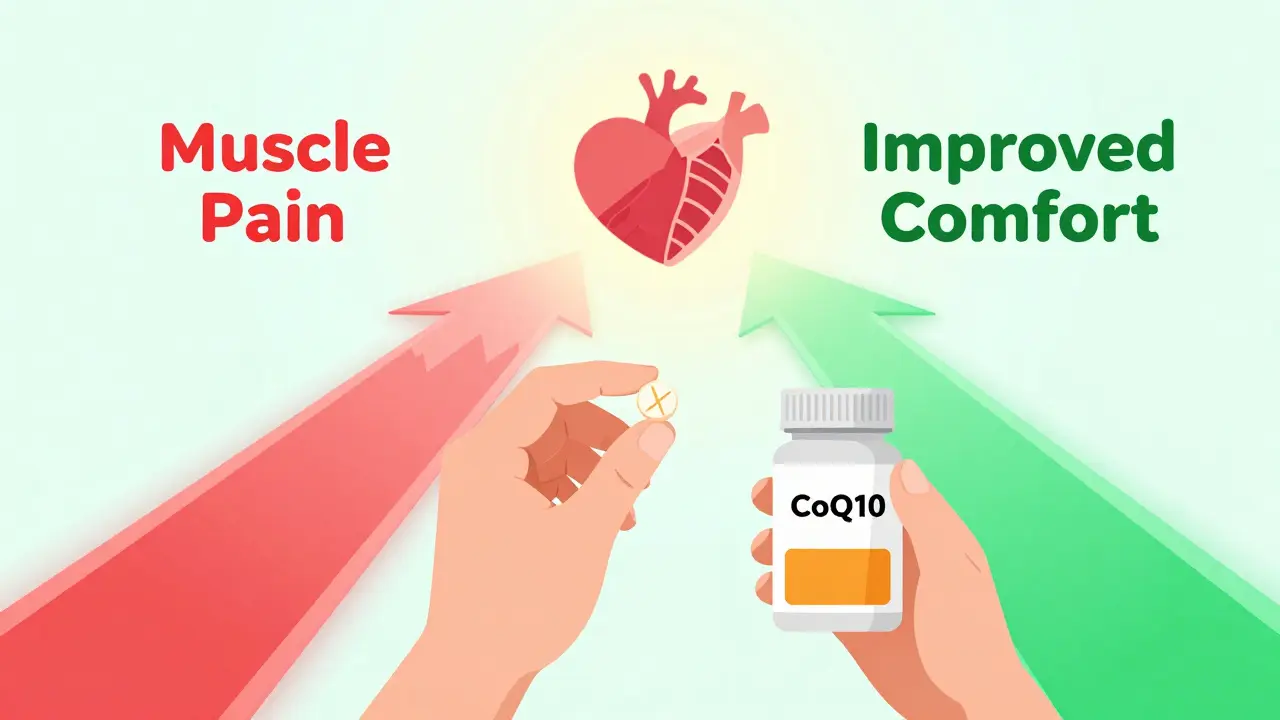
If you're taking a statin and dealing with sore, weak, or cramping muscles, you're not alone. About 1 in 5 people on statins report muscle pain that makes them wonder if the drug is worth it. Many turn to Coenzyme Q10-often called CoQ10-as a natural fix. But does it actually work? Or is it just another supplement with big claims and little proof?
Why Statins Might Be Causing Your Muscle Pain
Statins lower cholesterol by blocking an enzyme your liver needs to make cholesterol. But that same enzyme is also involved in making CoQ10, a compound your body uses to produce energy in your cells-especially in your muscles. When statins cut CoQ10 levels, your muscles may struggle to get the fuel they need. Studies show statins can drop blood levels of CoQ10 by up to 54%. That sounds like a clear link, right? But here’s the twist: just because blood levels drop doesn’t mean muscle tissue does. Some studies actually found higher CoQ10 levels in muscle tissue of people on statins. That’s confusing-and it’s why scientists still aren’t sure if CoQ10 depletion is the real cause of muscle pain.What the Research Actually Shows
The data on CoQ10 for statin-related muscle pain is messy. Some studies say yes, it helps. Others say no. A 2018 meta-analysis in the Journal of the American Heart Association looked at 12 clinical trials with nearly 600 people. It found that those taking CoQ10 (usually 100-200 mg/day) reported less muscle pain, less weakness, and less fatigue compared to those on placebo. The improvement was real-about 1.6 points lower on a 10-point pain scale. That’s noticeable. But here’s where it gets tricky: none of those studies showed a drop in creatine kinase (CK), a blood marker for muscle damage. That means CoQ10 might make you feel better without actually fixing underlying muscle injury. And that’s a big deal. If your muscles are getting damaged, feeling better doesn’t mean you’re safe. Then there’s the 2007 study by Young and colleagues, where 200 mg of CoQ10 daily for 12 weeks did nothing to ease muscle pain-even though blood CoQ10 levels went up. That’s one of the reasons the National Lipid Association still says the evidence is inconclusive. The most consistent finding? CoQ10 seems to help people with mild muscle discomfort. In one study, 75% of patients with moderate symptoms saw improvement. But for those with severe pain or true muscle damage, it rarely works.How Much CoQ10 Should You Take?
There’s no official dose, but most studies use between 100 mg and 200 mg per day. Some use up to 600 mg, but there’s no proof higher doses work better. Form matters too. CoQ10 comes in two forms: ubiquinone and ubiquinol. Ubiquinol is the active, reduced form your body uses directly. It’s marketed as 3 to 8 times more absorbable than ubiquinone. If you’re buying a supplement, look for ubiquinol-it’s more likely to help. Take it with a meal that has fat. CoQ10 is fat-soluble, so swallowing a pill on an empty stomach means most of it just passes through. And patience is key. Don’t expect results in a week. Most people who benefit see changes after 4 to 12 weeks. One study showed steady improvement over 12 weeks-no sudden relief.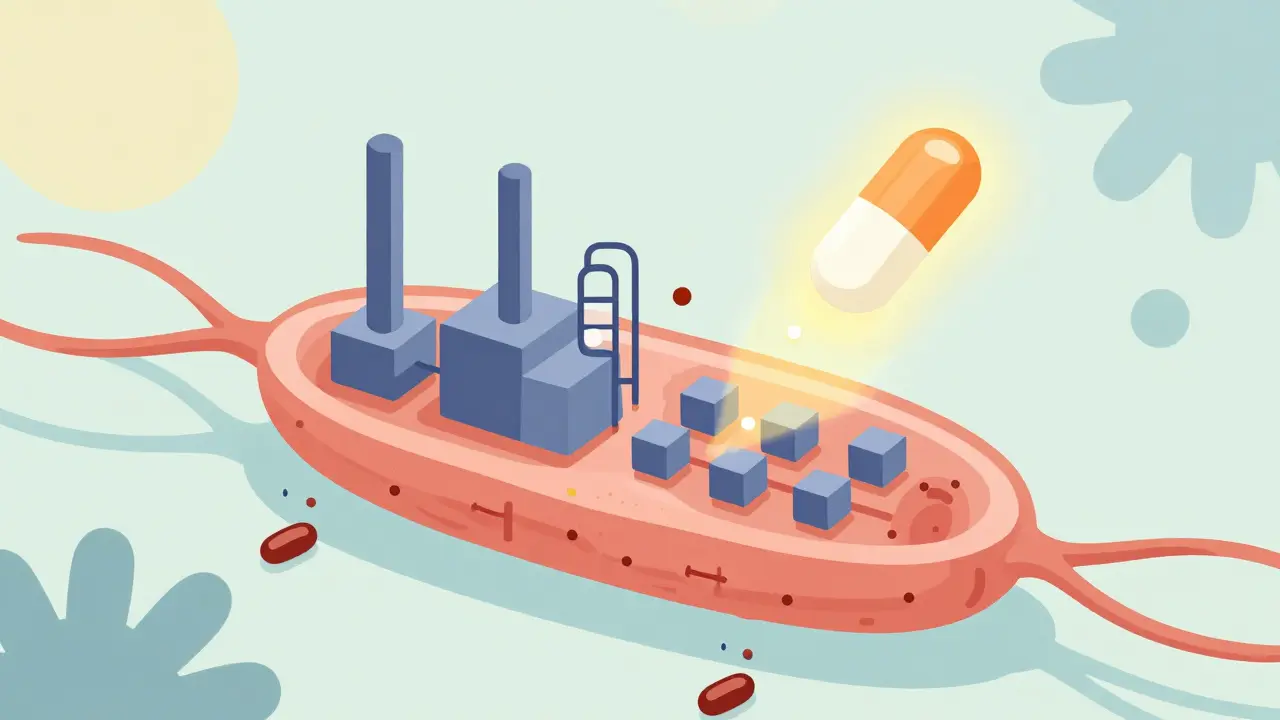
Is It Safe?
Yes. CoQ10 has an excellent safety record. Even at doses of 600 mg a day, no serious side effects have been reported in decades of use. Some people report mild stomach upset or trouble sleeping, but that’s rare. It doesn’t interfere with how statins work. Your cholesterol levels stay under control. And unlike switching to a different statin-which can cost hundreds of dollars a month-CoQ10 supplements usually run $15 to $40 a month.What Real People Are Saying
Online forums tell a story that doesn’t always match the science. On Reddit’s r/Supplements, 78% of 142 statin users said CoQ10 helped their muscle pain. One person wrote: “After six months of leg cramps on atorvastatin, CoQ10 200mg daily eliminated my symptoms in three weeks.” On Amazon, CoQ10 supplements average 4.2 out of 5 stars. Sixty-three percent of 5-star reviews mention muscle pain relief. But flip the page, and you’ll find the other side. “Tried three brands for four months. Nothing changed,” wrote one user on Drugs.com. That’s the reality: some people get huge relief. Others get nothing. It’s hit or miss.What Doctors Really Think
Most cardiologists aren’t convinced-but they’re not stopping you either. The American College of Cardiology says CoQ10 is a “reasonable option to consider” if you’re having mild muscle pain and are thinking about stopping your statin. They recommend trying it for 3 to 6 months. About 42% of cardiologists surveyed in 2021 say they’ll suggest CoQ10 to patients with statin-related muscle issues-even though they admit the evidence isn’t solid. Why? Because the risk is low, the cost is low, and for some patients, it’s the only thing that keeps them on their life-saving medication. Clinics like Mayo Clinic and Cleveland Clinic include CoQ10 in their protocols for statin intolerance-but only as part of a trial, not as a guaranteed fix.
Should You Try It?
Here’s how to decide:- If you have mild muscle soreness or fatigue after starting a statin, and you’re worried about quitting-try CoQ10. Start with 100-200 mg of ubiquinol daily, with food.
- If your pain is severe, your muscles are weak, or your CK levels are high-talk to your doctor first. This could be something more serious than just low CoQ10.
- If you’ve tried CoQ10 for 12 weeks and felt nothing? Stop. It’s not working for you.
- Don’t use it as an excuse to ignore other causes of muscle pain-like vitamin D deficiency, thyroid issues, or overtraining.
The Bottom Line
CoQ10 won’t fix every case of statin-related muscle pain. But for a lot of people, it’s the difference between quitting their medication and staying on it. It’s not a miracle. It’s not proven beyond doubt. But it’s safe, cheap, and worth a shot-if you’re realistic about what to expect. If your muscles feel better after a few months, great. Keep going. If not, you haven’t lost anything except a few bucks and some time. And you’re still on your statin-protecting your heart.Frequently Asked Questions
Can CoQ10 lower cholesterol like a statin?
No. CoQ10 doesn’t lower cholesterol at all. It doesn’t work like a statin. Its only known role in this context is to potentially ease muscle symptoms caused by statins. If you stop your statin and rely only on CoQ10, your cholesterol will likely rise again.
How long does it take for CoQ10 to work for muscle pain?
Most people who benefit see results between 4 and 12 weeks. Don’t expect fast relief. Some studies showed improvement only after 30 days, and others took up to 12 weeks for steady results. Patience is important.
Is ubiquinol better than ubiquinone for statin muscle pain?
Yes, ubiquinol is more easily absorbed by the body. Most clinical trials that showed positive results used ubiquinol or a highly bioavailable form. Ubiquinone is cheaper but less effective for most people. If you’re spending money on CoQ10, choose ubiquinol.
Can CoQ10 cause muscle pain?
No. There are no reports of CoQ10 causing muscle pain. In fact, it’s the opposite-people take it to relieve muscle pain. Side effects are rare and mild, like upset stomach or trouble sleeping in a small number of users.
Should I take CoQ10 if I’m not on a statin?
Not unless you have a specific medical reason. Your body makes enough CoQ10 on its own. Taking it without statins won’t give you more energy or prevent heart disease. It’s not a general wellness supplement for healthy people.


Post A Comment