
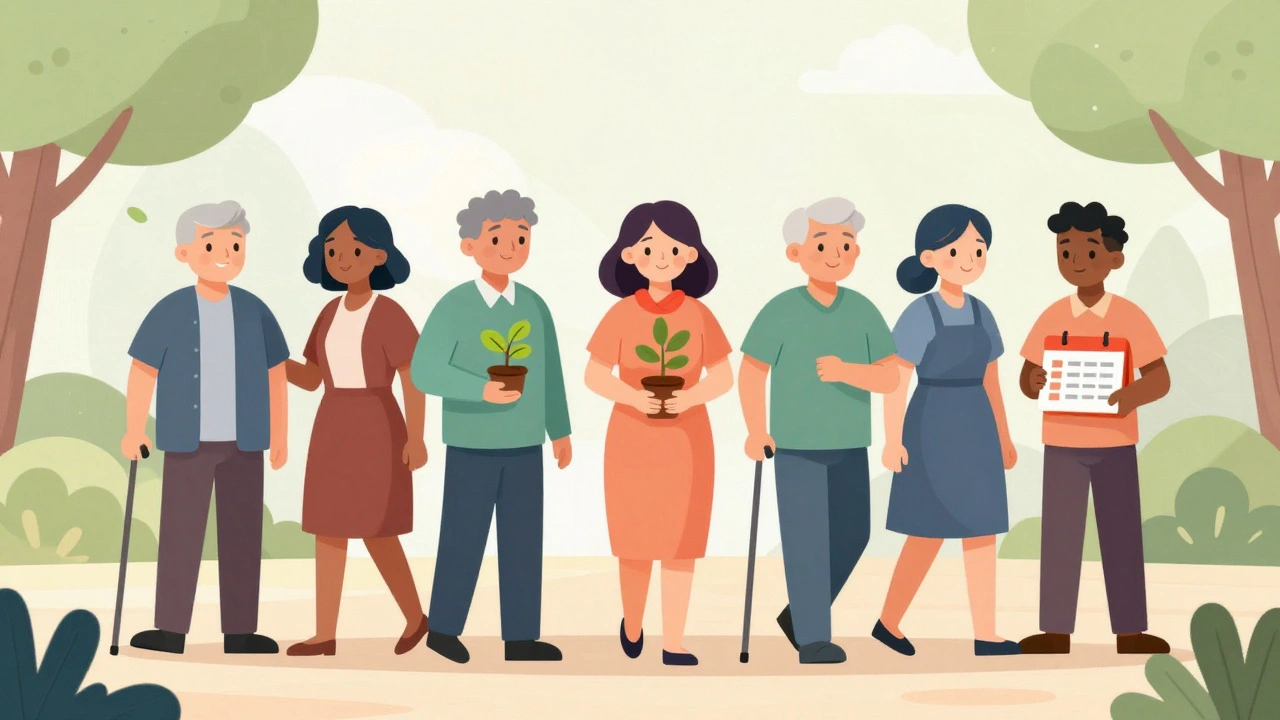
Living beyond cancer isn’t the end of the journey-it’s the start of a new one. For millions of people, surviving cancer means learning to manage side effects that don’t disappear when treatment ends. Fatigue that won’t lift. Memory issues that make simple tasks feel impossible. Heart problems that show up years later. Fear that the cancer might come back. These aren’t rare experiences. They’re common, expected, and manageable-if you know how.
What Survivorship Really Means
Cancer survivorship doesn’t just mean being alive after treatment. It’s the ongoing process of living with the physical, emotional, and practical fallout of cancer and its treatment. The Institute of Medicine first defined this in 2006, and since then, the number of survivors in the U.S. has jumped from 3 million in 1971 to nearly 17 million in 2018. By 2030, that number is expected to hit 22.2 million. But here’s the problem: most of these people aren’t getting the care they need after treatment ends.
Survivorship care isn’t just about checking for recurrence. It’s about handling the long-term damage chemotherapy, radiation, and surgery can leave behind. It’s about helping someone get back to work, manage depression, afford insurance, or rebuild relationships. And it’s about catching new problems early-like heart disease, osteoporosis, or a second cancer-before they become life-threatening.
The Hidden Costs of Treatment
Chemotherapy and radiation don’t just kill cancer cells. They damage healthy ones too. The effects can show up months or even decades later. For example:
- Women treated with certain chemo drugs or radiation to the chest may face early menopause, infertility, or a 30% lifetime risk of developing breast cancer again.
- Survivors of Hodgkin lymphoma who had chest radiation need annual mammograms and breast MRIs starting 8 years after treatment.
- People who received anthracyclines (a common chemo for breast cancer) have a 15-20% risk of heart damage and need cardiac checks every 6-12 months.
- Radiation to the head or neck can cause permanent tooth decay, dry mouth, or thyroid problems.
- Many survivors report memory fog, trouble focusing, or brain fatigue-often called ‘chemo brain.’
These aren’t side effects you can just ‘tough out.’ They need active management. Bone loss from steroids or hormonal therapy? That’s treatable with exercise and medication. Nerve damage causing numbness or pain? Physical therapy helps. Depression and anxiety? Counseling and support groups make a difference.
Survivorship Care Plans: The Missing Link
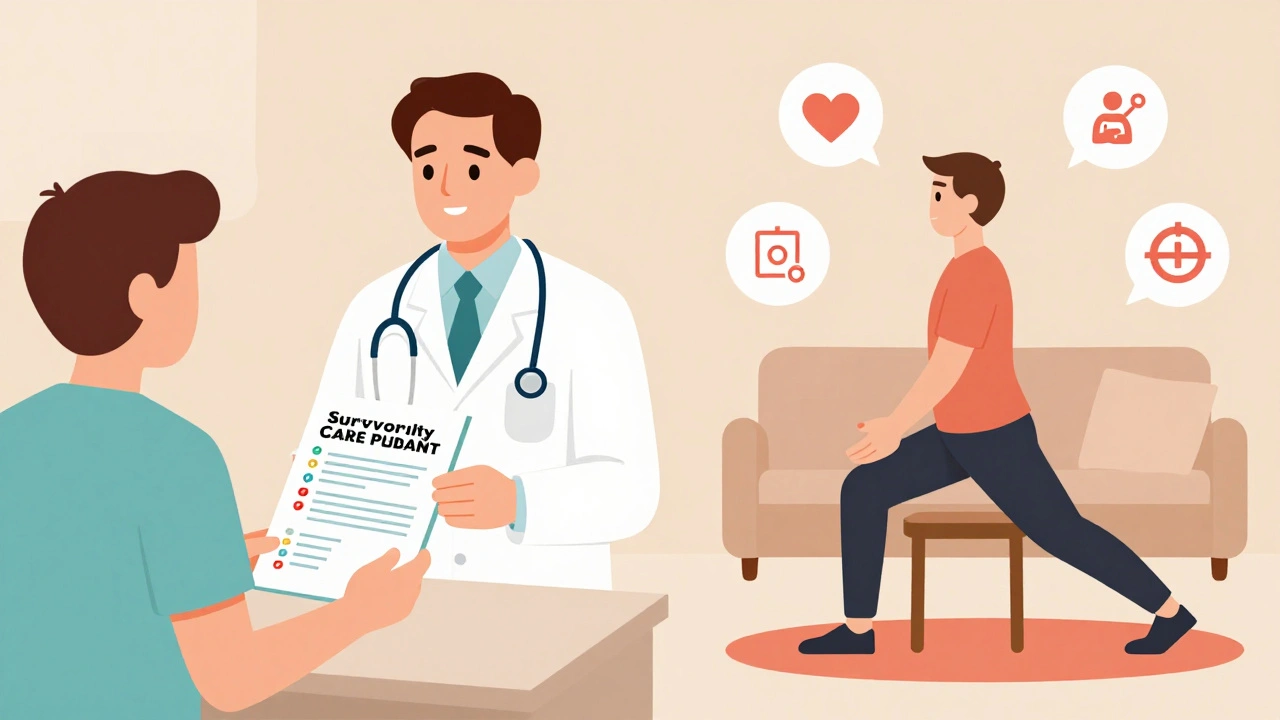
A survivorship care plan isn’t just a piece of paper. It’s a roadmap. It should include:
- A summary of your treatment: what drugs you got, what doses, what radiation fields you were exposed to, what surgeries you had.
- A list of possible late effects based on your treatment.
- A schedule for follow-up tests and screenings.
- Who to contact if something changes-your oncologist? Your primary care doctor? A specialist?
- Advice on lifestyle changes: exercise, diet, quitting smoking, limiting alcohol.
Studies show that when survivors have a clear care plan, they’re 27% less likely to experience cancer-related complications. They’re 40% more likely to stay active. They use the emergency room 25% less often. And they’re far more likely to stick to follow-up appointments-adherence jumps from 58% to 85%.
Yet, only about 62% of large cancer centers offer these plans. And even when they’re given, many survivors don’t understand them-or don’t know who to take them to. That’s why having a primary care provider who’s in the loop is so important. Over 78% of older survivors already have a regular doctor. That doctor knows their history, their medications, their other health issues. They’re the perfect partner-if they’re given the right information.
Why Primary Care Matters
Most cancer survivors don’t die from cancer. They die from heart disease, stroke, or other illnesses. That’s why survivorship care can’t be left only to oncologists. They’re experts in treating cancer, but not always in managing high blood pressure, diabetes, or osteoporosis.
When your oncologist and your primary care doctor work together, you get better care. One study found that survivors with a clear care plan shared between both doctors had 40% fewer duplicate tests and procedures. That means less stress, less cost, and less time waiting for answers.
But here’s the catch: most primary care doctors haven’t been trained in cancer survivorship. They don’t know that a patient who had radiation to the neck needs thyroid checks every year. Or that someone who had chemo for lymphoma should avoid certain vaccines. That’s a gap-and it’s dangerous.
Exercise: The Most Powerful Tool You Have
One of the most effective ways to fight fatigue, improve mood, protect your bones, and lower your risk of recurrence? Exercise. Not intense workouts. Just movement.
Studies show that regular physical activity reduces cancer-related fatigue by 40-50%. It improves mobility in older survivors by 25-35%. It increases bone density by 3-5% in just a few months. And it cuts the risk of cancer coming back-especially for breast, colon, and prostate cancer survivors.
You don’t need a gym. Walk 30 minutes a day. Do chair yoga. Swim. Garden. The key is consistency. The American Cancer Society recommends at least 150 minutes of moderate activity per week. Even 10-minute walks, three times a day, add up.
Managing Mental and Emotional Health
Survivorship isn’t just physical. It’s emotional. One in three survivors report anxiety or depression. Many feel guilty for surviving when others didn’t. Others struggle with body image after surgery or hair loss. Some can’t go back to work because they’re too tired. Or they can’t get insurance because of their history.
Financial stress hits 73% of survivors. Relationship changes affect 57%. Self-esteem drops for nearly half. These aren’t signs of weakness. They’re normal reactions to an abnormal experience.
Support groups, counseling, and mind-body practices like meditation or tai chi help. Programs like the Osher Center for Integrative Medicine at Northwestern University report that 82% of participants felt better quality of life after combining talk therapy, yoga, and nutrition counseling with their medical care.

What You Can Do Right Now
If you’re a survivor, here’s what to do next:
- Get your treatment summary. Ask your oncologist for a written record of every drug, dose, radiation field, and surgery.
- Ask for a survivorship care plan. If they don’t have one, ask them to make one with you.
- Share it with your primary care doctor. Bring it to your next check-up.
- Start moving. Even if it’s just walking around the block.
- Find a support group. Online or in person. You’re not alone.
- Keep track of new symptoms. Don’t ignore fatigue, pain, memory lapses, or changes in your body. Write them down.
Future of Survivorship Care
The future is personal. Researchers are now building risk models that use your genetics, your treatment history, your lifestyle, and even your sleep patterns to predict what late effects you’re most likely to face. This is called precision survivorship. It means your follow-up care will be tailored to you-not a one-size-fits-all checklist.
Telehealth is also changing the game. The Mayo Clinic’s virtual survivorship clinic saw 75% satisfaction among users. You can now have check-ins, counseling, and even physical therapy sessions from home.
But progress depends on funding, training, and policy. Right now, most insurance plans don’t cover long-term survivorship care. Medicare’s Oncology Care Model pays for some services-but only in certain areas. Until payment systems catch up, many survivors will fall through the cracks.
Final Thoughts
You survived cancer. That’s powerful. But surviving doesn’t mean healing. Healing takes work. It takes knowledge. It takes support. And it takes a plan.
Don’t wait for symptoms to get worse. Don’t assume your oncologist will handle everything. Don’t think you have to go it alone. The tools are there. The research is clear. The people who can help are waiting. You just have to ask.
How long do cancer survivors need follow-up care?
There’s no fixed end date. Most survivors need ongoing monitoring for at least 5-10 years after treatment, especially for recurrence and late effects. For some-like those treated with radiation or certain chemo drugs-lifelong follow-up is recommended. High-risk survivors may need visits every 3-6 months. Low-risk survivors can often shift to annual check-ups with their primary care provider, with oncology input as needed.
Can cancer come back after 10 years?
Yes. While most recurrences happen within the first 5 years, some cancers can return after 10, 15, or even 20 years. Breast cancer, prostate cancer, melanoma, and Hodgkin lymphoma are known for late recurrences. That’s why ongoing screening and awareness matter-even decades after treatment.
What’s the difference between a recurrence and a new cancer?
A recurrence means the original cancer came back, usually in the same area or nearby. A new cancer is a completely different type of cancer, unrelated to the first. For example, a woman treated for breast cancer might later develop colon cancer. That’s not a recurrence-it’s a new cancer. Survivorship care includes screening for both.
Do I still need mammograms if I had a double mastectomy?
Usually not-if both breasts were completely removed and no breast tissue remains. But if you had a partial mastectomy, or if reconstruction used your own tissue, you may still need imaging. Always check with your doctor. Some survivors with a history of radiation or genetic risk (like BRCA) still need annual MRIs of the chest wall or remaining tissue.
How do I talk to my doctor about long-term side effects?
Be specific. Don’t say, ‘I’m tired.’ Say, ‘I’ve had constant fatigue for 8 months, even after sleeping 8 hours. I can’t walk more than 10 minutes without stopping.’ Write down your symptoms, when they started, and what makes them better or worse. Bring your treatment summary. Ask: ‘Could this be related to my cancer treatment? What tests should we do?’ If your doctor doesn’t know, ask for a referral to a survivorship clinic.
Can lifestyle changes really reduce the risk of cancer coming back?
Yes. Studies show that survivors who maintain a healthy weight, exercise regularly, eat mostly plant-based foods, limit alcohol, and avoid smoking have a 25-50% lower risk of recurrence for certain cancers. For breast cancer, walking 3-5 hours a week at a moderate pace reduces recurrence risk by 20%. For colon cancer, high fiber intake and physical activity cut risk by up to 40%. Lifestyle isn’t a cure-but it’s one of the strongest tools you have.


Post A Comment