
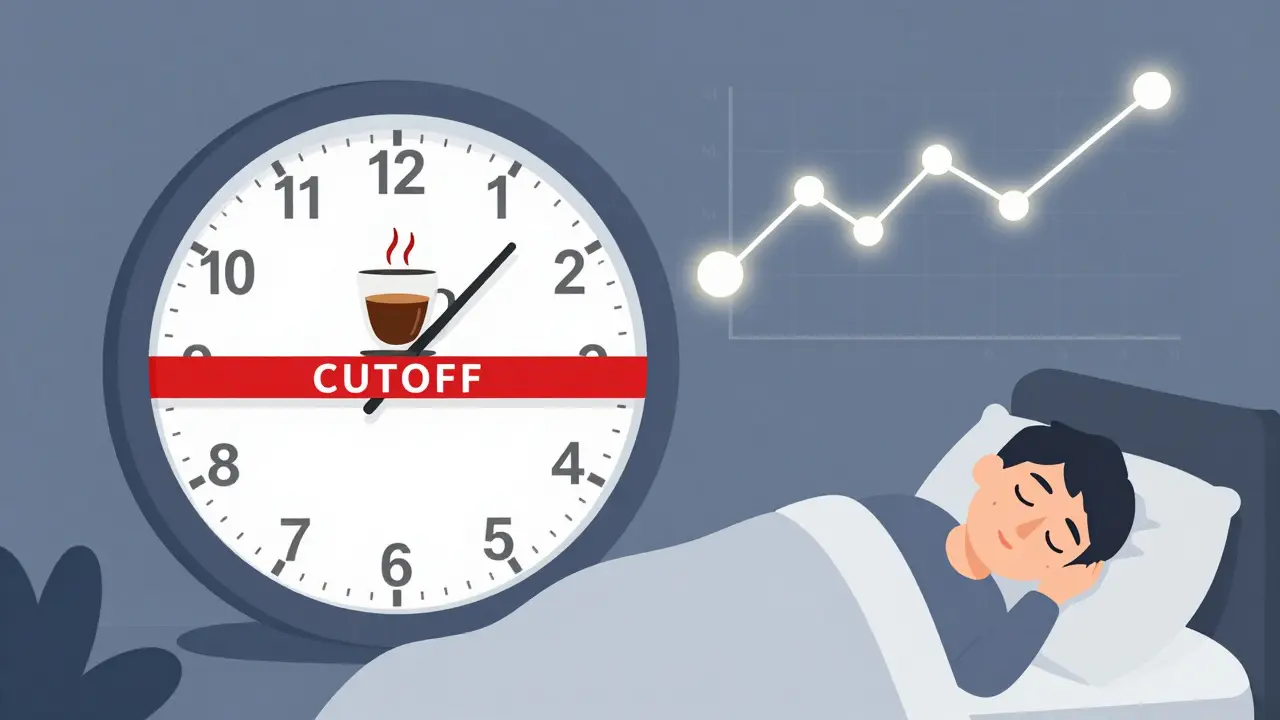
Most people know they shouldn’t drink coffee right before bed. But if you’re still tossing and turning even after your last cup at 4 p.m., the problem might not be stress or screen time-it could be the caffeine cutoff time you’re using.
Why 4 p.m. Isn’t Enough for Most People
The old rule of thumb-"don’t drink caffeine after 2 p.m."-sounds simple. But it doesn’t work for everyone. Why? Because caffeine doesn’t disappear when you finish your coffee. It lingers. The FDA says caffeine has a half-life of 4 to 6 hours, meaning half of it is still in your system 5 hours after you drink it. For some people, it’s even longer. A 2021 review of 24 studies published in Sleep Medicine Reviews found that a standard 250 mL cup of coffee (about 107 mg of caffeine) needs an 8.8-hour cutoff before bedtime to avoid disrupting sleep. That means if you go to bed at 11 p.m., you should stop drinking coffee by 2:12 p.m. Not 4 p.m. Not even 3 p.m. Even if you fall asleep, your brain doesn’t get the deep, restorative sleep it needs. A 2022 review in the American Journal of Managed Care found that caffeine reduces total sleep time by 45 minutes, lowers sleep efficiency by 7%, and adds 9 minutes to how long it takes you to fall asleep. That’s not just "a little worse sleep." That’s enough to leave you groggy, irritable, and less productive the next day.It’s Not Just Coffee
Many people think they’re safe because they only drink coffee. But caffeine hides in places you might not expect. - A single shot of espresso (63 mg) might seem harmless, but if you drink two after lunch, you’re already at 126 mg-close to a full cup of coffee. That requires a 6.5-hour cutoff. - Energy drinks like Red Bull (80 mg per 250 mL) or Monster (160 mg per can) pack a punch. A 217.5 mg pre-workout supplement? That needs a 13.2-hour cutoff. If you take it at 3 p.m. and sleep at 11 p.m., you’re still swimming in caffeine. - Black tea has less caffeine than coffee, but it’s not caffeine-free. Some people think they can drink it late without consequence. That’s a myth. Even small amounts can affect sensitive individuals. - Medications like Excedrin (65 mg per tablet) or weight-loss pills often contain hidden caffeine. You might not realize you’re consuming it until your sleep starts falling apart. A 2023 Sleep Foundation survey found that 68% of people significantly underestimate caffeine in these hidden sources. You don’t need to quit coffee to sleep better-you just need to know exactly how much you’re consuming.Age and Genetics Change Everything
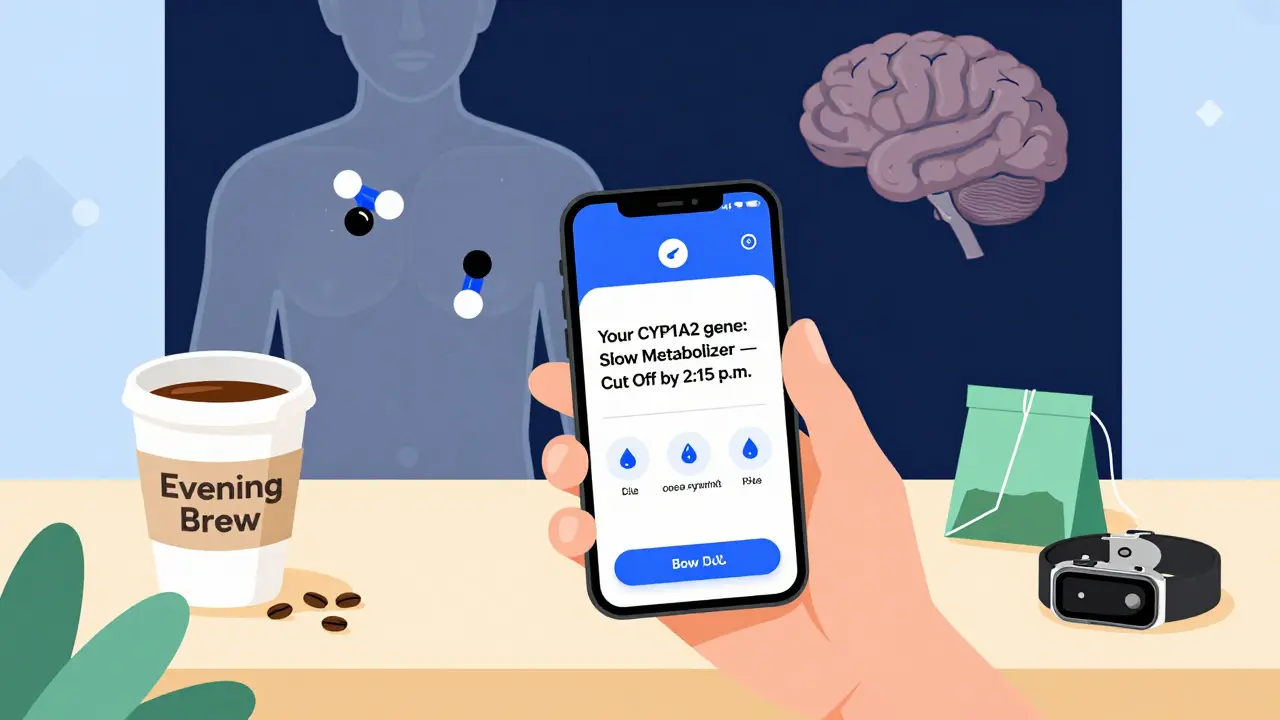
Not everyone metabolizes caffeine the same way. Your genes play a big role. The CYP1A2 gene controls how fast your liver breaks down caffeine. Some people have a variant that makes them "slow metabolizers." For them, caffeine’s half-life can stretch from 5 hours to 12 hours. That means a cup of coffee at noon could still be affecting your sleep at midnight. A 2024 study in Nature Communications showed that middle-aged adults (41-58 years) are more sensitive to caffeine’s effects on sleep than younger adults (20-27 years). Your body changes as you age. What worked at 25 might not work at 45. If you’ve tried cutting off caffeine at 4 p.m. and still wake up at 3 a.m., you might be a slow metabolizer. The good news? Companies like 23andMe now offer genetic tests that tell you your caffeine metabolism type. For $199, you can find out if your body needs a stricter cutoff than most people.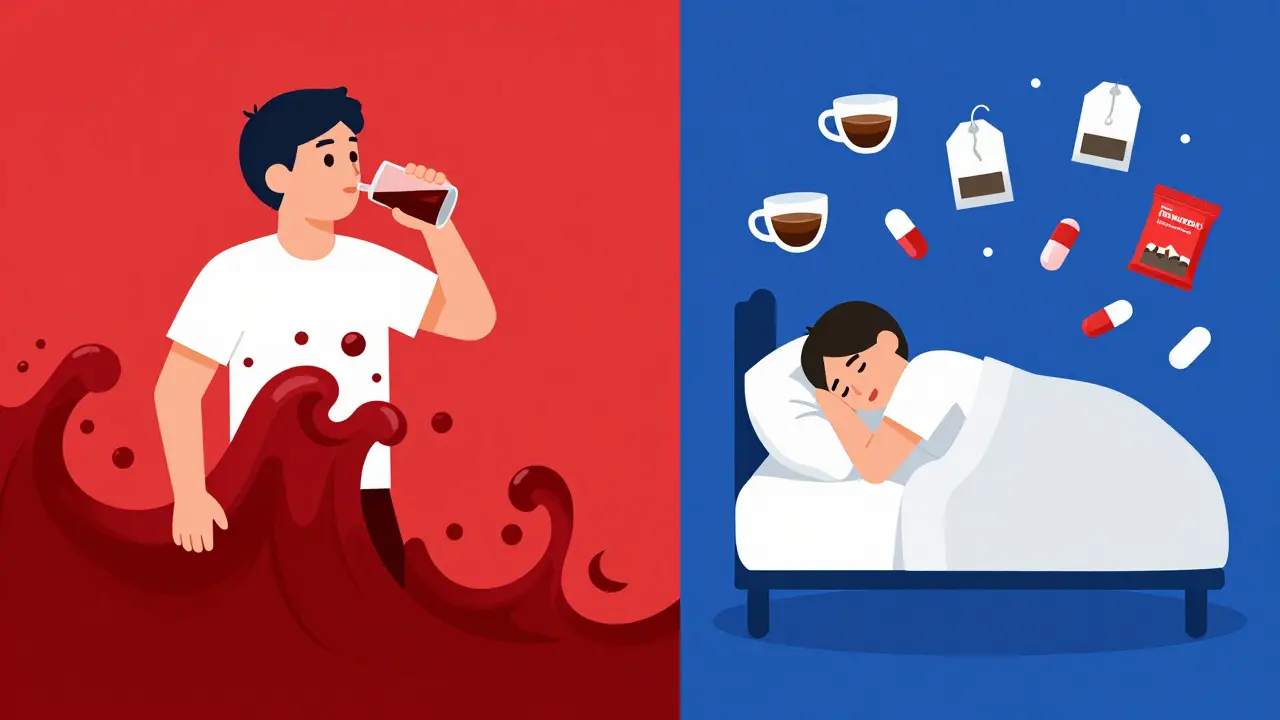
Real People, Real Results
You don’t need to take our word for it. Look at what real users are experiencing. In a 2022 survey of 2,150 people by Sleepopolis, those who stopped caffeine by 2 p.m. got 47 more minutes of sleep and 8% higher sleep efficiency than those who drank until 4 p.m. One Reddit user, u/CaffeineStruggles, wrote: "I switched from 4 p.m. to 2 p.m. and gained almost an hour of sleep quality. It was eye-opening." A 2022 analysis of 15,328 sleep logs from the Sleep Cycle app found that people who followed an 8-hour cutoff reported 82% satisfaction with their sleep quality. Those sticking to a 4-hour cutoff? Only 47% were satisfied. It’s not about willpower. It’s about timing. Your body doesn’t care if you "feel fine." It’s still processing caffeine while you think you’re resting.How to Find Your Personal Cutoff Time
Here’s how to figure out what works for you:- Track your caffeine intake for one week. Write down everything: coffee, tea, soda, energy drinks, painkillers, even chocolate.
- Use an app like Caffeine Zone to log doses and get automatic cutoff reminders. A 2022 App Store review analysis showed 73% of users found these tools helpful.
- Set your cutoff time at 8.5 hours before your target bedtime. If you sleep at 11 p.m., stop at 2:30 p.m.
- Stick to it for 7 days. Don’t cheat. Even one late coffee can reset your progress.
- Check your sleep quality. Are you falling asleep faster? Waking up less? Feeling more rested?
- If sleep improves, you’ve found your cutoff. If not, try moving it earlier-by 30 minutes each week-until you see results.
What About Decaf?
Decaf coffee isn’t caffeine-free. A typical cup still has 2-5 mg of caffeine. For most people, that’s harmless. But if you’re a slow metabolizer or super sensitive, even that tiny amount can add up. Starbucks noticed this trend. In 2022, they launched "Evening Brew," a decaf blend marketed specifically for after-4 p.m. consumption. It captured 15% of the after-4 p.m. coffee market within six months. People aren’t just quitting coffee-they’re switching to smarter options.What If You Need Caffeine Afternoon?
If you’re exhausted at 3 p.m. and your job demands focus, try this: - Switch to half-caf coffee. A 2022 AJMC review found this reduces sleep disruption by 32% compared to full-strength afternoon coffee. - Try green tea. It has less caffeine than coffee and contains L-theanine, which helps smooth out the energy spike. - Take a 20-minute nap. It’s more effective than caffeine for afternoon fatigue. - Get outside. Natural light resets your circadian rhythm and boosts alertness without chemicals.The Future of Caffeine and Sleep
Sleep tech is catching up. Oura Ring and Fitbit now give personalized caffeine cutoff recommendations based on your sleep data. Philips SmartSleep is testing systems that adjust your bedroom lighting and temperature based on when you last had caffeine. In January 2025, the American Academy of Sleep Medicine announced it’s updating its guidelines to include beverage-specific cutoff times-finally moving beyond vague advice like "avoid caffeine late in the day." The goal isn’t to eliminate caffeine. It’s to use it wisely. You don’t need to be a coffee monk to sleep well. You just need to know when to stop.What time should I stop drinking coffee to sleep better?
For most people, stop caffeine at least 8.5 hours before bedtime. If you sleep at 11 p.m., cut off coffee by 2:30 p.m. This accounts for the 4-6 hour half-life of caffeine and ensures it’s mostly cleared from your system before sleep.
Does decaf coffee affect sleep?
Decaf coffee still contains 2-5 mg of caffeine per cup. For most people, that’s not enough to disrupt sleep. But if you’re a slow metabolizer or extremely sensitive, even small amounts can add up. If you’re struggling to sleep, try switching to herbal tea after 2 p.m.
Why do I still feel wired after 6 hours?
You might be a slow caffeine metabolizer due to your CYP1A2 gene variant. This can extend caffeine’s half-life to 12 hours. Age also plays a role-people over 40 are more sensitive. Try cutting off caffeine earlier or consider a genetic test to find out your metabolism type.
Is it okay to drink caffeine before a workout?
Yes, if you time it right. Pre-workout supplements often contain 200+ mg of caffeine. If you work out at 5 p.m. and sleep at 11 p.m., that’s only a 6-hour gap-too short. Either move your workout earlier, switch to a low-caffeine pre-workout, or accept that your sleep might suffer that night.
Can I drink tea instead of coffee in the afternoon?
Black tea has less caffeine than coffee but still contains 20-48 mg per cup. Green tea has even less (20-30 mg) and includes L-theanine, which can help calm the nervous system. It’s a better afternoon option than coffee, but not risk-free. If you’re sensitive, stick to herbal teas after 2 p.m.
How long does caffeine stay in your system?
Caffeine’s half-life is 4-6 hours for most people, meaning half of it is gone by then. But it can take 10-12 hours for nearly all of it to clear. In slow metabolizers, it can linger for up to 12 hours. That’s why a 4-hour cutoff is rarely enough.
Does caffeine affect deep sleep?
Yes. Research shows caffeine doesn’t just delay sleep onset-it reduces deep, restorative slow-wave sleep. A 2025 study in Nature Communications found caffeine increases brain activity during non-REM sleep, making it harder for your brain to enter deep rest. This is why you might sleep 8 hours but still feel tired.


Post A Comment