
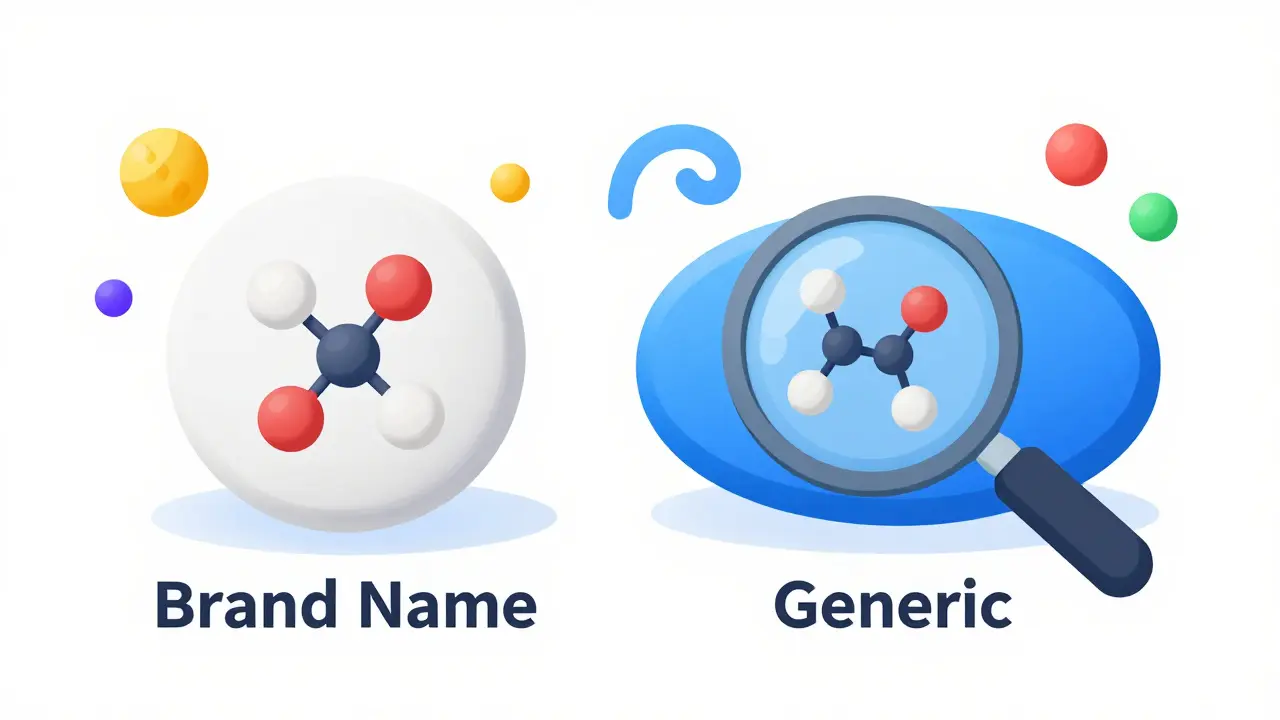
Why do generic pills look different from brand-name ones?
It’s normal to notice that your generic pill is a different color, shape, or size than the brand-name version you used to take. That’s because the law doesn’t require generics to look identical. The active ingredient-the part that actually treats your condition-is exactly the same. But the fillers, dyes, and coatings that give pills their appearance can be different. These are called inactive ingredients, and they don’t affect how the drug works. Think of it like two different brands of aspirin: one’s white and round, another’s blue and oval. Both contain the same amount of acetylsalicylic acid. The difference is just in how they’re packaged, not what’s inside.
Are generic drugs really as strong as brand-name drugs?
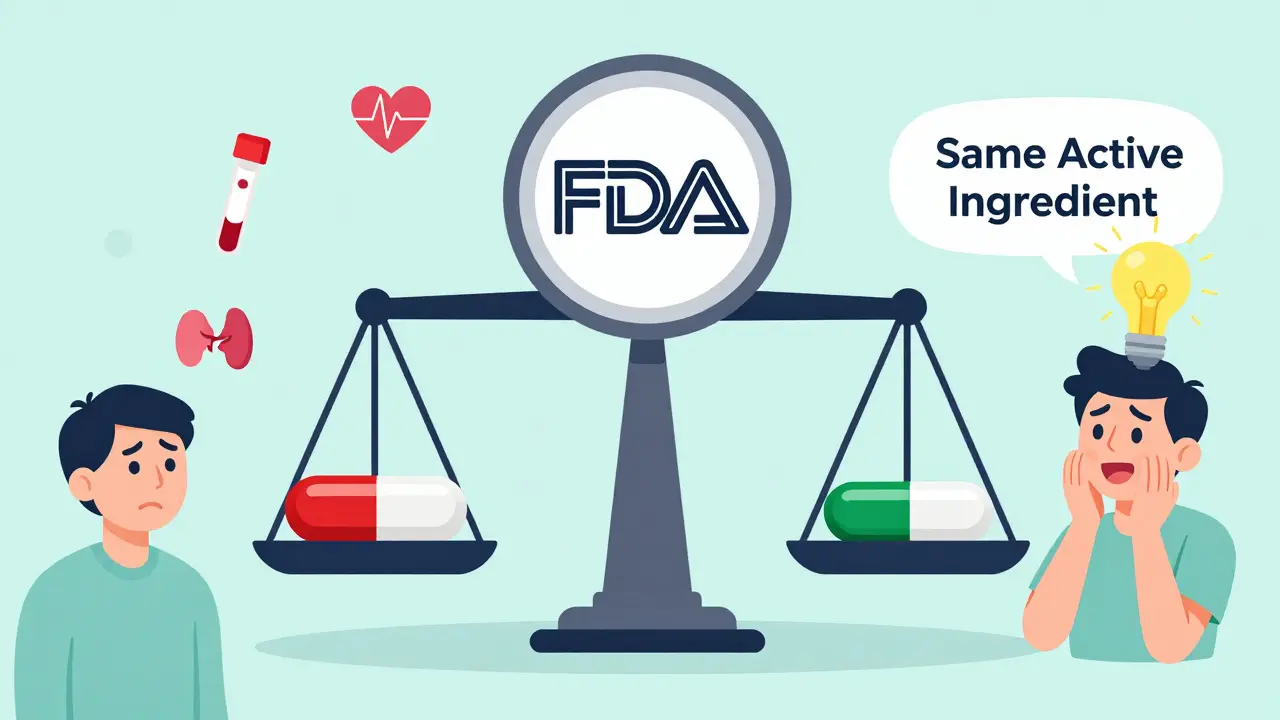
Yes. The U.S. Food and Drug Administration (FDA) requires every generic drug to deliver the same amount of active ingredient into your bloodstream at the same rate as the brand-name version. This is called bioequivalence. For a generic to be approved, its absorption must fall within 80% to 125% of the brand-name drug’s levels. That’s not a wide range-it’s a tight, scientifically proven window. If a generic didn’t meet this standard, it wouldn’t get approved. In fact, the FDA tests hundreds of generic drugs every year, and only those that pass strict bioequivalence studies are allowed on the market.
Do generic drugs cause more side effects?
No. Side effects come from the active ingredient, not whether the drug is generic or brand-name. If you had a headache or dizziness with the brand-name version, you’re likely to have the same reaction with the generic. Some patients report feeling different after switching, but that’s often because they’re paying more attention to how they feel after a change-something called the nocebo effect. A 2014 study of 753 people with chronic conditions found that 88% believed generics were just as safe as brand-name drugs. Still, a small number worry that generics contain “more chemicals” to make them work. That’s not true. Generic manufacturers must use the same active ingredient, and any differences in inactive ingredients are carefully reviewed for safety.
Could a generic drug be fake or contain less medicine?
No. Counterfeit drugs are illegal and extremely rare in the U.S. supply chain. All generic drugs sold in pharmacies must go through the same FDA approval process as brand-name drugs. The FDA inspects manufacturing sites-both in the U.S. and overseas-with the same standards. In fact, about half of all generic drugs are made by the same companies that produce the brand-name versions. The FDA’s Risk Identification and Correction Action Program has fixed over 1,200 potential quality issues since 2018. If a batch of generics failed to meet standards, it would be pulled immediately. You’re not taking a gamble when you fill a generic prescription.
Why do some doctors say not to substitute generics?
There are a few medications where even tiny changes in how the drug is absorbed can matter. These are called narrow therapeutic index drugs. Examples include warfarin (a blood thinner), levothyroxine (for thyroid conditions), and some seizure medications like phenytoin. For these, the difference between a helpful dose and a harmful one is very small. If you’re on one of these, your doctor might write “Do not substitute” on your prescription. That means the pharmacy must give you the exact brand or generic specified. But even in these cases, switching from one approved generic to another is usually safe-just make sure your doctor and pharmacist know you’ve made the switch so they can monitor you closely.
Is it true that generics cost way less?
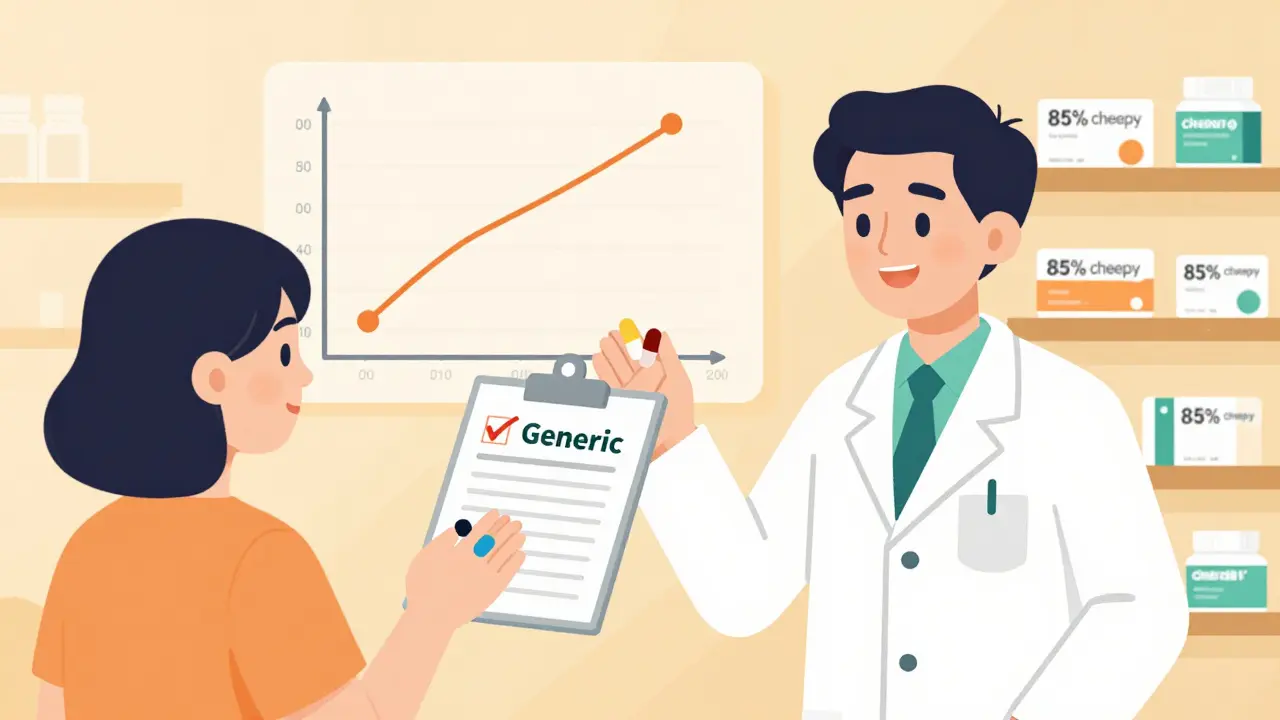
Yes, and that’s the whole point. Generic drugs typically cost 80% to 85% less than their brand-name equivalents. Over the past decade, generics have saved the U.S. healthcare system more than $2.2 trillion. On average, each generic prescription saves patients about $442 a year. Why the big difference? Brand-name companies spend billions developing a new drug and recoup those costs through high prices during their patent period. Once the patent expires, other companies can make the same drug without repeating expensive clinical trials. Multiple generic manufacturers often enter the market, driving prices down further through competition. That’s why you might see the same generic drug priced differently at different pharmacies-it’s just the market working as it should.
Can pharmacists switch my brand to a generic without telling me?
In most cases, yes-but only if your doctor didn’t say “Do not substitute.” State laws allow pharmacists to swap a brand-name drug for an FDA-approved generic unless the prescription specifically blocks it. This is called automatic substitution. But pharmacists are trained to explain this to patients. If you get a different-looking pill and aren’t sure why, ask the pharmacist. They can tell you exactly what changed and why it’s safe. Many pharmacists now offer free medication reviews to help patients understand their full regimen, including cost-saving switches. You’re not being left in the dark-you’re being guided.
Why do some people still distrust generics?
Beliefs about generics often come from personal stories or misinformation. A 2012 CDC study found that rural patients sometimes heard from friends or family that generics made them feel worse-leading them to avoid them entirely. Some people assume that cheaper means lower quality, even though that’s not how medicine works. Cultural factors also play a role: the same 2014 study showed that non-Caucasian patients were significantly more likely to request brand-name drugs, even when generics were just as effective. These concerns are real, and they need to be addressed with clear, respectful conversations-not assumptions. Talking to your doctor or pharmacist about your worries can help replace fear with facts.
What should I do if I think my generic isn’t working?
First, don’t stop taking it. Then, schedule a quick check-in with your doctor or pharmacist. Sometimes, a change in how you feel isn’t because the drug stopped working-it’s because your body is adjusting, or another factor (like stress, diet, or sleep) has changed. But if you truly notice a drop in effectiveness or new side effects after switching to a generic, bring it up. For most drugs, a 30-day observation period is enough to tell if the switch is working. For narrow therapeutic index drugs, your provider may want to run a blood test to check levels. Never assume the generic is faulty. Most often, the issue isn’t the drug-it’s timing, expectations, or another health change.
Are there any situations where I should stick with brand-name drugs?
Only in rare cases. If you’ve tried a generic and had a clear, documented reaction-like a rash, severe dizziness, or a drop in lab results-your doctor can prescribe the brand-name version with a “Do not substitute” note. Some insurance plans also require you to try the generic first before covering the brand. But if you’re doing well on a generic, there’s no medical reason to switch back. The FDA, Kaiser Permanente, Cedars-Sinai, and Pharmacy Times all agree: for 90% of prescriptions, generics are just as safe and effective. The only difference? The price tag-and your wallet will thank you.
How can I be sure I’m getting a real generic?
Check the label. All approved generics must list the active ingredient clearly. You can also ask your pharmacist for the manufacturer’s name. If you’re ever unsure, call the FDA’s Drug Information line or check their website for the approved list of generics for your medication. Most pharmacies also offer patient information sheets that explain what’s in each pill. You don’t need to be an expert-you just need to ask the right questions.


Post A Comment